


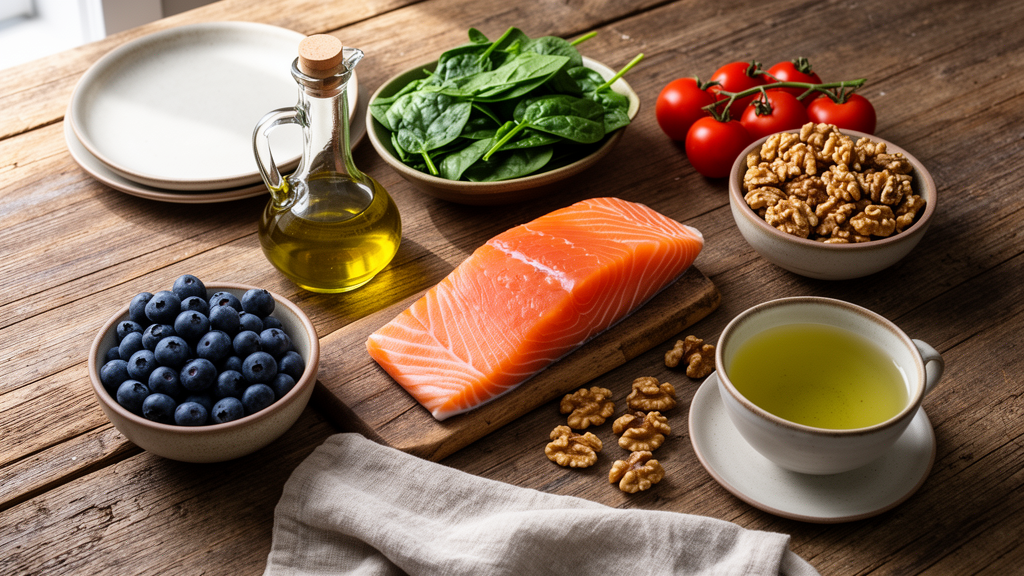
A large analysis of nationally representative United States health survey data suggests that what people with fatty liver disease put on their plates may matter nearly as much as what they drink. Researchers examining more than 3,000 adults with metabolic dysfunction-associated steatotic liver disease, or MASLD, and its moderate-alcohol counterpart, MetALD, report that pro-inflammatory diets were associated with a substantially elevated risk of death, while diets rich in antioxidants were linked to markedly better survival. The findings, published in Food Science & Nutrition, arrive at a moment when treatment options for the most common chronic liver condition in the world remain strikingly limited, making diet one of the few powerful levers clinicians and patients can actually pull.
MASLD, the renamed and rigorously redefined successor to what was long called non-alcoholic fatty liver disease, affects a large share of adults globally and is tightly entwined with obesity, type 2 diabetes, and cardiovascular risk. Under the 2023 consensus framework from the major hepatology societies, patients with hepatic steatosis and at least one cardiometabolic risk factor are classified as MASLD, while those who also drink moderate amounts of alcohol fall into a new category called metabolic dysfunction and alcohol-associated liver disease, or MetALD. That distinction matters clinically, because MetALD carries a higher mortality risk and more severe hepatic outcomes than MASLD alone. With only one drug, resmetirom, approved for the inflammatory stage of the disease, prevention through lifestyle remains the cornerstone of care.
The research team drew on seven cycles of the National Health and Nutrition Examination Survey, or NHANES, collected between 2005 and 2018. From an initial pool of more than 70,000 participants, the investigators identified 3,048 adults with steatotic liver disease: 2,146 with MASLD and 902 with MetALD. Hepatic steatosis was assessed using the fatty liver index, a validated composite of body mass index, waist circumference, triglycerides, and gamma-glutamyltransferase, while metabolic criteria followed the latest international consensus definitions. Participants were then followed through the end of 2019, with deaths captured from national mortality records and classified by cause, including cardiovascular disease, malignancy, diabetes, and respiratory illness.
To characterize diet, the researchers used three complementary tools. The Dietary Inflammatory Index, or DII, scores the overall inflammatory potential of a person’s intake across dozens of food components, with higher values signaling a more pro-inflammatory pattern. The Composite Dietary Antioxidant Index, or CDAI, aggregates intake of six key antioxidants: vitamins A, C, and E, zinc, selenium, and carotenoids. The Dietary Antioxidant Quality Score, or DAQS, measures how closely a person’s antioxidant intake approaches recommended daily levels, ranging from zero for poor quality to six for high quality. All three metrics were calculated from two 24-hour dietary recall interviews, one conducted in person and a second by telephone days later.
The results were striking. Across the entire cohort, adults in the highest tertile of DII had roughly double the all-cause mortality risk of those in the lowest tertile after full adjustment for age, sex, income, body mass index, smoking, sedentary time, energy intake, supplement use, cancer, diabetes, liver enzymes, uric acid, and hyperlipidemia. Conversely, those in the highest tertile of CDAI had about 56 percent lower mortality risk, and those with the highest DAQS had roughly 43 percent lower risk. In the MASLD subgroup alone, the pattern held: the most pro-inflammatory diets nearly doubled mortality risk, while the highest antioxidant capacity and quality were each associated with about half the risk of death.
The MetALD subgroup told a more dramatic, if statistically delicate, story. Among these moderate drinkers, a pro-inflammatory diet was associated with nearly four times the all-cause mortality risk compared with the least inflammatory diets, the strongest association observed anywhere in the study. The protective trends for antioxidant capacity and quality pointed in the same favorable direction but did not reach conventional statistical significance, likely because only 58 deaths occurred in this smaller subgroup, limiting statistical power. When the researchers jointly analyzed diet and disease subtype, using MASLD patients with the worst diets as the reference, MetALD patients with the highest antioxidant quality scores showed an 81 percent lower all-cause mortality risk, and MASLD patients with top-quality antioxidant diets showed a 62 percent reduction.
Cardiovascular mortality, a leading killer in this population, followed a similar trajectory. Dietary antioxidant quality showed a consistent protective association in the total cohort and among MASLD patients, where the highest DAQS group had about 58 percent lower cardiovascular death risk. In the joint analysis, the apparent benefits were even larger among MetALD patients, with the highest antioxidant quality and capacity tertiles associated with risk reductions exceeding 80 percent, though wide confidence intervals counseled caution. Restricted cubic spline analyses reinforced the overall picture, revealing largely monotonic relationships in which mortality risk climbed with increasing dietary inflammatory potential and fell with rising antioxidant exposure.
Seeking mechanism, the team ran exploratory mediation analyses using inflammatory and hematological markers, including the neutrophil-to-lymphocyte ratio, platelet counts, and the platelet-to-HDL cholesterol ratio. Among MASLD patients, indirect pathways through platelets and the platelet-to-HDL ratio were statistically significant, but the effects operated in opposing directions to the direct effects, a pattern the authors describe as inconsistent mediation or suppression rather than clean biological mediation. In plain terms, diet quality clearly tracks with systemic inflammatory and blood markers, but those markers do not act as simple pipelines between diet and death. In the MetALD subgroup, no significant mediation emerged at all, hinting that alcohol-related biological alterations, gut microbiome changes, and hepatocellular protection may weave a more tangled web in moderate drinkers.
Subgroup analyses added nuance about who benefits most. The associations between diet and mortality were modified by age, sex, smoking status, body mass index, cancer, diabetes, and crucially, liver fibrosis stage as measured by the FIB-4 index. When fibrosis was minimal, with FIB-4 below 1.3, the dietary associations were strongest; as fibrosis advanced, the protective effects of antioxidant diets weakened and the inflammatory diet signal lost significance. This suggests that dietary intervention may deliver its greatest survival payoff early in the disease course, before irreversible scarring takes hold, a window when patients and clinicians still have real leverage.
The authors are candid about limitations. NHANES relies on self-reported diet and behavior, inviting recall bias; the 24-hour recalls cannot fully capture long-term eating patterns or precise alcohol intake; some plant-derived antioxidant compounds could not be included in the indices; and the modified application of the 2023 diagnostic criteria, including the omission of Asian-specific body mass cutoffs, may affect generalizability. The small number of deaths among MetALD participants in particular warrants replication in larger cohorts. Still, the practical implications are hard to ignore. For the many patients who cannot achieve complete abstinence, the study suggests that swapping refined grains for whole grains, avoiding fried foods and processed red meat, and loading the plate with fiber-rich vegetables, legumes, and dark-colored fruits such as anthocyanin-packed berries could meaningfully blunt mortality risk. Optimizing the anti-inflammatory and antioxidant quality of the diet, the authors conclude, should stand alongside alcohol restriction as a central nutritional strategy for improving prognosis across the entire steatotic liver disease spectrum.
Subject of Research: Associations of dietary inflammatory and antioxidant indices with mortality risk in MASLD and MetALD
Article Title: Differential Associations of Dietary Inflammatory Index and Dietary Antioxidant Indices With Mortality Risk From MASLD/MetALD: Results From a Large Population‐Based Study
Article References: Lyu, H., Chen, H., Zhan, Z., Qin, Y., Mao, L., Guo, M., Mo, Y., & Shen, T. (2026). Differential Associations of Dietary Inflammatory Index and Dietary Antioxidant Indices With Mortality Risk From MASLD / MetALD : Results From a Large Population‐Based Study. Food Science & Nutrition, 14(10), Article e72429. https://doi.org/10.1002/fsn3.72429
Image Credits: AI Generated
DOI: 10.1002/fsn3.72429
Keywords: MASLD, MetALD, fatty liver disease, Dietary Inflammatory Index, Composite Dietary Antioxidant Index, Dietary Antioxidant Quality Score, NHANES, mortality, nutrition, oxidative stress, cardiovascular mortality, liver fibrosis
Cite Scienmag News
Daisy Hatcher. (October 9, 2026). Anti-Inflammatory, Antioxidant-Rich Diets Linked to Longer Survival in Fatty Liver Disease. Scienmag. https://scienmag.com/anti-inflammatory-antioxidant-rich-diets-linked-to-longer-survival-in-fatty-liver-disease/
Daisy Hatcher. "Anti-Inflammatory, Antioxidant-Rich Diets Linked to Longer Survival in Fatty Liver Disease." Scienmag, 9 October 2026, https://scienmag.com/anti-inflammatory-antioxidant-rich-diets-linked-to-longer-survival-in-fatty-liver-disease/. Accessed 9 October 2026.
Daisy Hatcher. "Anti-Inflammatory, Antioxidant-Rich Diets Linked to Longer Survival in Fatty Liver Disease." Scienmag. October 9, 2026. https://scienmag.com/anti-inflammatory-antioxidant-rich-diets-linked-to-longer-survival-in-fatty-liver-disease/


