


One of the most feared events in breast cancer care is not the original tumor but what happens months or years after surgery, when cancer cells quietly reappear in distant organs such as bone, liver, lung, or brain. Postsurgical distant metastasis remains the leading cause of death among breast cancer patients, yet clinicians still lack dependable tools to identify, at the time of operation, which tumors are most likely to seed such relapses. A new study published in BMC Cancer by a team at Southwest Medical University in Sichuan, China, offers a fresh candidate for that task. The researchers report that a single immune-regulatory protein, TNFAIP3, together with markers of a specific class of tumor-associated immune cells, can predict which breast cancer patients went on to develop distant metastasis with striking accuracy, and they describe the molecular conversation that appears to link the two.
The protein at the center of the study is tumor necrosis factor alpha-induced protein 3, better known in the literature as TNFAIP3 or A20. It is a ubiquitin-editing enzyme with a well-documented role as a brake on inflammatory signaling, most famously within the NF-kappaB pathway that governs how cells respond to tumor necrosis factor alpha and other inflammatory cues. Because TNFAIP3 damps inflammation, it has often been viewed as protective. But in cancer biology, the same immunosuppressive activity can be co-opted by tumors: by muting inflammatory alarm signals, TNFAIP3 can help cancer cells evade immune attack. The new work adds a twist to that picture, suggesting that TNFAIP3 does not merely shield tumor cells from immunity but actively reshapes the immune cells around them, converting potential attackers into willing accomplices.
The accomplices in question are tumor-associated macrophages, or TAMs, the abundant white blood cells that infiltrate solid tumors. Macrophages are famously plastic. In one polarization state, often called M1-like, they mount antimicrobial and antitumor responses, releasing inflammatory cytokines and presenting antigens to T cells. In the opposing M2-like state, they promote tissue repair, wound healing, angiogenesis, and immune tolerance. Tumors exploit this plasticity by nudging infiltrating macrophages toward the M2-like program, which is characterized by expression of scavenger receptors such as CD163 and CD206 and by secretion of factors that suppress cytotoxic T cells and encourage tissue remodeling. High densities of M2-like TAMs have repeatedly been associated with poor outcomes across many cancer types, but the signals that drive this reprogramming in breast cancer, and the prognostic value of pairing those signals with their downstream markers, had not been firmly established.
To address that gap, the team, led by Xiaoqing Zhou and Yan Lin with corresponding authors Yan Tang and Tao He, analyzed 96 breast cancer surgical specimens, evenly divided between 48 patients who later developed distant metastasis and 48 who did not. Using immunohistochemistry, a staining technique that reveals where specific proteins sit within tissue sections, they measured TNFAIP3 levels in tumor cells and the abundance of the M2 macrophage markers CD163 and CD206 in the surrounding tumor stroma. The results were clear-cut: tumors from patients who went on to relapse at distant sites showed significantly higher TNFAIP3 expression and denser infiltrates of CD163- and CD206-positive macrophages than tumors from patients who remained metastasis-free. Moreover, within the metastatic group, TNFAIP3 levels correlated positively with both macrophage markers, with correlation coefficients of 0.322 for CD163 and 0.370 for CD206, both statistically significant.
To make sure the pattern was not an artifact of a single, modestly sized cohort, the researchers turned to GEPIA2, a public web tool that mines large RNA-sequencing datasets from The Cancer Genome Atlas. Across 1,085 breast cancer samples in that database, the association between TNFAIP3 expression and M2 macrophage signatures held, and in fact the correlations were even stronger than in the local tissue cohort. This kind of two-pronged validation, combining hands-on pathology from a Chinese patient population with independent computational analysis of a large international dataset, is increasingly seen as the gold standard for biomarker studies, because it guards against findings that reflect only the quirks of one institution’s staining protocols or patient mix.
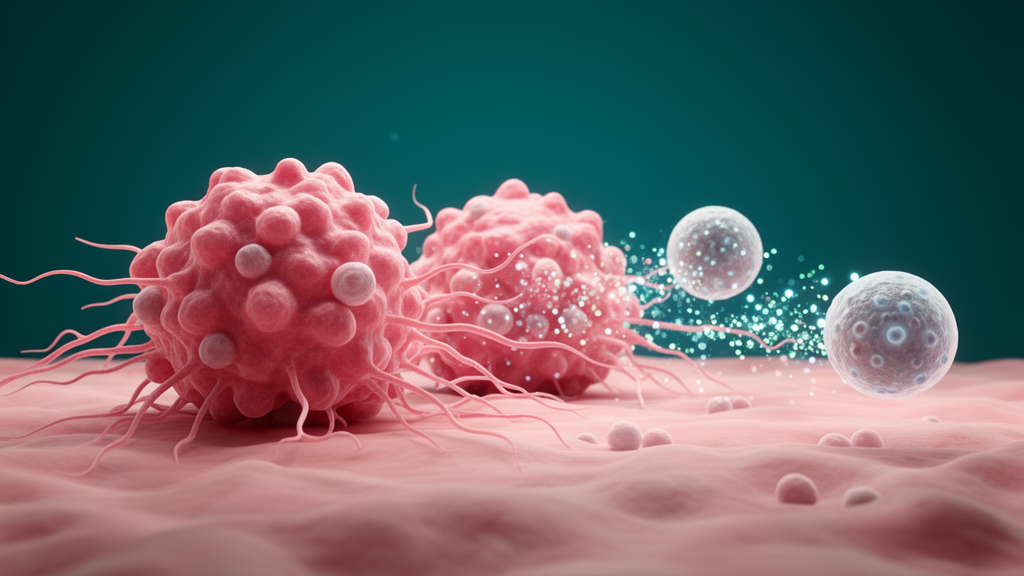
Correlation, however, is not mechanism, and this is where the study becomes particularly interesting. The team engineered breast cancer cell lines to either overexpress TNFAIP3 or have it knocked down, then co-cultured these modified tumor cells with macrophages in the laboratory. Macrophages exposed to TNFAIP3-overexpressing tumor cells shifted visibly toward the M2-like program, a change documented by flow cytometry and quantitative PCR. The critical intermediary turned out to be CCL2, a chemokine, or chemical attractant, that tumor cells secrete to summon immune cells bearing its receptor, CCR2. TNFAIP3 overexpression boosted CCL2 secretion from breast cancer cells, which activated CCR2 signaling in macrophages and drove their M2-like polarization. When macrophages conditioned by TNFAIP3-high tumor cells were then placed back with cancer cells in Transwell migration and invasion assays, the tumor cells migrated and invaded 1.5- to 2.3-fold more vigorously than controls, demonstrating that the reprogrammed macrophages were functionally pro-metastatic rather than merely present.
The clinical payoff of the study lies in its predictive statistics. Using multivariate logistic regression, which adjusts for confounding variables, the researchers showed that elevated TNFAIP3, CD163, and CD206 were each independently associated with metastasis, meaning each marker carried prognostic information on its own. They then evaluated performance with receiver operating characteristic analysis, a standard method that plots true-positive rate against false-positive rate across diagnostic thresholds. TNFAIP3 alone achieved an area under the curve, or AUC, of 0.84, which is generally considered good discriminatory power. But the combinations were even better: TNFAIP3 paired with CD163 reached an AUC of 0.90, the highest in the study, while TNFAIP3 with CD206 reached 0.87. An AUC of 0.90, if it holds up in prospective testing, would represent a substantial improvement over the clinicopathological features, such as tumor size, grade, and lymph node status, that currently anchor metastatic risk assessment.
Why should a macrophage marker improve on TNFAIP3 alone? The answer likely reflects the biology of metastasis itself. A tumor cell does not metastasize in isolation; it must escape the primary site, survive in circulation, and colonize a distant organ, and each of those steps is shaped by the microenvironment the tumor has cultivated. By measuring both the driver, TNFAIP3, and its presumed downstream consequence, the M2 macrophage infiltrate marked by CD163 or CD206, the two-marker panel effectively interrogates both sides of the tumor-immune conversation. A tumor that expresses high TNFAIP3 but has failed to recruit M2-like macrophages may be less dangerous than one in which the full CCL2/CCR2-driven program has taken hold. The combined biomarker, in other words, captures not just a molecular trait but a functional tumor ecosystem, which may explain its superior accuracy.
The findings also point toward therapeutic opportunities. The CCL2/CCR2 axis is already a target of considerable pharmaceutical interest, with CCR2 antagonists having been tested in trials for other cancers and inflammatory diseases. If TNFAIP3-high breast tumors depend on CCL2-driven macrophage recruitment to prepare the ground for metastasis, then intercepting that axis, or finding ways to re-polarize TAMs from the M2-like back toward the M1-like state, could complement existing treatments. Similarly, TNFAIP3 itself, as an intracellular enzyme, presents a challenging but not impossible drug target, and understanding exactly how it regulates CCL2 secretion in breast cancer cells may reveal druggable nodes upstream or downstream of it. None of these possibilities is proven by the current study, but the mechanistic chain it describes, from TNFAIP3 to CCL2 to CCR2 to macrophage polarization to enhanced migration and invasion, provides a testable roadmap.
Important caveats remain before this biomarker panel reaches the clinic. The study was retrospective, comparing patients who had already metastasized with those who had not, and the authors themselves emphasize that prospective clinical validation, in which the markers are measured at surgery and used to predict relapse before it occurs, is the necessary next step. The 96-patient tissue cohort, while carefully matched, is small by the standards of biomarker development, and immunohistochemistry scoring can vary between pathology laboratories. Still, the convergence of tissue staining, large-scale database validation, and mechanistic cell biology gives the findings unusual coherence for an early-stage biomarker study. If larger prospective trials confirm that a simple two-protein stain performed on routine surgical specimens can flag patients at high risk of distant relapse, oncologists would gain a powerful tool for tailoring follow-up intensity and adjuvant therapy, and researchers would gain a validated starting point for therapies aimed at dismantling the tumor’s immune entourage before it can help the cancer spread.
Subject of Research: TNFAIP3-driven M2-like macrophage polarization as a prognostic biomarker for postsurgical distant metastasis in breast cancer
Article Title: High TNFAIP3 expression and its induced M2-like macrophage polarization serve as prognostic markers for postsurgical distant metastasis in breast cancer
Article References: Zhou, X., Lin, Y., Li, X., Lei, Y., Yang, M., Wang, W., Tang, Y., & He, T. (2026). High TNFAIP3 expression and its induced M2-like macrophage polarization serve as prognostic markers for postsurgical distant metastasis in breast cancer. BMC Cancer. https://doi.org/10.1186/s12885-026-17116-6
Image Credits: AI Generated
DOI: 10.1186/s12885-026-17116-6
Keywords: TNFAIP3, breast cancer, tumor-associated macrophages, M2 macrophage polarization, CCL2/CCR2 axis, distant metastasis, prognostic biomarker, CD163, CD206, tumor microenvironment, immunohistochemistry, BMC Cancer
Cite Scienmag News
Nathaniel Bowman. (October 8, 2026). Breast Cancer Cells Recruit Immune Allies Through TNFAIP3 to Drive Metastasis. Scienmag. https://scienmag.com/breast-cancer-cells-recruit-immune-allies-through-tnfaip3-to-drive-metastasis/
Nathaniel Bowman. "Breast Cancer Cells Recruit Immune Allies Through TNFAIP3 to Drive Metastasis." Scienmag, 8 October 2026, https://scienmag.com/breast-cancer-cells-recruit-immune-allies-through-tnfaip3-to-drive-metastasis/. Accessed 8 October 2026.
Nathaniel Bowman. "Breast Cancer Cells Recruit Immune Allies Through TNFAIP3 to Drive Metastasis." Scienmag. October 8, 2026. https://scienmag.com/breast-cancer-cells-recruit-immune-allies-through-tnfaip3-to-drive-metastasis/


