


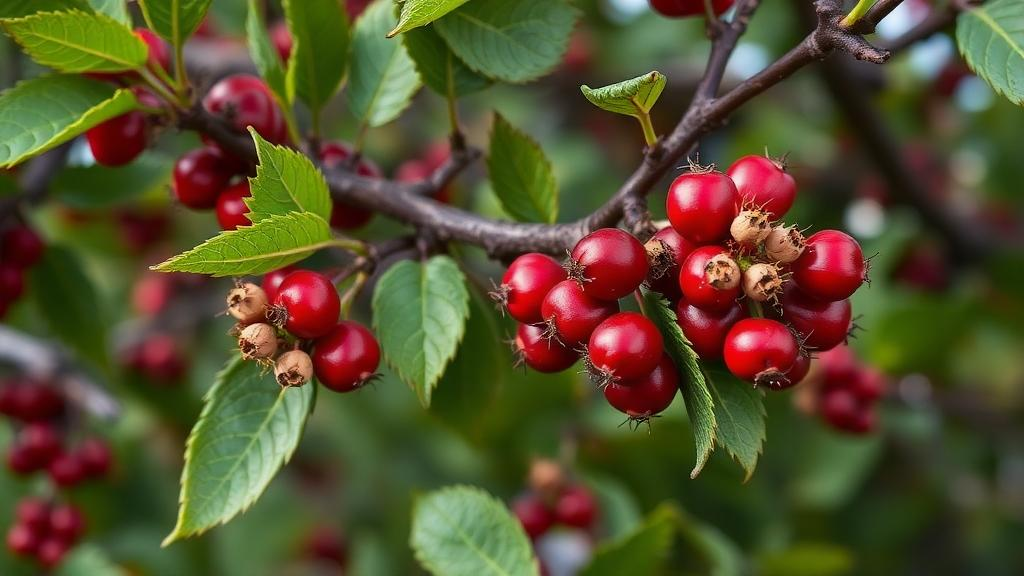
Seed dormancy is one of nature’s most elegant survival strategies, allowing a plant to hold its offspring in suspended animation until conditions are right for growth. Yet for growers and foresters, dormancy can be a stubborn obstacle, producing erratic, delayed, and uneven germination that complicates everything from nursery production to large-scale reforestation. A new study published in BMC Plant Biology has now uncovered a surprising chemical explanation for why some seeds of the soapberry tree, Sapindus mukorossi, sprout promptly while their siblings languish in the soil. The answer, it turns out, is not primarily about how tough the seed coat is, but about what is brewing inside the kernel itself.
Sapindus mukorossi, commonly known as the Chinese soapberry or soapnut tree, is a species of growing economic importance. Its fruit shells are rich in natural saponins and have long been used as a biodegradable detergent, while the tree is increasingly valued for afforestation and land restoration programs across Asia. Like many woody species, it produces seeds with pronounced dormancy, but the dormancy is not uniform. Growers have long observed that the seeds fall into two behavioral classes: hard seeds, which remain firm even after prolonged soaking in water, and soft seeds, which soften noticeably after immersion. Counterintuitively, the hard seeds tend to germinate earlier, while the soft seeds exhibit delayed germination. That inversion of expectations is precisely what a team of researchers at Beijing Forestry University, working with a colleague at Ghazi University in Pakistan, set out to explain.
The conventional assumption in seed science has been that physical dormancy, imposed by an impermeable or mechanically restrictive seed coat, is the dominant barrier in hard-coated species. If that were the whole story, seeds with softer, more permeable coats should germinate faster, not slower. The research team, led by Areeba Bano and Muhammad Tahir, with Liming Jia as corresponding author, suspected that a second, chemical layer of control was at work. Their hypothesis drew on the concept of allelopathy, the phenomenon by which plants release or accumulate biochemical compounds that suppress the germination or growth of other organisms, sometimes even their own tissues.
To test the idea, the researchers combined three complementary approaches: allelopathic bioassays, high-resolution metabolite profiling by ultra-performance liquid chromatography coupled with tandem mass spectrometry (UPLC-MS/MS), and anatomical imaging of the seed coat using scanning electron microscopy (SEM). The bioassays used Chinese cabbage seeds as a sensitive biological indicator, a standard technique in allelopathy research because cabbage germinates quickly and responds dramatically to inhibitory compounds. When the team applied aqueous extracts of seed kernels to the cabbage seeds, the results were striking. A concentrated extract from soft-seed kernels, prepared at 100 grams per liter, reduced cabbage seed germination to as little as 6 percent. Root growth was completely abolished at that concentration. By contrast, the same concentration of hard-seed kernel extract was far more benign, with cabbage germination reaching up to 100 percent.
The seed coat extracts told a different and equally revealing story. Extracts from soft seed coats allowed limited root elongation, with roots extending up to 2.9 centimeters, indicating that the coat itself carries comparatively little inhibitory chemistry. Taken together, the bioassays pointed an accusing finger at the kernel of the soft seeds as the principal reservoir of germination-suppressing compounds. This was the opposite of what a purely physical model of dormancy would predict, since the soft seeds have coats that should, in principle, permit easier water uptake and embryo expansion.
The metabolomic analysis then revealed what those inhibitory compounds might be. Across soft and hard seed kernels, the UPLC-MS/MS profiling detected a remarkable 1,120 metabolites, of which 129 differed significantly between the two seed types. Soft-seed kernels were notably enriched in 33 flavonoids and 11 alkaloids found uniquely or predominantly in that tissue. Among the identified candidates were hesperetin-7-O-glucoside, a glycosylated flavonoid; epicatechin, a well-known plant flavanol; phlorizin derivatives, compounds with documented biological activity; strictamine, an alkaloid; methyl dioxindole-3-acetate; hexadecanamide, a fatty acid amide; and even caffeine, a compound more famous in coffee but widely recognized as a potent allelochemical in plants that produce it. Many of these compound classes have established roles in plant chemical defense and in the inhibition of seed germination and seedling growth, making them credible candidates for the allelopathic activity observed in the bioassays.
The scanning electron microscopy added a crucial anatomical dimension to the investigation. The soft seeds displayed a rough outer surface, palisade layers containing internal spaces, crystal-like formations, and a porous endotesta, the innermost layer of the seed coat. Hard seeds, by contrast, showed a porous outer surface but a highly compact palisade layer and an interconnected endotesta. These structural differences matter because the palisade layer is typically the water-gatekeeping tissue in hard-coated seeds. Yet the anatomical evidence, when weighed against the bioassay results, suggested that these physical differences were not the main driver of the germination delay. The soft seeds, with their more open and porous coat architecture, should have been the easier seeds to imbibe and germinate. Instead, their delayed emergence pointed squarely at the chemical arsenal concentrated in their kernels.
The conclusion the authors draw is a significant reframing of how dormancy works in this species. Delayed germination in soft Sapindus mukorossi seeds appears to be primarily associated with allelopathic inhibitors accumulated within the seed kernel rather than with physical restrictions imposed by the seed coat. In other words, the soft seeds are not failing to germinate because they cannot take up water or because their embryos are mechanically trapped; they are failing because their own tissues are saturated with self-inhibitory chemistry that must degrade, leach away, or be metabolically overcome before germination can proceed. This mechanism, sometimes described as chemical dormancy or embryonic autotoxicity, adds an important dimension to the classical physical-versus-physiological dormancy framework that dominates seed biology textbooks.
The practical implications could be considerable. For nursery managers and restoration ecologists, knowing that the barrier in soft seeds is chemical rather than physical changes the treatment strategy entirely. Physical dormancy is typically broken by scarification, hot water soaks, or mechanical nicking, all of which target the seed coat. Chemical dormancy, by contrast, may respond better to prolonged leaching, controlled after-ripening, or treatments that accelerate the breakdown or detoxification of inhibitory compounds within the kernel. Sorting seeds into hard and soft fractions before sowing, and applying different pre-treatments to each, could dramatically improve germination uniformity in commercial propagation of this valuable tree. The findings also raise intriguing evolutionary questions about why a tree would invest in two distinct dormancy strategies within a single seed batch, a form of bet-hedging that may spread germination risk across seasons in unpredictable environments.
Scientifically, the study is a compelling demonstration of how modern metabolomics can resolve long-standing puzzles in plant physiology. By pairing a classical bioassay with untargeted chemical profiling and high-resolution imaging, the researchers were able to move from an observed phenomenon, delayed germination in soft seeds, to a mechanistic hypothesis grounded in specific candidate molecules. The identification of 129 differentially abundant metabolites, including dozens of unique flavonoids and alkaloids, provides a rich target list for follow-up work. Future studies will need to isolate individual compounds and test them at physiological concentrations to confirm which of the candidates are the true germination inhibitors, and to determine how those compounds are synthesized, stored, and eventually deactivated within the kernel. For now, the message is clear and a little humbling: sometimes the secret to a seed’s stubbornness lies not in its armor, but in the invisible chemistry locked within its own heart.
Subject of Research: Allelopathic chemical inhibitors in seed kernels causing dormancy variation between hard and soft Sapindus mukorossi seeds
Article Title: Allelopathic inhibitors in seeds kernel cause dormancy variation between hard and soft Sapindus mukorossi seeds
Article References: Bano, A., Tahir, M., Zhong, J., Noor, M., & Jia, L. (2026). Allelopathic inhibitors in seeds kernel cause dormancy variation between hard and soft Sapindus mukorossi seeds. BMC Plant Biology. https://doi.org/10.1186/s12870-026-09657-6
Image Credits: AI Generated
DOI: 10.1186/s12870-026-09657-6
Keywords: Sapindus mukorossi, seed dormancy, allelopathy, flavonoids, alkaloids, UPLC-MS/MS, metabolomics, seed coat anatomy, scanning electron microscopy, germination, plant biochemistry, BMC Plant Biology
Cite Scienmag News
Alan Morgan. (October 5, 2026). Chemical Sabotage Inside the Kernel Drives Seed Dormancy in the Soapberry Tree. Scienmag. https://scienmag.com/chemical-sabotage-inside-the-kernel-drives-seed-dormancy-in-the-soapberry-tree/
Alan Morgan. "Chemical Sabotage Inside the Kernel Drives Seed Dormancy in the Soapberry Tree." Scienmag, 5 October 2026, https://scienmag.com/chemical-sabotage-inside-the-kernel-drives-seed-dormancy-in-the-soapberry-tree/. Accessed 5 October 2026.
Alan Morgan. "Chemical Sabotage Inside the Kernel Drives Seed Dormancy in the Soapberry Tree." Scienmag. October 5, 2026. https://scienmag.com/chemical-sabotage-inside-the-kernel-drives-seed-dormancy-in-the-soapberry-tree/


