


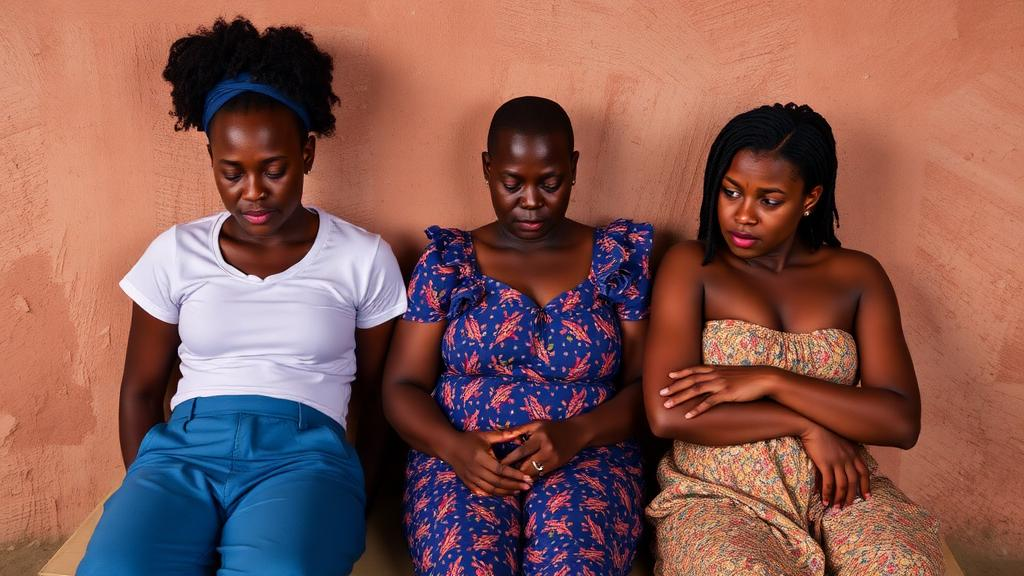
Nearly seven in ten adolescent girls in high schools across Kumasi, Ghana, experience menstrual pain severe enough to disrupt their daily lives, yet only about a third of them turn to non-drug strategies such as relaxation, dietary changes, or exercise to cope. That striking mismatch between the scale of the problem and the response it receives is the central finding of a new cross-sectional study published in Discover Social Science and Health, which surveyed 431 female students aged 12 to 19 in two junior high schools and two senior high schools spanning urban, peri-urban, and rural communities in the Ashanti Region. The research, led by Lydia Boampong Owusu of the School of Nursing and Midwifery at Kwame Nkrumah University of Science and Technology, offers one of the most detailed portraits to date of how teenage girls in a resource-limited setting actually manage dysmenorrhea, and why safer non-pharmacological options remain so underused.
The physiological backdrop to the study is well established. Dysmenorrhea, the medical term for painful menstrual cramps, arises when excessive production of prostaglandins during menstruation triggers intensified contractions of the myometrium, the muscular wall of the uterus, along with vasoconstriction and heightened sensitivity of local nerves. The result is a cramping pain in the lower abdomen that is frequently accompanied by headache, nausea, vomiting, diarrhea, bloating, backache, and leg pain. Clinicians distinguish primary dysmenorrhea, which occurs in the absence of any underlying pelvic pathology, from secondary dysmenorrhea, which is linked to conditions such as endometriosis, ovarian cysts, pelvic inflammatory disease, and uterine fibroids. Globally, estimates suggest that between 50 and 90 percent of adolescent girls experience dysmenorrhea, with 10 to 25 percent enduring pain severe enough to substantially diminish their quality of life.
The Kumasi survey placed itself within that global picture while sharpening the focus on a setting where menstrual health support is often scarce. Using Cochran’s formula for prevalence studies and adjusting for an anticipated 10 percent non-response rate, the team calculated a target sample of 431 participants. Schools were selected purposively to represent different educational levels and geographic contexts, and students were then drawn through proportional allocation and simple random sampling from class registers, with random numbers generated in SPSS. Data were collected with a structured, interviewer-administered questionnaire that had been pilot tested among 30 adolescents, translated into Twi using a forward and back-translation process, and shown to have acceptable internal consistency with a Cronbach’s alpha of 0.73. Ethical clearance came from the Committee on Human Research, Publications and Ethics at KNUST, and written informed consent or assent was obtained from all participants and their guardians.
The headline numbers are sobering. The mean age at menarche among respondents was 12.3 years, and 68.9 percent reported experiencing menstrual pain, most frequently rating its intensity between 5 and 7 on a 10-point numeric pain rating scale. Fatigue was the most common accompanying symptom, reported by 46.2 percent of respondents, followed by lower back pain at 34.8 percent and headache at 33.2 percent. Most girls reported pain lasting one to two days, though nearly one in ten endured it for more than four days. Perhaps most consequentially for their futures, 33.6 percent of participants said they had missed school because of menstrual pain, most commonly for a single day within the preceding six months. In a region where menstrual pain is already associated with absenteeism rates of 20 to 30 percent among youth, the finding underscores how period pain quietly compounds existing educational disparities.
Against that burden, the uptake of non-pharmacological interventions was strikingly low. Only 33.9 percent of respondents reported using any drug-free method to manage their pain. Among those who did, sleep and relaxation led the list at 25.3 percent, followed by dietary changes at 13.1 percent, exercise at 12.8 percent, and herbal remedies at 8.1 percent. Heat therapy, one of the most widely validated and inexpensive self-care measures internationally, was used by a mere 2.7 percent of respondents, and massage by just 1 percent. The authors note that this pattern contrasts sharply with evidence from other Ghanaian and international contexts: students in Ghana’s Western Region have reported far greater reliance on relaxation and hot water therapy, nursing trainees in Northern Ghana predominantly use sleep and heat application, and Brazilian women report high use of heat therapy and massage. The near-absence of heat therapy in Kumasi points to gaps in both awareness and access rather than any inherent unsuitability of the technique.
Why, then, do so many girls forgo these options? The study catalogued a cluster of interlocking barriers. The most frequently cited was a preference for quick relief through medication, reported by 40.4 percent of respondents, followed closely by time constraints at 40.1 percent, limited access to resources at 39.9 percent, and fear that non-drug methods would be ineffective, also at 39.9 percent. Lack of knowledge was cited by 38.7 percent, and cultural or religious beliefs by 36.7 percent. These obstacles do not operate in isolation. Previous qualitative work in Moshi, Tanzania, documented how cultural taboos and insufficient funds left adolescent girls unable to embrace non-drug treatments, while Ghanaian stakeholder research has highlighted the financial burden of menstrual supplies and the perception of menstruation as a private or even dirty matter that discourages open discussion. In such an environment, girls often normalize their pain or fall back on inconsistent remedies rather than adopting recommended strategies.
The pathways of information reveal a further structural weakness. Family, cited by 14.2 percent of respondents, and peers, cited by 13.9 percent, were the most common sources of menstrual health information, with healthcare providers, school programs, and social media each mentioned by roughly 12 to 14 percent. Formal guidance was rare, and a notable share of girls reported coping with their pain entirely alone, a pattern the authors link to stigma and unsupportive environments. Comparable findings among Irish students describe social stigma compelling young women to bear pain in silence, suggesting that the isolation of menstruating adolescents is not confined to any one country. Yet the appetite for change is unmistakable: while 38.7 percent of respondents wanted counselling from a healthcare provider, 79.8 percent expressed interest in attending workshops or seminars on menstrual health, and roughly half of the sample identified menstrual health education, affordable medication, counselling, and non-pharmacological resources as priority needs.
On the statistical front, the study’s search for predictors came back largely empty, and that null result is itself informative. No sociodemographic variable, including study site, educational level, age, religion, family financial status, parental education, age at menarche, or menstrual cycle regularity, was significantly associated with either the presence of dysmenorrhea or the use of non-pharmacological methods. In univariate logistic regression, middle-income status showed a nominally significant association with dysmenorrhea, with a crude odds ratio of 1.70, but this attenuated to non-significance after adjustment. A Spearman’s rank-order correlation found no relationship between menstrual cycle length and pain intensity, with a coefficient of just minus 0.019 and a p-value of 0.751. The practical implication is that menstrual pain in this population is essentially universal in its reach, cutting across income, geography, and family background, which means interventions cannot be narrowly targeted but must be systemic.
The authors are candid about the limitations of their design. The cross-sectional approach captures only a snapshot and cannot establish causation, self-reported data carry the risk of recall and social desirability bias, and the school-based setting without clinical evaluation meant the team could not definitively distinguish primary from secondary dysmenorrhea, leading them to frame their outcome as self-reported menstrual pain consistent with dysmenorrhea. Findings among students may also not generalize to out-of-school adolescents. Nevertheless, the large sample, the combination of proportional and random sampling, the pilot-tested instrument, and the inclusion of both junior and senior high students across rural and urban settings lend the results considerable weight in an under-researched field.
The recommendations that flow from the study are concrete and, notably, inexpensive. The authors call for in-service training so that practicing nurses and midwives can guide adolescents in both the safe use of over-the-counter analgesics and drug-free options such as heat therapy, relaxation techniques, and lifestyle modification. They urge that school health clinics be stocked with heat packs, sanitary products, and informational leaflets, and that menstrual health education be fully integrated into high school curricula through interactive sessions that address the biology of menstruation, self-care practices, and the misconceptions and taboos that currently suppress open dialogue. They further propose collaboration between Ghana’s Ministries of Health and Education, local authorities, and non-governmental organizations to subsidize menstrual products and heat therapy devices, alongside policies mandating teacher and counsellor training and school-based accommodations. With nearly four in five girls saying they would attend a workshop if one were offered, the demand is already there. What remains is for schools, health systems, and families to meet it, turning a silent monthly burden into a manageable, openly discussed part of adolescent health.
Subject of Research: Non-pharmacological management of dysmenorrhea among female high school adolescents in Ghana
Article Title: Patterns and determinants of non pharmacologic management of dysmenorrhea among female adolescents in high schools in a developing country
Article References: Owusu, L. B., Issifu, J. S., Zakaria, A.-F. S., Eshun, S. A., Cobbina, S., Asiedu, B., Peprah, P. S., Acquah, R., Adjeso, Y. N., Dwumfour, C. K., Emikpe, A. O., Poku, C. A., & Lumor, D. A. (2026). Patterns and determinants of non pharmacologic management of dysmenorrhea among female adolescents in high schools in a developing country. Discover Social Science and Health, 6(1), Article 97. https://doi.org/10.1007/s44155-026-00424-4
Image Credits: AI Generated
DOI: 10.1007/s44155-026-00424-4
Keywords: dysmenorrhea, menstrual pain, adolescent health, Ghana, non-pharmacological interventions, school absenteeism, menstrual health education, pain management, cross-sectional study, cultural stigma, heat therapy, public health
Cite Scienmag News
Courtney Benton. (October 5, 2026). Menstrual Pain Silences Ghanaian Teens as Drug-Free Remedies Go Largely Unused. Scienmag. https://scienmag.com/menstrual-pain-silences-ghanaian-teens-as-drug-free-remedies-go-largely-unused/
Courtney Benton. "Menstrual Pain Silences Ghanaian Teens as Drug-Free Remedies Go Largely Unused." Scienmag, 5 October 2026, https://scienmag.com/menstrual-pain-silences-ghanaian-teens-as-drug-free-remedies-go-largely-unused/. Accessed 5 October 2026.
Courtney Benton. "Menstrual Pain Silences Ghanaian Teens as Drug-Free Remedies Go Largely Unused." Scienmag. October 5, 2026. https://scienmag.com/menstrual-pain-silences-ghanaian-teens-as-drug-free-remedies-go-largely-unused/


