


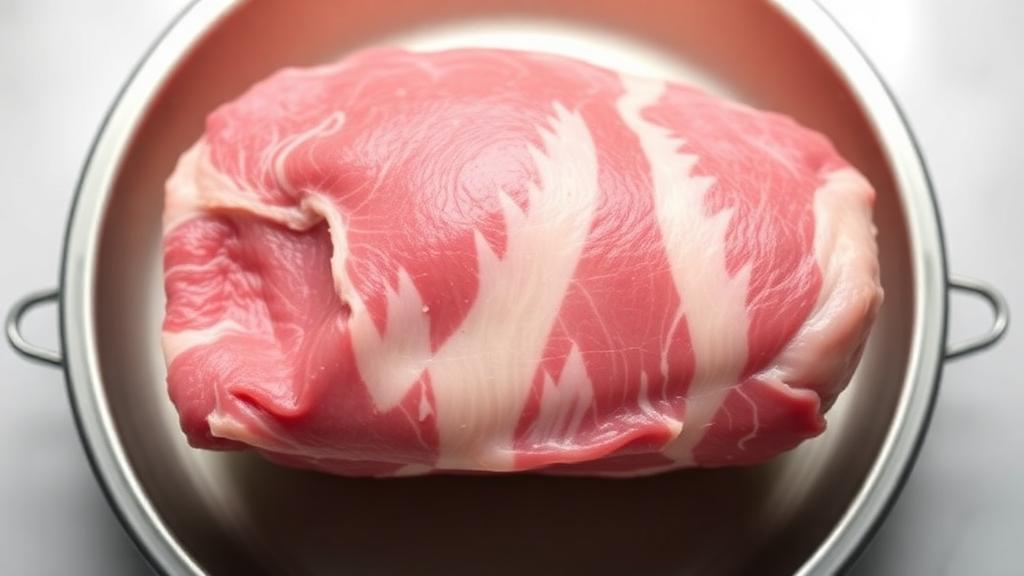
High hydrostatic pressure processing, a technology that kills foodborne pathogens without a single degree of added heat, has delivered some of its most detailed results yet in a new study of raw pork. Researchers at Kongju National University in Korea systematically exposed pork loin to pressures of 0.1, 100, 300, and 500 megapascals for five or fifteen minutes, then tracked both the survival of five major foodborne pathogens and a battery of quality measurements over two weeks of refrigerated storage. The findings, published in Food Science of Animal Resources, map out with unusual precision the trade-offs that food producers face when they swap heat for brute physical force.
The motivation behind the work is a genuine public health problem. Raw meat-based diets, particularly those fed to pets, retain their natural nutritional profile and palatability but carry inherent zoonotic risks in the shared living environments of animals and their owners. Regulatory bodies including the U.S. Food and Drug Administration and the American Veterinary Medical Association have warned about pathogen-contaminated raw pet food, yet conventional thermal sterilization destroys the very qualities that make raw diets appealing. High hydrostatic pressure offers an alternative: it transmits pressure uniformly through a product regardless of shape or size, works on sealed packages to prevent recontamination, has regulatory approval in major markets, and preserves heat-sensitive nutrients and flavors.
The study’s experimental design was deliberately broader than most previous work. Earlier investigations typically tested a narrow pressure range of 200 to 400 megapascals and examined either microbial safety or physicochemical quality in isolation. Here, pork samples were artificially contaminated with multiple strains of Escherichia coli, Bacillus cereus, Salmonella Typhimurium, Listeria monocytogenes, and Staphylococcus aureus, reaching initial populations of roughly 10^5 to 10^8 colony-forming units per gram. Vacuum-sealed samples were then treated in an industrial high-pressure sterilizer maintained at 21 degrees Celsius internally, creating a graduated pressure-time matrix that had never been systematically evaluated for raw pork intended for pet food.
The microbial results were striking and strongly pressure-dependent. Treatment at 500 megapascals for fifteen minutes produced the most pronounced inactivation across all organisms, and Salmonella Typhimurium and Listeria monocytogenes were reduced to below the detection limit during subsequent refrigerated storage. The mechanism is physical rather than chemical: compressive forces deform cell membranes and walls, increase membrane permeability, disrupt intracellular ion balance, dissociate ribosomes, and inactivate enzymes, ultimately collapsing cellular homeostasis. Pressures above 100 megapascals alter the phospholipid bilayer itself, impairing nutrient transport and energy metabolism.
Not every pathogen surrendered equally easily, however, and the species-specific patterns proved scientifically revealing. Although gram-positive bacteria are generally considered more pressure-resistant thanks to their thicker peptidoglycan layers, Listeria monocytogenes, despite being gram-positive, was completely eliminated under the harshest conditions, while Staphylococcus aureus showed the highest resistance of all organisms tested. Staphylococcus possesses a thick, highly cross-linked peptidoglycan layer of roughly 20 to 40 nanometers, and in the most intense treatment group its counts actually increased during storage, suggesting recovery and regrowth from sublethal injury. Bacillus cereus and E. coli also remained detectable under most conditions, with Bacillus spores protected by a multilayered structure that distributes pressure and maintains a dehydrated core stabilized by calcium-dipicolinic acid complexes.
The physicochemical consequences of pressure treatment were equally systematic. As pressure and holding time increased, water-holding capacity, shear force, and pH all rose above control values, while moisture and protein contents increased and fat and ash decreased. The researchers attribute these shifts to pressure-induced denaturation and reorganization of myofibrillar proteins. The non-covalent bonds that maintain protein structure, including ionic bonds, hydrogen bonds, and hydrophobic interactions, are voluminous and unstable under pressure, so when secondary and tertiary structures collapse, myosin partially unravels and exposes polar and charged groups that bind water. The resulting compact protein network traps moisture in a gel-like matrix but also cross-links myosin aggregates, making crack propagation difficult and increasing mechanical strength, which explains the higher shear force.
Color changes followed a nuanced pattern tied to the pigment myoglobin and to light-scattering physics. Lightness increased with pressure and time, redness peaked in the 300 megapascal groups before falling again at 500 megapascals, and yellowness was highest in the 500 megapascal, five-minute group. Previous research has shown that dramatic pressure-induced color changes in meat generally appear only above roughly 400 to 600 megapascals, leaving color largely preserved at lower intensities. The observed paleness here is attributed more to protein denaturation and microstructural changes that enhance light scattering than to straightforward myoglobin oxidation, a combined effect rather than a single pigment transformation.
Oxidation and spoilage chemistry told a two-sided story. Thiobarbituric acid reactive substances, a marker of lipid oxidation, rose with pressure and time, reaching their highest values in the 500 megapascal, fifteen-minute group and climbing further during storage. Pressures between 300 and 700 megapascals disrupt phospholipid membranes and expose lipids to oxygen and pro-oxidants, while structural changes in heme proteins can release iron ions that catalyze oxidative chain reactions. In contrast, volatile basic nitrogen, an indicator of protein decomposition and spoilage, was suppressed by treatment, with the 500 megapascal, five-minute group showing the lowest increase rate during storage at just 13.24 percent compared with 111.72 percent in the mildest group. Microbial inactivation and pressure-induced enzyme inactivation both limit the production of ammonia and volatile amines.
Correlation analysis tied the whole picture together. Pressure and holding time correlated negatively with all tested microorganisms, redness, and volatile basic nitrogen, while water-holding capacity, shear force, pH, lightness, yellowness, and lipid oxidation correlated positively, all consistent with cumulative pressure-induced effects on membranes, myofibrils, myoglobin, and enzymes. The authors conclude that while high hydrostatic pressure effectively inactivated Salmonella and Listeria, enhanced water retention, and suppressed spoilage markers, it also produced a paler appearance, increased lipid oxidation, and failed to achieve complete microbial elimination, with pressure-tolerant organisms surviving or recovering.
The practical takeaway is that pressure treatment should not be deployed as a stand-alone solution. The researchers recommend integrated hurdle strategies, combining pressure with salt addition, antimicrobial agents, optimized packaging, and strict refrigerated storage management, to push microbial safety further while preserving quality. For a food industry increasingly interested in minimally processed products, the study provides something rare: a complete pressure-time map showing exactly where pathogen reduction ends and quality degradation begins, at least for raw pork. As demand for raw pet food and clean-label meats grows, that map may prove one of the most useful tools yet for producers navigating the delicate balance between safety and freshness.
Subject of Research: Effects of high hydrostatic pressure processing on microbial inactivation and physicochemical quality of raw pork
Article Title: Application of high hydrostatic pressure on the microbial and physicochemical characteristics of pork
Article References: Baek, U.-B., & Kim, H.-Y. (2026). Application of high hydrostatic pressure on the microbial and physicochemical characteristics of pork. Food Science of Animal Resources, 46(1), Article 73. https://doi.org/10.1007/s44463-026-00091-8
Image Credits: AI Generated
DOI: 10.1007/s44463-026-00091-8
Keywords: high hydrostatic pressure, food safety, pork, microbial inactivation, non-thermal processing, Salmonella, Listeria monocytogenes, lipid oxidation, myofibrillar protein, water-holding capacity, raw pet food, food science
Cite Scienmag News
Daisy Hatcher. (October 1, 2026). Crushing Bacteria With Pressure: The 500-Megapascal Trick That Could Make Raw Pork Safe. Scienmag. https://scienmag.com/crushing-bacteria-with-pressure-the-500-megapascal-trick-that-could-make-raw-pork-safe/
Daisy Hatcher. "Crushing Bacteria With Pressure: The 500-Megapascal Trick That Could Make Raw Pork Safe." Scienmag, 1 October 2026, https://scienmag.com/crushing-bacteria-with-pressure-the-500-megapascal-trick-that-could-make-raw-pork-safe/. Accessed 1 October 2026.
Daisy Hatcher. "Crushing Bacteria With Pressure: The 500-Megapascal Trick That Could Make Raw Pork Safe." Scienmag. October 1, 2026. https://scienmag.com/crushing-bacteria-with-pressure-the-500-megapascal-trick-that-could-make-raw-pork-safe/


