


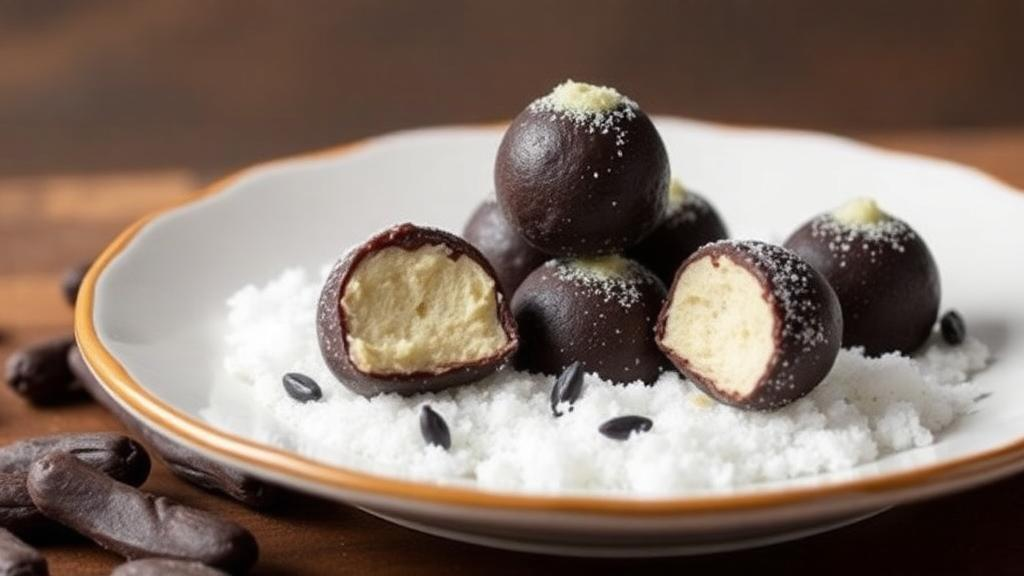
Kachagolla, a soft, melt-in-the-mouth sweet made from fresh cottage cheese known as chhana, is one of Bengal’s most cherished confections. Yet like many milk-based sweets, it has a fatal flaw: it spoils within a day or two at room temperature. In warm, humid climates where refrigeration is not always available, this short shelf life means food waste, lost income for sweet shops, and health risks for consumers. Now, a team of food scientists in West Bengal, India, has found a remarkably simple fix hiding in one of the country’s most abundant fruit by-products: the discarded seed of the jamun, or Indian blackberry.
Researchers Sarita Roy, Tanmay Sarkar, and Runu Chakraborty of Jadavpur University and Malda Polytechnic set out to fortify Kachagolla with jamun seed powder and to replace refined cane sugar with coconut sugar, a lower-glycemic sweetener derived from coconut palm sap. Their study, published in Discover Biotechnology, is the first to characterize the phytochemical composition of this traditional dessert and a jamun-fortified version of it. The results are striking: the fortified sweet stayed microbiologically and sensorially acceptable for five to six days longer than the conventional product, all while delivering significantly higher antioxidant activity and a richer polyphenol profile.
The choice of jamun seeds was no accident. Jamun (Syzygium cumini) seeds are typically thrown away after the fruit is eaten, yet they are packed with polyphenols, flavonoids, and other bioactive compounds long recognized in South Asian medicine for their antidiabetic, antimicrobial, and antioxidant properties. Previous work has shown that seeds such as chia and flaxseed can extend the shelf life of yoghurt, buttermilk, and butter by slowing lipid oxidation, the chemical breakdown of fats that produces rancid off-flavors. Jamun seeds, however, had never been systematically tested in a dairy sweetmeat.
To prepare the powder, the researchers microwave-dried fresh jamun seeds at power levels ranging from 300 to 900 watts until their moisture content fell from 11.5 percent to 3 percent, then ground and sieved them. Because color is a decisive factor in consumer appeal for Indian sweets, the team used response surface methodology with a Box-Behnken design to optimize three variables simultaneously: the microwave power used for drying, the percentage of jamun seed powder added, and the percentage of coconut sugar. The goal was to maximize total color difference, a measure of how visibly the fortified sweet departs from the pale hue of the original. The statistical model, which achieved an R-squared value of 0.9995, identified an optimum of 600 watts, 2 percent jamun seed powder, and 30 percent coconut sugar.
The color chemistry behind the optimization is elegant. Coconut sugar contains reducing sugars and free amino acids that drive the Maillard reaction, a non-enzymatic browning process between sugars and amino groups, while microwave drying releases brown polysaccharides from the jamun seed tissue. Together these reactions gave the fortified sweet a deep yellowish-brown tone that panelists actually preferred. The browning index of the fortified product reached nearly 55, compared with roughly 14 for the conventional version, and its chroma, or color saturation, rose from 13.09 to 24.28.
Beyond appearance, the nutritional upgrade was substantial. Total polyphenol content in the fortified sweet was 4.4 times higher than in the conventional product, and ABTS radical scavenging activity rose from about 29 percent to over 40 percent. High-performance liquid chromatography revealed significant increases in seven individual polyphenols, including a 68.5 percent rise in gallic acid, a 41 percent rise in kaempferol, a 51 percent rise in protocatechuic acid, and a tenfold increase in ferulic acid. The fortified sweet also contained 24.5 percent more protein, more fiber, and 14.85 percent more total minerals, with notable gains in potassium, sodium, and copper.
Texture analysis told a subtler story. The fortified sweet was slightly harder, a consequence of its lower fat content and more compact microstructure, which scanning electron microscopy confirmed as smaller, more uniformly packed crystals and a smoother surface. Cohesiveness, springiness, gumminess, and chewiness were all significantly higher, while a panel of 45 trained assessors rated the fortified product’s color, chewiness, juiciness, flavor, and visual appearance above the conventional sweet. One trade-off emerged: in-vitro protein digestibility was 7 percent lower in the fortified version, likely because phenolic compounds bind milk proteins and monoterpene aldehydes in the seed powder inhibit digestive proteases.
The most dramatic findings concerned spoilage. Over seven days of room-temperature storage, the fortified sweet showed significantly lower lipid oxidation, measured through free fatty acid content, peroxide value, and ultraviolet absorptivity. Microbial counts told the same story: the conventional sweet exceeded FSSAI permissible bacterial limits by day 4 and yeast and mold limits by day 5, whereas the fortified version stayed within regulatory bounds until day 7. The team attributes this to the combined antimicrobial and antioxidant effects of the jamun seed polyphenols and coconut sugar, both of which have demonstrated ability to suppress bacterial and fungal growth in earlier studies.
The implications reach well beyond a single sweet. The study offers a replicable template for marrying traditional food systems with modern nutraceutical science, turning an agricultural waste stream into a clean-label preservative that simultaneously boosts nutrition. For the millions of people who cannot afford refrigeration, a sweet that keeps for nearly a week at room temperature is not a luxury but a meaningful improvement in food security. The researchers suggest that future work should explore scalability, economic feasibility, and other phytochemical-rich seed powders, pointing toward a future where the seeds we currently discard become the preservatives of tomorrow’s pantry.
Subject of Research: Fortification of a traditional Indian dairy sweet with jamun seed powder and coconut sugar to improve shelf life, nutrition, and sensory quality
Article Title: Enhancing shelf-life and sensory quality of Kachagolla (sweet cottage cheese truffles) through jamun seed and coconut sugar substitution
Article References: Roy, S., Sarkar, T., & Chakraborty, R. (2025). Enhancing shelf-life and sensory quality of Kachagolla (sweet cottage cheese truffles) through jamun seed and coconut sugar substitution. Discover Biotechnology, 2(1), Article 15. https://doi.org/10.1007/s44340-025-00026-x
Image Credits: AI Generated
DOI: 10.1007/s44340-025-00026-x
Keywords: Kachagolla, jamun seed powder, coconut sugar, shelf life, antioxidants, polyphenols, dairy sweetmeat, lipid oxidation, response surface methodology, Maillard reaction, food preservation, functional foods
Cite Scienmag News
Daisy Hatcher. (October 1, 2026). Jamun Seeds and Coconut Sugar Triple the Shelf Life of a Beloved Indian Cheese Sweet. Scienmag. https://scienmag.com/jamun-seeds-and-coconut-sugar-triple-the-shelf-life-of-a-beloved-indian-cheese-sweet/
Daisy Hatcher. "Jamun Seeds and Coconut Sugar Triple the Shelf Life of a Beloved Indian Cheese Sweet." Scienmag, 1 October 2026, https://scienmag.com/jamun-seeds-and-coconut-sugar-triple-the-shelf-life-of-a-beloved-indian-cheese-sweet/. Accessed 1 October 2026.
Daisy Hatcher. "Jamun Seeds and Coconut Sugar Triple the Shelf Life of a Beloved Indian Cheese Sweet." Scienmag. October 1, 2026. https://scienmag.com/jamun-seeds-and-coconut-sugar-triple-the-shelf-life-of-a-beloved-indian-cheese-sweet/


