


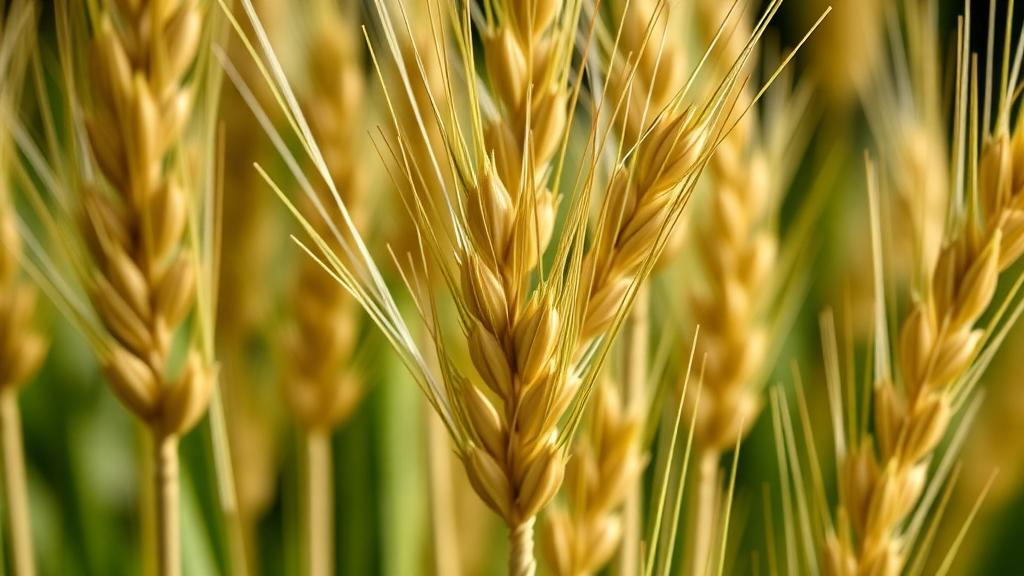
Fusarium Head Blight is one of the most destructive fungal diseases of small grain cereals, wiping out yield and contaminating grain with mycotoxins that threaten human and animal health. Now, a comprehensive multi-omics study of barley has revealed, in unprecedented molecular detail, how the plant mounts a coordinated chemical defense against the pathogen Fusarium culmorum. By simultaneously tracking genes, proteins and metabolites in infected barley heads, researchers at the Technical University of Munich and their collaborators have shown that barley’s response converges on a single, striking theme: the massive upregulation of aromatic amino acid-derived chemical defense compounds.
The study, published in the journal Stress Biology, is notable for its scale and rigor. While previous investigations of barley’s response to Fusarium have largely focused on a single molecular layer, most often gene expression, this work integrated three unbiased approaches on the very same plant material. The team grew four barley varieties, Avalon, Barke, Morex and Palmella Blue, which differ in their susceptibility to initial infection but all share barley’s characteristic type II resistance, which prevents the fungus from spreading through the rachis of the ear. The researchers sprayed the spikes with F. culmorum spores around mid-flowering and sampled the tissue four and seven days later.
To confirm that infection had actually taken hold, the team quantified fungal DNA relative to barley DNA using quantitative PCR. The results tracked known differences in susceptibility: the resistant varieties Avalon and Barke carried the lowest fungal loads at seven days post inoculation, at 4.39 and 5.56 picograms of fungal DNA per nanogram of barley DNA respectively, while the more susceptible Palmella Blue accumulated 22.38 picograms. This gradient of infection success gave the researchers a meaningful backdrop against which to interpret the molecular data.
On the transcript level, the team used 3′-RNA sequencing mapped to the Morex V3 reference genome and detected transcripts from 36,920 gene models. Differential expression analysis identified 3,085 genes whose activity changed after infection in at least one variety at one time point. The proteomics side was equally ambitious: using an untargeted, bottom-up approach with tandem mass tag labeling and high-resolution mass spectrometry, the researchers quantified 7,671 proteins, of which 3,169 showed significantly altered abundance after infection. This shotgun proteomics dataset represents a major advance over earlier barley FHB studies, which relied on lower-depth two-dimensional gel methods.
The crucial analytical step came from overlaying the two datasets. The researchers identified 7,149 gene-protein pairs for which both the transcript and the corresponding protein had been measured, and within these they pinpointed 570 pairs that were significantly regulated at both the RNA and protein levels. These differentially expressed and differentially abundant pairs represent the most reliable candidates for genuinely deployed defense machinery, because they show evidence of both transcriptional activation and successful translation into protein. Enrichment analysis of this subset pointed unambiguously toward aromatic amino acid metabolism: terms and pathways related to the shikimate pathway, tryptophan biosynthesis, phenylalanine biosynthesis and phenylpropanoid biosynthesis were all significantly overrepresented.
Among the most strongly induced genes and proteins were the canonical players of plant immunity. Pathogenesis-related proteins, including chitinases, thaumatin-like proteins and PR1, showed dramatic increases, with log2-fold transcript changes reaching nearly 11 in some cases. The team also detected strong upregulation of known Fusarium response factors, including UDP-glycosyltransferases such as HvUGT13248, which detoxifies the mycotoxin deoxynivalenol by attaching a glucose group, and glutathione-S-transferases. But the single most consistently and strongly upregulated proteins across all varieties and time points were tryptophan decarboxylases, the enzymes that convert tryptophan into tryptamine, a precursor of serotonin.
The metabolomics data brought the story full circle. Out of more than 14,000 metabolic features detected, the researchers identified 53 unique metabolites at varying confidence levels, including tryptophan derivatives, hydroxycinnamic acids, hydroxycinnamic acid amides and the barley-specific hordatines. Serotonin and tryptamine were among the metabolites most strongly enriched in infected tissue, matching the enzyme data. Using an in silico database of known and hypothetical hydroxycinnamic acid amides, the team additionally identified conjugates linking hydroxycinnamic acids to agmatine, tryptamine and serotonin. Several of these, including caffeoyl-tryptamine and cinnamoyl-serotonin, accumulated after infection, while others decreased, possibly because they were being incorporated into the cell wall and thus became inaccessible to extraction.
The hordatines deserve special attention. These dimerized hydroxycinnamoylagmatine conjugates are found only in barley and its wild relatives, and they have a documented history as antifungal compounds. Hordatine A inhibits spore germination of several fungi, including Fusarium oxysporum, at concentrations as low as ten micromolar in liquid culture. In the new study, coumaroylagmatine, the biosynthetic precursor, along with hordatine A and its glucoside, all rose after infection. The agmatine coumaroyltransferase genes that initiate this branch of the pathway were highly upregulated at the transcript level in every variety, echoing earlier findings in wheat and Brachypodium where loss or silencing of equivalent enzymes increases susceptibility to Fusarium.
What makes the convergence so compelling is that all three omics layers, measured independently on the same samples, point to the same metabolic hub. The shikimate pathway funnels carbon into chorismate, which feeds both tryptophan and phenylalanine biosynthesis. Tryptophan yields tryptamine and serotonin; phenylalanine yields hydroxycinnamic acids; and the two streams merge in the hydroxycinnamic acid amides, including the hordatines. Because all four barley varieties, despite their differences in type I resistance to initial infection, share type II resistance to fungal spread, the authors hypothesize that this aromatic amino acid-derived chemical defense may contribute to barley’s natural ability to contain the pathogen within initially infected spikelets, a trait wheat lacks.
The study also flagged intriguing questions for future work. Nearly 2,000 proteins changed in abundance without any corresponding change in their transcripts, hinting at post-translational regulation or toxin-driven inhibition of translation by deoxynivalenol, which blocks the ribosome. Small proteins like the Fusarium resistance orphan gene HvFROG, whose transcript surged more than eleven-fold in one variety, escaped proteomic detection entirely, underscoring the limits of untargeted workflows. The researchers suggest that follow-up experiments with higher spatial and temporal resolution, and functional genetic validation of hydroxycinnamic acid amide metabolism, will be needed to confirm whether these compounds are genuinely causal for barley’s type II resistance. If they are, the aromatic amino acid pathways identified here could offer breeders chemical markers and genetic targets for building more resilient cereal varieties at a time when Fusarium Head Blight remains a persistent global threat to food safety and supply.
Subject of Research: Multi-omics analysis of barley defense metabolism during Fusarium Head Blight infection
Article Title: Multi-omics of barley Fusarium Head Blight converge on pathogen-triggered biosynthesis of aromatic amino acid derived chemical defense compounds
Article References: Hein, S., Steidele, C. E., Hoheneder, F., Brajkovic, S., Kuster, B., Kurzweil, L., Stark, T. D., Dawid, C., & Hückelhoven, R. (2026). Multi-omics of barley Fusarium Head Blight converge on pathogen-triggered biosynthesis of aromatic amino acid derived chemical defense compounds. Stress Biology, 6(1), Article 41. https://doi.org/10.1007/s44154-026-00313-5
Image Credits: AI Generated
DOI: 10.1007/s44154-026-00313-5
Keywords: Fusarium Head Blight, barley, Fusarium culmorum, multi-omics, proteomics, metabolomics, tryptophan metabolism, serotonin, hordatines, hydroxycinnamic acid amides, plant immunity, mycotoxin detoxification
Cite Scienmag News
Alan Morgan. (October 1, 2026). Barley Fights Fungal Attack With a Chemical Arsenal Built From Amino Acids. Scienmag. https://scienmag.com/barley-fights-fungal-attack-with-a-chemical-arsenal-built-from-amino-acids/
Alan Morgan. "Barley Fights Fungal Attack With a Chemical Arsenal Built From Amino Acids." Scienmag, 1 October 2026, https://scienmag.com/barley-fights-fungal-attack-with-a-chemical-arsenal-built-from-amino-acids/. Accessed 1 October 2026.
Alan Morgan. "Barley Fights Fungal Attack With a Chemical Arsenal Built From Amino Acids." Scienmag. October 1, 2026. https://scienmag.com/barley-fights-fungal-attack-with-a-chemical-arsenal-built-from-amino-acids/


