


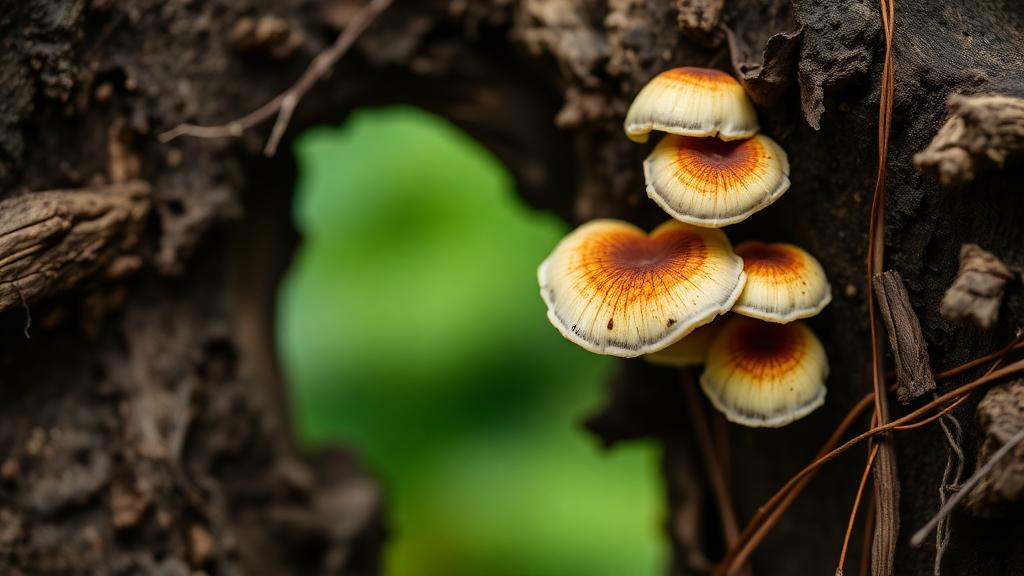
Wood is one of the most abundant materials on Earth, and it is also one of the most stubborn. Its lignocellulosic structure evolved hundreds of millions of years ago specifically to resist decomposition, locking carbon away in tree trunks, branches, and fallen logs. Yet a quiet army of organisms learned to defeat this barrier with astonishing precision. Wood-degrading fungi, which emerged roughly in the same geological window that saw lignin first appear in plants during the Devonian period around 400 to 390 million years ago, have been dismantling woody material ever since. Their evolutionary breakthrough was so consequential that it helped shape the carbon cycle of the entire planet, and a new mini-review published in Applied Microbiology and Biotechnology argues that we still understand far less about these organisms than their ecological and economic importance would suggest.
The review, written by Elisabeth Tamayo, Felix Bachmann, Tian Cheng, Tim K. Felle, Marcello Nussbaumer, and J. Philipp Benz of the Professorship of Fungal Biotechnology in Wood Science at the Technical University of Munich, synthesizes literature insights with exploratory genomic and bibliometric meta-analyses. The team’s goal was to provide an integrative view that connects what can be seen with the naked eye, the characteristic rot patterns and colonization structures on wood, with the molecular machinery operating at the scale of enzymes, transporters, and metabolites. This dual perspective matters because the same biological capabilities that make these fungi indispensable for global nutrient cycling also make them formidable threats to forests, timber products, and even human health.
The evolutionary backstory is dramatic. When lignin evolved in the Devonian, plants gained a structural material of unprecedented rigidity and decay resistance. The consequence was visible in the geological record: vast quantities of organic carbon accumulated during the Carboniferous period, roughly 360 to 299 million years ago, eventually forming the coal reserves that powered the industrial revolution. Lignin was so recalcitrant that dead plant matter piled up faster than anything could break it down. Then fungi evolved enzymatic systems capable of cleaving lignin’s complex aromatic polymer, opening up wood as a carbon source and fundamentally changing how carbon flows through ecosystems. Without this fungal innovation, the authors note, the planet’s biogeochemical cycles would look radically different today.
Wood-degrading fungi are conventionally divided into functional groups based on the decay patterns they produce. Brown rot fungi preferentially degrade the cellulose and hemicellulose in wood while leaving the brown, modified lignin behind, a process that can proceed through highly reactive oxidative mechanisms rather than relying solely on hydrolytic enzymes. White rot fungi, by contrast, are the only organisms known to fully mineralize lignin, using powerful oxidative enzyme systems to dismantle the aromatic polymer along with the wood’s polysaccharides. Soft rot fungi, which thrive in wetter and more extreme environments, attack wood more slowly and with less enzymatic sophistication. Each strategy reflects a different evolutionary solution to the same problem: extracting energy and carbon from the most resistant biological composite nature has produced.
At the molecular level, the review emphasizes that wood degradation is far more than a simple cocktail of secreted enzymes. Fungi deploy coordinated systems involving oxidative enzymes, small metabolites that generate reactive oxygen species, membrane transporters that shuttle degradation products into the cell, and regulatory networks that sense the substrate and adjust the enzymatic arsenal accordingly. Genomic analyses have revealed that the genetic capacity for wood decay is distributed unevenly across the fungal tree of life, with different lineages expanding or losing gene families for ligninolytic peroxidases, lytic polysaccharide monooxygenases, and sugar transporters. Understanding these genetic underpinnings is not merely academic curiosity; it directly informs how researchers might harness or inhibit these organisms.
The threat side of the story is substantial. In forests, pathogenic wood-decay fungi can weaken living trees, creating hazards in urban environments and causing economic losses in forestry. In the built environment, fungal colonization of structural timber is a persistent problem, and studies of how fungi attack wood in buildings have expanded mechanistic understanding of their natural behavior, revealing how hyphae navigate wood anatomy, penetrate cell walls, and respond to moisture and treatment chemicals. The review also points to health risks, since fungal growth in damp buildings can produce spores and volatile compounds that affect indoor air quality. The duality is familiar from the food industry, where fungi serve as fermentation agents, protein sources, and producers of food colorings while simultaneously posing risks through mycotoxin contamination.
Yet the same organisms that rot beams and kill trees are among the most promising biotechnological resources of the emerging bioeconomy. The enzyme systems that white rot fungi use to degrade lignin are being explored for sustainable biomass conversion, turning agricultural and forestry residues into platform chemicals, biofuels, and materials. Fungal enzymes offer routes to biological pulping that could reduce the energy and chemical intensity of paper production. Fungal metabolites and modified lignins themselves are candidates for novel materials, and the review’s authors are involved in applied projects, including work funded through the German REGULUS-project ISAR and the Bavarian 3DfunSiC project, that translate fungal biology into technological applications. The transporters and regulatory circuits that fungi use to import wood sugars are equally relevant for engineering microbial production strains.
What makes the review particularly valuable is its insistence on integration. Macroscopic observations, the softening, discoloration, and fracture patterns of decayed wood, are traditionally studied by wood scientists, while the molecular details are the domain of microbiologists and biochemists. The authors argue that meaningful progress requires connecting these scales, using genomic and literature meta-analyses to identify patterns that neither field can see alone. Their exploratory database analyses provide a holistic map of what is known and, crucially, what is not. Gaps remain in understanding how fungal communities interact during decay, how environmental conditions shape the expression of decay mechanisms, and how the diversity of uncharacterized fungal species might harbor undiscovered enzymatic capabilities.
The timing of such a synthesis is significant. As societies seek to replace fossil carbon with renewable resources, wood is poised to play a larger role in construction, materials, and chemistry, which raises the stakes for both protecting wood from fungal attack and exploiting fungi for wood-based biorefineries. Climate change adds another layer of urgency, as shifting temperature and moisture regimes may alter the distribution and activity of decay fungi in forests, affecting carbon storage in soils and deadwood. A deeper mechanistic understanding of wood-degrading fungi is therefore not a niche concern but a prerequisite for managing one of the planet’s largest carbon reservoirs and for building a sustainable materials economy on top of it.
The message of the Munich team is ultimately one of humility and opportunity. Fungi that learned to eat the most resistant material on Earth hundreds of millions of years ago are still revealing their secrets, and the remaining unknowns span ecology, evolution, biochemistry, and engineering. By framing wood-degrading fungi as simultaneously threats and assets, the review invites researchers, industry, and the public to see these organisms not as mere agents of rot but as master chemists whose enzymatic legacy built the modern carbon cycle and may yet help redesign it. The coal seams of the Carboniferous are a monument to what happened before fungi cracked lignin; what happens next depends on how well we learn from the organisms that did.
Subject of Research: Mechanisms, ecological threats, and biotechnological applications of wood-degrading fungi
Article Title: What we (still don’t) know about wood-degrading fungi: an overview of threats and utilization potentials
Article References: Tamayo, E., Bachmann, F., Cheng, T., Felle, T. K., Nussbaumer, M., & Benz, J. P. (2026). What we (still don’t) know about wood-degrading fungi: an overview of threats and utilization potentials. Applied Microbiology and Biotechnology, 110(1), Article 289. https://doi.org/10.1007/s00253-026-14043-1
Image Credits: AI Generated
DOI: 10.1007/s00253-026-14043-1
Keywords: wood-degrading fungi, lignin, brown rot, white rot, fungal evolution, wood degradation, biorefinery, fungal enzymes, carbon cycle, bioeconomy, mycology, biotechnology
Cite Scienmag News
Roger Howard. (October 1, 2026). Wood-Decaying Fungi: Forest Threats and Bioeconomy Heroes in One Ancient Package. Scienmag. https://scienmag.com/wood-decaying-fungi-forest-threats-and-bioeconomy-heroes-in-one-ancient-package/
Roger Howard. "Wood-Decaying Fungi: Forest Threats and Bioeconomy Heroes in One Ancient Package." Scienmag, 1 October 2026, https://scienmag.com/wood-decaying-fungi-forest-threats-and-bioeconomy-heroes-in-one-ancient-package/. Accessed 4 October 2026.
Roger Howard. "Wood-Decaying Fungi: Forest Threats and Bioeconomy Heroes in One Ancient Package." Scienmag. October 1, 2026. https://scienmag.com/wood-decaying-fungi-forest-threats-and-bioeconomy-heroes-in-one-ancient-package/


