


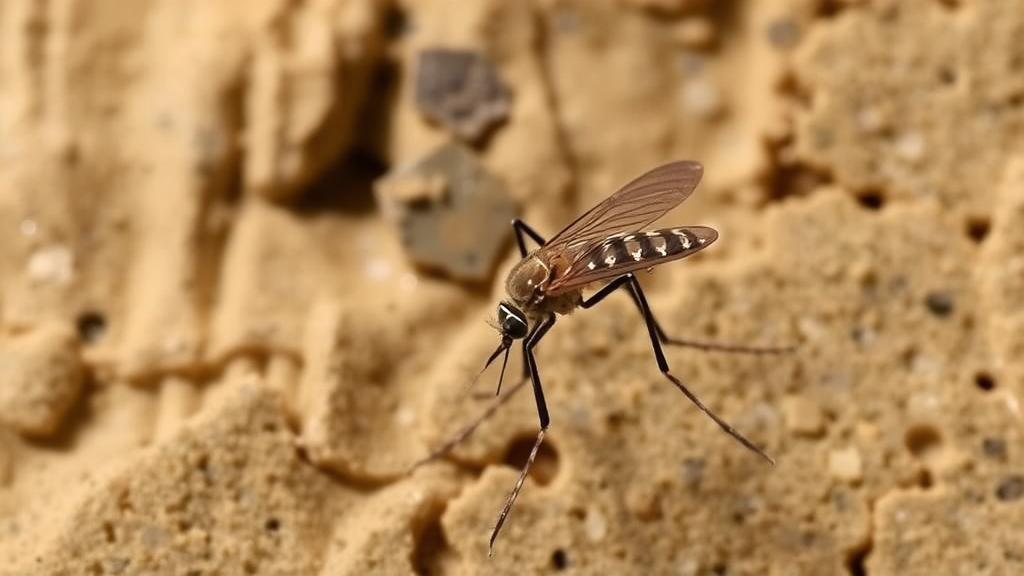
The Asian bush mosquito, Aedes japonicus japonicus, has for the first time been detected in Central Italy, according to a brief report published in the journal Parasites & Vectors. A team of entomologists from the Istituto Zooprofilattico Sperimentale del Lazio e della Toscana M. Aleandri, working with colleagues from Azienda USL Toscana Nord Ovest and the Tuscany regional health authority, found the invasive species in five municipalities of northern Tuscany during a targeted survey conducted in April 2026. The finding extends the known Italian range of this mosquito well beyond the northern regions where it had previously established itself and confirms fears that the species is continuing its southward march through the Italian peninsula.
Aedes japonicus is one of several so-called Aedes invasive mosquitoes, or AIMs, that have spread rapidly across Europe in recent decades. Native to East Asia, the species has colonised large parts of central and western Europe since its first detections on the continent, establishing populations in countries including Germany, Switzerland, Austria, Belgium, the Netherlands, France and Slovenia. In Italy, the mosquito had until now been reported only in the northern part of the country, where it has been expanding alongside another Asian invader, Aedes koreicus. The presence of both species in territories bordering Tuscany raised concerns among public health entomologists that the insects would follow the main transport corridors linking northern Italy to the central regions, and the new study set out to test exactly that hypothesis.
The survey was deliberately designed around the geography of invasion. Rather than sampling randomly across Tuscany, the researchers focused on the province of Massa-Carrara, the northernmost province of the region, and specifically on small villages situated along the roads that connect Tuscany with the adjacent regions where Aedes japonicus and Aedes koreicus had already been reported. This strategy reflects a well-established principle in invasion biology: human-mediated transport along road networks is one of the principal drivers of mosquito range expansion, and the first footholds of a new species are most likely to appear along the routes that funnel traffic from invaded areas into uninvaded ones. The team conducted the fieldwork over just two days, inspecting potential breeding habitats for adult mosquitoes, larvae and pupae.
The results were unambiguous. Morphological identification of 90 adult mosquitoes and 35 larvae, combined with molecular analyses performed on eggs, larvae, pupae and one adult, confirmed the presence of Aedes japonicus japonicus in five municipalities of northern Tuscany. The molecular work relied on standard genetic markers used in mosquito identification, including the internal transcribed spacer 1 region of the nuclear genome and the cytochrome c oxidase subunit I gene of the mitochondrial genome, amplified by polymerase chain reaction. This combination of morphological and molecular confirmation is important because several invasive Aedes species are morphologically similar, particularly in their immature stages, and misidentification can lead to costly delays in surveillance and control responses.
Perhaps the most striking aspect of the finding is what it implies about how long the species has been present. Despite the extremely short duration of the survey, the researchers detected Aedes japonicus across multiple sites and in several different types of artificial breeding containers, including buckets, tyres and a fountain basin. Finding the mosquito in so many locations and habitat types within a two-day window suggests that it is not a recent arrival confined to a single introduction point but is already firmly established in the area. The detection of immature stages co-occurring with larvae of other species, including the Asian tiger mosquito Aedes albopictus, the common house mosquito Culex pipiens, Culex hortensis and Culiseta annulata, further indicates that the species is breeding successfully in its new environment rather than merely being transported there incidentally.
This ecological flexibility is a hallmark of the species and a key reason for its invasion success. Aedes japonicus thrives in container habitats of both natural and artificial origin, tolerates cooler temperatures than many other invasive mosquitoes, and can exploit a wide range of water-holding structures in both rural and peri-urban settings. The fact that the Tuscany survey found it in buckets, tyres and a fountain basin confirms this plasticity in the Italian context and suggests that the species has the potential to spread further south, where it may encounter increasingly favourable climatic conditions during the cooler parts of the year. The coexistence of Aedes japonicus with the Asian tiger mosquito, which is now ubiquitous across Italy, also raises ecological questions about competition between the two invaders, since both exploit similar larval habitats.
From a public health perspective, the establishment of Aedes japonicus in Central Italy carries two main implications. The first is nuisance: the species is an aggressive day-biting mosquito whose females readily feed on humans, and its presence in residential areas can significantly degrade quality of life during the warm season. The second, and more consequential, is its potential role as a disease vector. While Aedes japonicus is not as efficient a vector of dengue or chikungunya as Aedes albopictus, it has been shown experimentally and in field studies to be competent for a range of arboviruses, including West Nile virus, and it has been implicated in the transmission ecology of other pathogens in its native and invaded ranges. The introduction of an additional competent vector into a region that already circulates West Nile virus and other mosquito-borne pathogens adds a new layer of complexity to vector-borne disease risk assessment in Italy.
The authors of the study argue that these findings highlight the need for active surveillance specifically targeting Aedes invasive mosquitoes in Central Italy. Traditional mosquito monitoring in Italy has historically centred on the Asian tiger mosquito, which arrived in the country in the early 1990s and is now monitored through extensive ovitrap networks. However, the detection methods and thresholds optimised for Aedes albopictus are not necessarily suited to detecting a newly arriving species at low density. The Tuscany survey demonstrates the value of a different approach: targeted sampling along invasion corridors, informed by the known distribution of the species in neighbouring territories, can detect a new arrival quickly. The researchers acknowledge the contribution of colleagues from neighbouring regions who provided information on the distribution of invasive Aedes mosquitoes near the Tuscan border and offered suggestions on sampling strategies for the timely detection of Aedes japonicus and Aedes koreicus.
The study was supported by the Tuscany region through a fund dedicated to the regional entomological network for the protection of public health, developed and restructured for the 2026 to 2027 biennium. This institutional backing reflects a growing recognition among Italian regional authorities that invasive mosquito surveillance is a core public health function rather than a purely academic exercise. As climate change alters temperature and precipitation patterns across the Mediterranean, and as international trade and travel continue to move mosquitoes and their eggs across borders, the window for early detection and response is shrinking. The rapid spread of Aedes koreicus through northern Italy in recent years, following a pattern similar to that of Aedes japonicus elsewhere in Europe, illustrates how quickly an established invader can consolidate its range once it gains a foothold.
The first report of Aedes japonicus in Central Italy is therefore best understood not as an isolated discovery but as a milestone in an ongoing continental invasion. The species has now bridged the gap between its northern Italian strongholds and the central regions of the peninsula, and its presence in five municipalities of northern Tuscany, confirmed by both morphology and genetics, indicates that the invasion front has moved decisively southward. Whether the mosquito will establish permanent populations further into Tuscany and beyond will depend on climatic suitability, the availability of breeding habitats and the effectiveness of the surveillance and control measures that regional authorities put in place. What is already clear, the researchers conclude, is that the species is firmly established in northern Tuscany, that it exploits the same artificial containers that have fuelled the spread of other invasive mosquitoes, and that sustained, targeted monitoring is now essential to track and, where possible, contain its further expansion.
Subject of Research: First detection of the invasive mosquito Aedes japonicus in Central Italy and its implications for surveillance and public health
Article Title: New evidence of an ongoing invasion: first report of Aedes japonicus in Central Italy
Article References: Del Lesto, I., Chiavacci, M., De Liberato, C., Rondón, S., Ottolini, N., Carioti, V., Magliano, A., Porchia, B. R., & Romiti, F. (2026). New evidence of an ongoing invasion: first report of Aedes japonicus in Central Italy. Parasites & Vectors. https://doi.org/10.1186/s13071-026-07709-2
Image Credits: AI Generated
DOI: 10.1186/s13071-026-07709-2
Keywords: Aedes japonicus, Asian bush mosquito, invasive mosquitoes, Tuscany, Italy, vector-borne disease, entomological surveillance, biological invasion, Aedes albopictus, public health, mosquito vectors, Massa-Carrara
Cite Scienmag News
Patricia Pace. (September 30, 2026). Asian Bush Mosquito Reaches Central Italy as Invasion Continues Southward. Scienmag. https://scienmag.com/asian-bush-mosquito-reaches-central-italy-as-invasion-continues-southward/
Patricia Pace. "Asian Bush Mosquito Reaches Central Italy as Invasion Continues Southward." Scienmag, 30 September 2026, https://scienmag.com/asian-bush-mosquito-reaches-central-italy-as-invasion-continues-southward/. Accessed 4 October 2026.
Patricia Pace. "Asian Bush Mosquito Reaches Central Italy as Invasion Continues Southward." Scienmag. September 30, 2026. https://scienmag.com/asian-bush-mosquito-reaches-central-italy-as-invasion-continues-southward/


