


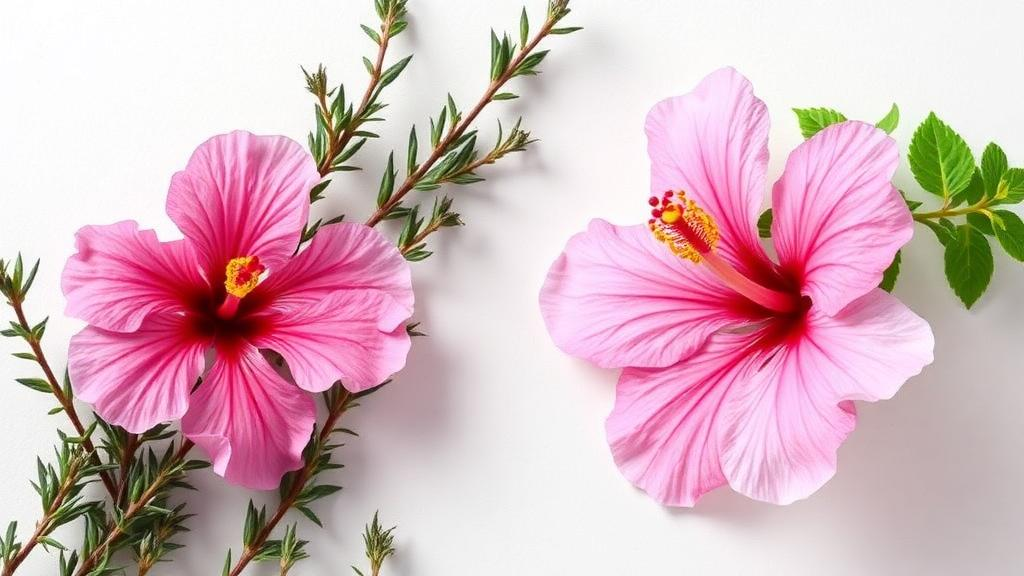
Two of the world’s most familiar garden and kitchen plants may be hiding a surprisingly potent weapon against some of medicine’s most troublesome bacteria. A new study from Somaiya Vidyavihar University in Mumbai reports that extracts of rosemary (Salvia rosmarinus) and hibiscus (Hibiscus rosa-sinensis L.) harbor bioactive molecules capable of binding to essential bacterial proteins with affinities that rival, and in one case exceed, those of clinical antibiotics. The research, published in Discover Biotechnology, combined classic laboratory microbiology with computational molecular docking to build a case that these plants could anchor a new generation of gentler, greener germicidal products.
The motivation behind the work is rooted in a growing set of problems with conventional sanitizers and disinfectants. Commercial germicidal products frequently rely on ethanol, isopropyl alcohol, and chemical preservatives, ingredients that the study’s authors note can cause skin dryness, irritation, burning, discoloration, dermatitis, and protein crosslinking with repeated use. Beyond the toll on human skin, there is an ecological dimension: disinfectants washed off floors and surfaces are entering sewage systems and polluting water bodies, placing aquatic ecosystems at risk. Perhaps most concerning, recent reports indicate that microorganisms are actively developing resistance to the chemicals used in sanitizers, echoing the well-known crisis of antibiotic resistance that has made pathogenic bacterial strains one of the defining public health challenges of the era.
Plant bioactive compounds have long been proposed as greener alternatives, and the researchers point out that they are less likely to induce resistance than many synthetic disinfectants. Rosemary is already known to contain rosmarinic acid, camphor, caffeic acid, ursolic acid, betulinic acid, carnosic acid, and carnosol, while hibiscus supplies saponins, flavonoids, and tannins, substances renowned for their membrane-disrupting and antimicrobial activities. Yet the team identified a gap in the literature: although antibacterial activity of plant extracts has been studied extensively, in silico analysis of plant bioactive compounds targeting specific bacterial proteins remains comparatively rare. Their study was designed to close that gap by pairing empirical assays with mechanistic computational predictions.
Methodologically, the team sourced rosemary leaves and hibiscus petals from Mumbai, Maharashtra, India, depositing voucher specimens for reproducibility. The plant material was ground into a fine powder and subjected to Soxhlet extraction with 70 percent ethanol, after which the extracts were concentrated by rotary evaporation under vacuum at a constant 40 degrees Celsius. Antibacterial activity was then measured using the agar well diffusion method against a formidable panel of eight pathogenic strains: Escherichia coli MTCC 2412, Staphylococcus aureus MTCC 2408, Salmonella species MTCC 4415, Shigella species MTCC 1457, Streptococcus pyogenes MTCC 442, Proteus vulgaris MTCC 426, Klebsiella pneumoniae MTCC 2716, and Bacillus subtilis MTCC 2010. Hydrogen peroxide served as the positive control and sterile saline as the negative control, providing benchmarks for comparison.
The results of the diffusion assays were striking, particularly for rosemary. Rosemary extract produced zones of inhibition ranging from 17.66 to 26.33 millimeters across the tested strains, while hibiscus extract produced zones ranging from 11.33 to 18.33 millimeters. Statistical analysis using one-way ANOVA followed by Tukey’s post hoc test in GraphPad Prism, with significance set at P less than 0.05, confirmed that the differences were meaningful. For rosemary, the analysis showed highly significant variation in activity across organisms (P less than 0.0001), with S. aureus emerging as the most sensitive strain, followed by moderate activity against S. pyogenes and Bacillus, while E. coli, Salmonella, Shigella, Proteus, and K. pneumoniae showed minimal or no inhibition. Hibiscus, by contrast, showed its strongest and most consistent effect against Salmonella, Shigella, S. pyogenes, Proteus, and Bacillus, with significantly lower inhibition of E. coli, S. aureus, and K. pneumoniae.
Minimum inhibitory concentrations told a complementary story about potency. Rosemary extract was effective at concentrations between 1.5 and 12.5 milligrams per milliliter, whereas hibiscus extract required 25 to 50 milligrams per milliliter to suppress bacterial growth. These values were determined using a resazurin dye reduction assay, in which the dye changes color as metabolically active bacteria reduce it, allowing growth inhibition to be tracked visually. The team also conducted preliminary phytochemical screening: rosemary revealed the presence of alkaloids, flavonoids, steroids, tannins, and saponins, while hibiscus contained alkaloids, flavonoids, glycosides, steroids, terpenoids, tannins, and saponins, a chemical arsenal consistent with the observed antibacterial effects.
To identify the specific molecules responsible, the researchers turned to gas chromatography-mass spectrometry using a Shimadzu GCMS-QP2010 Ultra instrument. The rosemary fingerprint profile revealed compounds including carbamic acid monoammonium salt, 1,2-dimethyl-3-nitrobenzene, n-hexadecanoic acid, 3-pentadecylphenol, 1,5,9,13-tetradecatetraene, tricyclo[20.8.0.0(7,16)]triacontane,1(22),7(16)-diepoxy, and 7-hexadecenal. Hibiscus yielded n-hexadecanoic acid, cis-vaccenic acid, 3-pentadecylphenol, 1,5,9,13-tetradecatetraene, bi-1-cycloocten-1-yl, alpha-santalol, and 1,3-diphenyl-1,2-butanediol. These molecular inventories then became the input for the computational phase of the study, in which AutoDock Vina, MGL Tools, and the PyMOL visualization tool were used to dock each compound against bacterial proteins selected because they are essential for cell survival or are established antibiotic targets.
The docking results provided the study’s headline finding. Tricyclo[20.8.0.0(7,16)]triacontane,1(22),7(16)-diepoxy from rosemary achieved a binding energy of minus 11.0 kilocalories per mole against the S. aureus protein (PDB: 3VSL), forming hydrogen bonds with Thr619, Thr621, Ser448, Glu623, Ser392, and Gln524 in Chain A, and with Thr621, Thr603, Ser392, and Glu623 in Chain B. The authors note that similar interactions have been observed with cefotaxime, a third-generation cephalosporin antibiotic. Meanwhile, 1,3-diphenyl-1,2-butanediol from hibiscus scored minus 7.5 kilocalories per mole against the K. pneumoniae protein (PDB: 2OV5), interacting with residues across three separate protein chains. Remarkably, these phytochemicals matched or exceeded the binding energies of the standard antibiotic meropenem, which ranged from minus 5.3 to minus 7.6 kilocalories per mole in comparative docking. Even more intriguingly, both lead compounds were relatively minor constituents of their extracts by GC-MS abundance, a phenomenon the authors note has been observed in earlier studies of essential oils, where trace compounds can exert outsized antimicrobial influence.
Before any compound can be considered a viable ingredient, however, it must pass pharmacological scrutiny. The team ran ADMET analysis, assessing absorption, distribution, metabolism, excretion, and toxicity, using the SwissADME platform. Both tricyclo[20.8.0.0(7,16)]triacontane,1(22),7(16)-diepoxy and bi-1-cycloocten-1-yl violated one of Lipinski’s rules of drug-likeness, but were deemed acceptable candidates on the strength of their bioavailability, with a bioavailability score of 0.55 indicating good absorption and distribution. The remaining bioactive compounds passed the ADMET filters cleanly, suggesting that the chemical repertoire of these two plants is not only antibacterial in principle but plausibly compatible with formulation into real products.
The broader implications reach into green chemistry and sustainable healthcare. Because plant-based bioactive compounds kill or inhibit microbes by destabilizing microbial membranes, disrupting proteins, and interfering with metabolic activities, they can serve as natural alternatives to alcohol in sanitizer formulations, which are typically built on gel or spray bases. Unlike alcohol, which dries and irritates the skin with regular use, plant-based formulations are described as gentler on both skin and environment, and their wide-spectrum activity makes them attractive for everyday hand hygiene. With recurring pandemics and epidemics underscoring the urgency of new antimicrobials, the identification of two lead candidates with antibiotic-comparable binding affinities gives the humble rosemary sprig and hibiscus bloom a new scientific pedigree, and offers formulators a concrete, evidence-backed starting point for alcohol-free germicidal products.
Subject of Research: Antimicrobial activity and molecular docking analysis of rosemary and hibiscus bioactive compounds for germicidal product development
Article Title: Exploring antimicrobial potency and in silico analysis of rosemary and hibiscus bioactive compounds to be used in germicidal product
Article References: Shedge, V., & Sambrani, S. (2025). Exploring antimicrobial potency and in silico analysis of rosemary and hibiscus bioactive compounds to be used in germicidal product. Discover Biotechnology, 2(1), Article 20. https://doi.org/10.1007/s44340-025-00028-9
Image Credits: AI Generated
DOI: 10.1007/s44340-025-00028-9
Keywords: rosemary, hibiscus, antimicrobial activity, molecular docking, bioactive compounds, plant extracts, hand sanitizer, antibiotic resistance, ADMET analysis, GC-MS, green chemistry, Staphylococcus aureus
Cite Scienmag News
Drew Townsend. (September 30, 2026). Rosemary and Hibiscus Compounds Show Antibiotic-Strength Punch Against Deadly Bacteria. Scienmag. https://scienmag.com/rosemary-and-hibiscus-compounds-show-antibiotic-strength-punch-against-deadly-bacteria/
Drew Townsend. "Rosemary and Hibiscus Compounds Show Antibiotic-Strength Punch Against Deadly Bacteria." Scienmag, 30 September 2026, https://scienmag.com/rosemary-and-hibiscus-compounds-show-antibiotic-strength-punch-against-deadly-bacteria/. Accessed 30 September 2026.
Drew Townsend. "Rosemary and Hibiscus Compounds Show Antibiotic-Strength Punch Against Deadly Bacteria." Scienmag. September 30, 2026. https://scienmag.com/rosemary-and-hibiscus-compounds-show-antibiotic-strength-punch-against-deadly-bacteria/


