


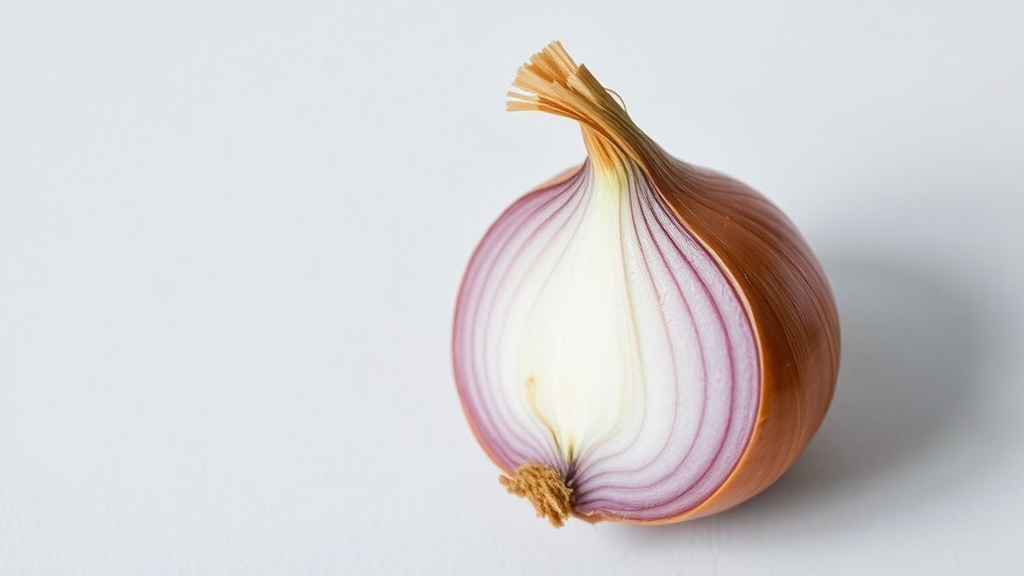
Every year, the global food industry peels, trims, and slices billions of onions, discarding tons of papery outer skin that most consumers never think twice about. A new study published in Food Chemistry: X suggests that this humble waste stream may be a chemical treasure chest—and that unlocking it could require nothing more complicated than a brief soak in water, vinegar, or dilute citric acid. Researchers in South Korea have shown that presoaking dried onion skin for as little as four minutes measurably changes how many beneficial phytochemicals can later be extracted, how potent the resulting extracts are against free radicals, and even how the extracts behave in preliminary tests with immune cells.
The research team, led by Bekri Melka Abdo and Sung-Hyen Lee of the Rural Development Administration’s National Institute of Crop and Food Science, set out to test a deceptively simple question: does the liquid used to presoak onion skin matter? Presoaking is usually dismissed as a washing step, a necessary bit of hygiene before the real work of extraction begins. But the authors argue that soaking can hydrate plant tissue, alter cell wall permeability, and change how soluble compounds diffuse out of the matrix. In other words, the soak itself may be a controllable processing variable—one that food manufacturers could tune to steer the chemistry of the final ingredient.
To probe this idea, the team obtained dried inner skins from conventionally grown yellow onions of a single hybrid cultivar lineage, traced through seed import records to a Dutch-bred variety and farmed in the Mungyeong and Yecheon regions of Gyeongsangbuk-do. The skins were soaked at room temperature in one of five solutions: tap water, 5% vinegar, 1% citric acid, a 1:1 mixture of vinegar and citric acid, or 0.3% hydrogen peroxide. Each soak lasted just four, eight, or twelve minutes—a deliberately narrow window chosen to see whether even minimal预处理 could shift the outcome. After rinsing, drying, and grinding, the powders were extracted in two contrasting systems: methanol, a laboratory reference solvent prized for pulling out flavonol aglycones, and hot water at 95°C, a route compatible with food production.
The results, analyzed by two-way ANOVA with Fisher’s least significant difference comparisons, showed a striking pattern: the identity of the soaking solution had a significant main effect on nearly every major parameter, while the duration of soaking—within that tight 4-to-12-minute range—mattered far less. Solution chemistry, not time, was the dominant lever. Citric acid and the vinegar–citric acid mixture produced the highest extraction yields, boosting total solids recovery to roughly 10.5–10.7% in both solvent systems, compared with about 5.8–7% for plain water. But the researchers caution that yield alone is a misleading metric. The acid-soaked samples recovered more non-phenolic material, diluting the phenolic density of the extracts rather than enriching them.
Total phenolic content, measured by the Folin–Ciocalteu assay and expressed as gallic acid equivalents, reached nearly 491 mg/g in water-soaked methanol extracts—the highest of any condition—while dropping to under 400 mg/g in the citric-acid group. The picture flipped, however, when the team turned to hot water. Here, peroxide-soaked skins yielded the strongest total flavonoid content at 918 mg quercetin equivalents per gram, and the highest quercetin glycoside yields in both solvent systems. Targeted UPLC–PDA quantification confirmed that quercetin, the dominant flavonol of onion skin, partitioned overwhelmingly into methanol—accounting for over 61% of the ion signal in the reference extract—while hot-water extracts were richer in protocatechuic acid and other polar constituents. High-resolution UHPLC–Orbitrap mass spectrometry revealed that the two solvents were not simply recovering different amounts of the same chemistry; they were generating compositionally distinct fractions.
Antioxidant performance tracked this compositional divergence. Using the DPPH radical-scavenging assay, the team calculated IC₅₀ values by four-parameter nonlinear regression and found that peroxide-presoaked extracts showed some of the most favorable radical-scavenging potency, alongside vinegar-treated samples. Exploratory contour plots suggested combined process–response patterns linking solution pH, soak duration, and antioxidant strength, though the authors are careful to note that the soaking solutions differed chemically as well as in pH, so the plots describe trends within the tested range rather than a universal pH optimum. The team emphasizes that assays like DPPH and Folin–Ciocalteu measure electron-transfer chemistry in a plate, not physiological efficacy in a body—useful for comparing treatments, but not proof of health benefits.
To add a biological dimension, the researchers screened representative extracts in RAW 264.7 macrophage cells, measuring metabolic activity with an MTS assay and nitric oxide production indirectly through nitrite accumulation via the Griess reaction. The extracts did not markedly reduce metabolic viability at the tested concentrations of 125 to 500 μg/mL, and presoaking-dependent differences in nitrite accumulation were observed within each extract type. Yet the authors are explicit about the limits: the extracts were tested without an inflammatory challenge such as lipopolysaccharide co-treatment, the two extract types were compared at different doses and durations, and nitrite levels cannot be classified as beneficial or harmful without a defined inflammatory model. The macrophage data are presented as hypothesis-generating screening, not evidence of immunological effect.
The practical implications reach into the growing field of food by-product valorization. Onion skin is a concentrated reservoir of quercetin and related flavonoids with well-documented antioxidant relevance, and converting it into a standardized food ingredient aligns with circular-economy and biorefinery principles. This study suggests that process designers should choose soaking solutions according to their target profile: acids to maximize mass yield, neutral water to preserve phenolic density in organic extraction, or carefully controlled mild oxidation to enhance hot-water flavonoid recovery. Because hot water is the route most compatible with industrial food processing, the finding that presoaking can steer hot-water extract composition is particularly relevant to anyone hoping to upcycle onion waste at scale.
The researchers are equally clear about what their work does not establish. The 0.3% hydrogen peroxide condition was an experimental oxidative treatment, not a food-ready process; residual peroxide, oxidation products, removal efficiency, and regulatory compliance would all need validation before any practical use. The study also did not measure structural changes in the skin matrix, so the mechanism behind the peroxide effect—whether enhanced accessibility or chemical transformation—remains unassigned. Translation to industry, the authors write, will require confirmation across harvests and commercial lots, pilot-scale mass and energy balances, stability and sensory testing, food-matrix performance trials, safety assessment, and techno-economic analysis. What the study does deliver is a framework: a demonstration that a step as ordinary as a few minutes of soaking, guided by the right chemistry and matched to the right solvent, can meaningfully reshape the value recovered from one of the world’s most abundant vegetable waste streams.
Subject of Research: How brief presoaking treatments modulate phytochemical recovery, antioxidant capacity, and macrophage responses of onion skin extracts
Article Title: Simple presoaking modulates phytochemical recovery, antioxidant capacity, and macrophage responses of onion skin extracts
Article References: Abdo, B. M., Song, D., Kang, H. J., Im, J. Y., Hwang, I.-G., Choi, A. J., Kwon, S., & Lee, S.-H. (2026). Simple presoaking modulates phytochemical recovery, antioxidant capacity, and macrophage responses of onion skin extracts. Food Chemistry: X, 39, Article 104402. https://doi.org/10.1016/j.fochx.2026.104402
Image Credits: AI Generated
DOI: 10.1016/j.fochx.2026.104402
Keywords: onion skin, phytochemicals, quercetin, antioxidant activity, food waste valorization, presoaking, hot water extraction, flavonoids, RAW 264.7 macrophages, circular economy, Food Chemistry: X, phenolic compounds
Cite Scienmag News
Bethany Barker. (September 23, 2026). A Quick Soak Could Unlock Onion Skin’s Hidden Antioxidant Power. Scienmag. https://scienmag.com/a-quick-soak-could-unlock-onion-skins-hidden-antioxidant-power/
Bethany Barker. "A Quick Soak Could Unlock Onion Skin’s Hidden Antioxidant Power." Scienmag, 23 September 2026, https://scienmag.com/a-quick-soak-could-unlock-onion-skins-hidden-antioxidant-power/. Accessed 23 September 2026.
Bethany Barker. "A Quick Soak Could Unlock Onion Skin’s Hidden Antioxidant Power." Scienmag. September 23, 2026. https://scienmag.com/a-quick-soak-could-unlock-onion-skins-hidden-antioxidant-power/


