


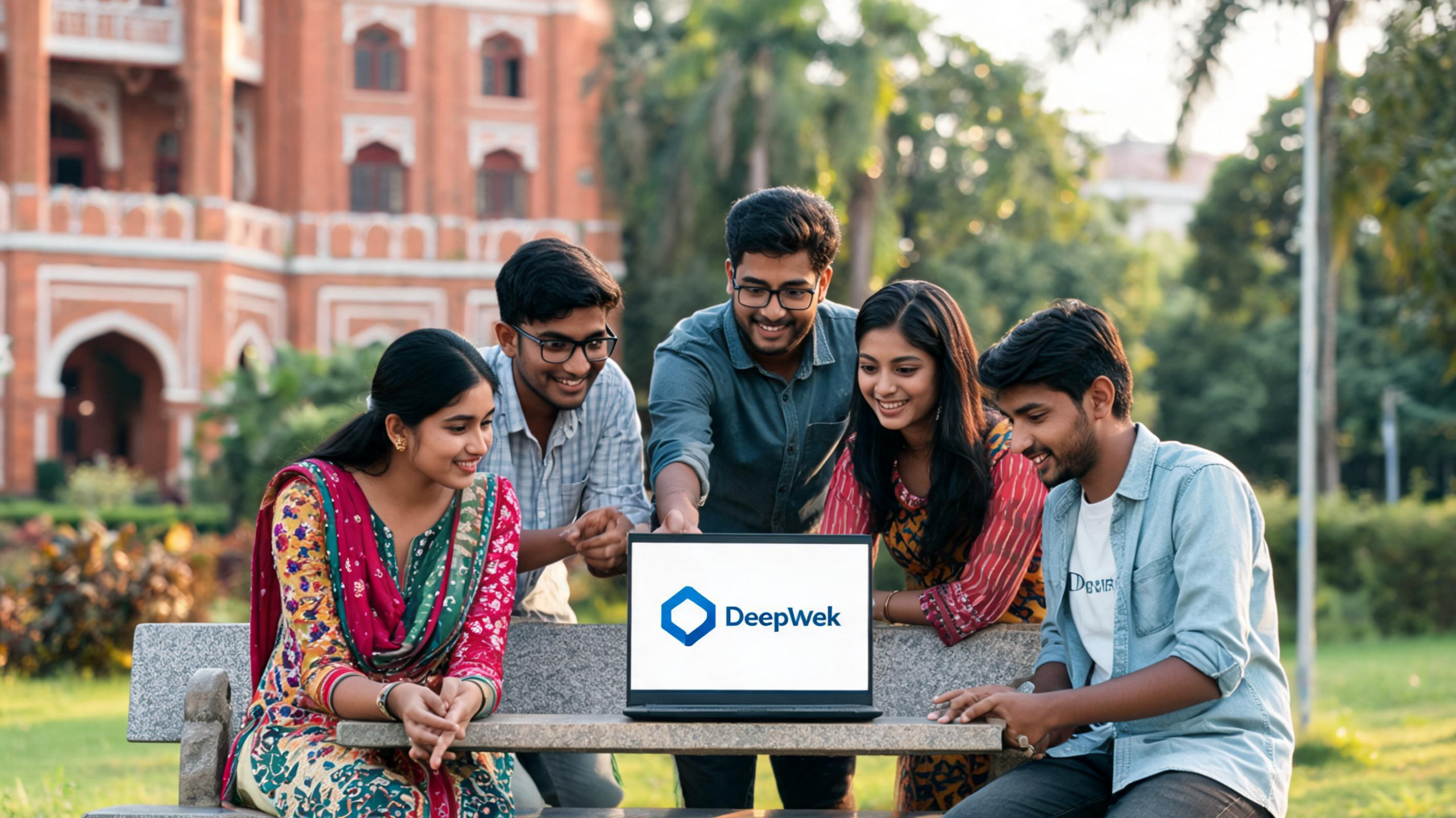
A large language model built in China is quietly winning over university students in Bangladesh, and new research suggests the reasons are as much geopolitical as they are technological. A study published in Frontiers of Digital Education examined why students at Bangladeshi universities are adopting DeepSeek, a free Chinese AI assistant that has emerged as a rival to Western models such as ChatGPT. By extending a widely used technology adoption framework with a novel construct — geopolitical concern — the researchers found that students weigh national security, strategic alignment and technological dependency alongside more familiar considerations like usefulness and ease of use when deciding whether to embrace the tool.
The study, led by Agostinho Sousa Pinto of the Polytechnic Institute of Porto together with colleagues in Portugal, Spain and Bangladesh, surveyed 202 university students and analysed their responses using partial least squares structural equation modelling, or PLS-SEM. This statistical technique allows researchers to test how multiple latent factors, such as trust or performance expectancy, interact to shape an outcome like the intention to use a technology. The team built their model on the extended unified theory of acceptance and use of technology (UTAUT), a framework that has become the workhorse of technology adoption research since its introduction in the early 2000s.
What sets this work apart is the addition of geopolitical concern to the model. The construct captures worries about national security risks, the strategic implications of relying on a Chinese AI system, and the broader question of technological dependency. The results showed that these concerns significantly shaped students’ trust in DeepSeek and their privacy perceptions, and in doing so indirectly dampened adoption intentions. In other words, students did not simply ask whether the tool worked well; they also asked who built it, where their data might end up, and what it means for their country’s digital sovereignty to depend on a foreign power’s AI infrastructure.
Despite these anxieties, the overall picture was surprisingly favourable. Students rated DeepSeek positively for reasons that reflect the realities of studying in a developing economy: the model is free to use, shows an element of cultural alignment that Western tools often lack, and offers a way to reduce dependence on Western technology giants. The researchers describe DeepSeek’s approach as a form of frugal innovation — delivering capable AI at minimal cost — and argue that this model provides a blueprint for emerging economies seeking affordable access to frontier technology.
On the technical side, the analysis identified performance expectancy and facilitating conditions as the key drivers of adoption. Performance expectancy, the belief that the tool improves learning and research productivity, was a strong predictor of behavioural intention, while facilitating conditions — the availability of infrastructure and support, such as reliable internet access — also played a significant role. Effort expectancy, how easy students find the tool to use, contributed as well. By contrast, social influence, the pressure or encouragement from peers and instructors, and hedonic motivation, the sheer enjoyment of using the technology, had negligible effects. This suggests Bangladeshi students approach AI tools pragmatically rather than socially or recreationally.
The mediating role of trust deserves particular attention. The study found that geopolitical concerns did not simply add or subtract directly from adoption intentions; instead, they worked indirectly by eroding trust and amplifying privacy concerns. This pathway aligns with earlier research showing that trust is a critical mediator in AI acceptance, and it highlights how geopolitical sentiment can undermine even a technically capable and free product. For policymakers in the Global South, the implication is that promoting AI adoption is not only a matter of building infrastructure but also of addressing public anxieties about data flows and foreign dependency.
The timing of the research is significant. DeepSeek made global headlines with its efficient mixture-of-experts architecture and its reasoning-focused R1 model, demonstrating that frontier-level AI could be developed and deployed at a fraction of the cost of Western equivalents. For countries like Bangladesh, which sit outside the major AI powers and often cannot afford premium subscriptions to Western services, such models are attractive precisely because they lower the barrier to entry. The Bangladeshi press has even framed DeepSeek’s rise as a call for the country to invest in retaining its own AI talent rather than watching it emigrate.
At the same time, the study is candid about the risks. Security analysts have raised questions about data governance in Chinese AI services, and the researchers note that privacy risks remain real even when users view a tool favourably. Bangladesh’s internet infrastructure also presents a constraint: reliability and speed gaps can undermine facilitating conditions and therefore suppress adoption, no matter how capable the underlying model is. The authors argue that policymakers and AI developers must address both geopolitical sentiments and infrastructure shortfalls if adoption is to grow.
Broader lessons extend well beyond Bangladesh. As the supply of globally available AI models diversifies, adoption decisions in the Global South increasingly reflect a calculus of sovereignty, cost and cultural fit rather than a simple race to the most powerful model. The researchers emphasise the need for culturally congruent, sovereignty-sensitive AI tools — systems that respect local data concerns while remaining affordable. Their study is, to their knowledge, among the first to formally integrate geopolitical factors into an established AI adoption framework, opening a line of inquiry that seems likely to grow as AI becomes an arena of great-power competition.
For educators and developers watching the generative AI boom, the message is clear: in emerging markets, the winning formula combines genuine usefulness, minimal cost, dependable infrastructure and attention to the political anxieties that surround foreign technology. DeepSeek’s popularity among Bangladeshi students shows that even in a field dominated by Silicon Valley narratives, the Global South is charting its own course through the AI revolution — one weighed down by real concerns, but propelled by the promise of accessible intelligence for all.
The theoretical lineage of the framework used in the study is worth unpacking. UTAUT emerged from a synthesis of eight earlier acceptance models and was designed to explain a large share of the variance in behavioural intention across workplace technologies. Its later extensions added constructs such as hedonic motivation, price value and habit, reflecting the shift from mandatory enterprise systems to consumer-facing tools. The Bangladeshi study pushes this evolution further by treating geopolitics as a measurable latent variable rather than background noise, an approach that acknowledges how international relations now shape everyday software choices in ways the original model’s authors could not have anticipated.
The methodological choices also merit attention. Partial least squares structural equation modelling is particularly suited to exploratory research where a new construct is being introduced, because it places fewer demands on sample size and distributional assumptions than covariance-based approaches. The researchers followed established practice by assessing the measurement model for reliability and validity before testing the structural paths, drawing on widely cited criteria for convergent and discriminant validity. A sample of 202 students is modest but adequate for this technique, and the reliance on self-reported intentions means the findings describe attitudes rather than observed long-term behaviour, a limitation common to the adoption literature.
The technical backdrop to DeepSeek’s appeal lies in its architectural efficiency. The model family employs a mixture-of-experts design, in which only a subset of parameters activates for any given query, cutting computational cost substantially compared with dense models of similar capability. Its reasoning model demonstrated that reinforcement learning could elicit strong chain-of-thought performance, and independent evaluations have since tested such models on engineering tasks with encouraging results. For students in low-income settings, this efficiency translates directly into free or near-free access to tools that would otherwise sit behind subscription paywalls.
Bangladesh’s broader digital context helps explain the pattern of results. The country has invested heavily in digital government services and mobile connectivity, yet internet quality remains uneven, and the study’s emphasis on facilitating conditions echoes real infrastructure constraints documented in connectivity indices. Prior research on AI literacy among South Asian students, including library and information science cohorts in Bangladesh, India and Pakistan, has shown uneven familiarity with AI systems, suggesting that effort expectancy and support structures matter as much as raw capability. The pragmatic orientation of the students surveyed, with social influence playing little role, fits a picture of adoption driven by tangible academic need rather than fashion.
The geopolitical dimension resonates with precedents elsewhere in the region. Debates over the TikTok ban in India illustrated how digital sovereignty concerns can override consumer popularity, and public opinion research has documented shifting views of China and the United States among South Asian populations. The study’s finding that geopolitical sentiment operates through trust rather than directly suggests a subtle mechanism: users may continue to value a tool’s usefulness while quietly discounting their confidence in it, a state of ambivalence that could shift rapidly with news of data mishandling or regulatory change.
Future research could extend the framework in several directions. Longitudinal designs would reveal whether geopolitical concerns harden or soften as familiarity grows, and comparative studies across countries with different alignments could test whether the construct behaves consistently. Sampling instructors, administrators and policymakers alongside students would broaden the picture, and behavioural measures such as actual usage logs would strengthen inference. As AI models multiply and great-power competition intensifies, the integration of geopolitical constructs into adoption theory offers a template for understanding how the next generation of digital tools will be welcomed, resisted or renegotiated across the Global South.
Subject of Research: Adoption of the DeepSeek large language model among university students in Bangladesh, analysed with an extended UTAUT framework incorporating geopolitical concern.
Article Title: Exploring DeepSeek Adoption in Higher Education in Bangladesh: A UTAUT-Based Approach
Article References: Pinto, A. S., Abreu, A., Cota, M. P., Paiva, J., & Biswas, M. S. (2026). Exploring DeepSeek Adoption in Higher Education in Bangladesh: A UTAUT-Based Approach. Frontiers of Digital Education, 3(2), Article 16. https://doi.org/10.1007/s44366-026-0090-2
Image Credits: AI Generated
DOI: 10.1007/s44366-026-0090-2
Keywords: DeepSeek, generative AI, UTAUT, Bangladesh, higher education, geopolitical concern, PLS-SEM, technology adoption, digital sovereignty, Global South, trust and privacy, frugal innovation
Cite Scienmag News
Courtney Benton. (September 10, 2026). DeepSeek Finds Favour Among Bangladeshi Students Despite Geopolitical Doubts. Scienmag. https://scienmag.com/deepseek-finds-favour-among-bangladeshi-students-despite-geopolitical-doubts/
Courtney Benton. "DeepSeek Finds Favour Among Bangladeshi Students Despite Geopolitical Doubts." Scienmag, 10 September 2026, https://scienmag.com/deepseek-finds-favour-among-bangladeshi-students-despite-geopolitical-doubts/. Accessed 10 September 2026.
Courtney Benton. "DeepSeek Finds Favour Among Bangladeshi Students Despite Geopolitical Doubts." Scienmag. September 10, 2026. https://scienmag.com/deepseek-finds-favour-among-bangladeshi-students-despite-geopolitical-doubts/


