


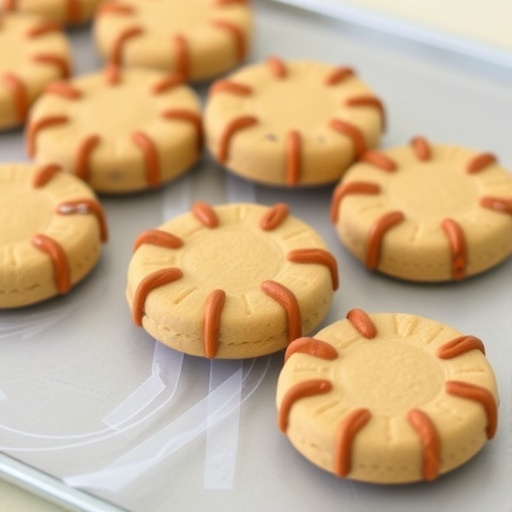
A cookie made from plastic bottles, corn stalks and engineered yeast may sound like science fiction, but researchers at Southern Illinois University Carbondale say their prototype could point toward a radically different future for food production. Known as “µBites,” the protein-rich cookies are produced by converting waste carbon into edible ingredients, including yeast-derived proteins, fats, organic acids, vitamins and flavor compounds. The technology was developed within a NASA-supported effort to create food for environments where conventional supplies are difficult or impossible to deliver, from disaster zones and submarines to future missions involving human crews in deep space. The researchers will present their latest results at the American Chemical Society’s ACS Fall 2026 meeting in Chicago.
The central idea is deceptively simple: plastic and food are both built largely from carbon, but their molecules are arranged in very different ways. Polyethylene terephthalate, or PET, the plastic commonly used in beverage bottles, contains carbon-rich chemical structures that can theoretically be dismantled and rebuilt into biologically useful compounds. Instead of relying entirely on harsh chemical processing, the SIU team uses microorganisms as living biochemical factories. “Microbes are very clever. So, we are using their traits to solve the problems we created,” says Lahiru Jayakody, an associate professor involved in the project. By programming yeast to consume selected breakdown products, the researchers aim to transform persistent waste into ingredients with nutritional and sensory value.
Before the microorganisms can use the waste, the PET and plant material undergo a process called oxidative hydrothermal dissolution. Developed by SIU Carbondale geologist Ken Anderson, the method uses water, oxygen, high temperatures and high pressure to break down difficult materials into smaller molecules that microbes can access. Discarded corn stalks, leaves and other biomass can be processed alongside plastic, creating a carbon-rich feedstock rather than sending these materials to landfills or incinerators. The resulting compounds are then supplied to carefully selected yeast strains. In their natural or engineered forms, these yeasts can metabolize the molecules and redirect carbon through cellular pathways that produce proteins, lipids, vitamins and other food-related substances.
The researchers have worked with several yeasts, including baker’s yeast, Saccharomyces cerevisiae, Saccharomyces boulardii and Rhodosporidium toruloides. Yeast has long been used in biotechnology because it grows efficiently, can be cultivated in controlled vessels and can be genetically modified to produce valuable molecules. The same general principle is already used to manufacture products such as recombinant insulin. In the µBites project, the organisms are being used not only as a source of biomass but also as miniature production platforms. Their metabolism can be tuned so that waste-derived carbon is converted into compounds that improve the cookie’s nutritional profile, aroma, color and flavor.
One recent advance involved engineering S. cerevisiae to produce vanillin, the molecule primarily responsible for the characteristic flavor and aroma of vanilla. The yeast converts ferulic acid, a compound found in plant biomass, into vanillin through a series of enzymatic reactions. This approach could provide a renewable route to a familiar flavor without depending exclusively on conventional vanilla supplies or petroleum-derived chemical synthesis. The team also adapted R. toruloides through laboratory evolution to use ethylene glycol, a compound obtained from PET breakdown, as a carbon source. The yeast can then produce beta-carotene, an orange pigment and precursor that the human body can convert into vitamin A.
After fermentation, the resulting yeast biomass and microbially produced compounds are combined with additional ingredients, including fiber, starch and sweetener. The mixture is formed using a three-dimensional food printer, allowing the researchers to produce compact, protein-rich cookies with a controlled shape and composition. Three-dimensional printing could become especially useful in isolated environments because it may allow food texture, nutrient density and ingredient ratios to be adjusted according to an individual’s needs. In a spacecraft, for example, a food system based on stable microbial cultures and locally available carbon sources could reduce the need to transport large quantities of packaged food from Earth.
The team reports that the current µBites prototypes have been evaluated for their chemical and nutritional properties and have been found to be safe to eat based on the available data. Formal taste testing, however, is still awaiting institutional approval. Participants who assessed the products without consuming them gave the cookies encouraging marks for aroma, and most said they would be willing to eat them in situations where food resources were limited. That distinction is important: a product designed for emergency survival or a space mission does not necessarily need to compete with a freshly baked cookie, but improving its taste could determine whether people accept it outside extreme conditions.
The researchers are therefore expanding the system beyond protein production. Their current work focuses on generating more of the ingredients that make food appealing, while also increasing the proportion of the cookie that can be made from microbial processes. In future versions, Jayakody’s team hopes to produce the added starch, fiber and sweetener biologically rather than sourcing them separately. Such a development would make the platform more self-contained and could reduce the amount of conventional agricultural material required. It may also help create a closed-loop food system in which waste carbon is repeatedly converted into new biomass and food components.
The potential applications extend beyond plastic recycling. Global food demand is projected to rise sharply by 2050, while climate pressures, resource shortages and unequal access to nutritious diets continue to threaten food security. A microbial platform could operate in locations where soil, freshwater, farmland or transportation infrastructure are limited. It could use agricultural residues that are normally discarded, as well as selected plastic waste, to produce concentrated nutritional supplements. In disaster zones, compact fermentation systems might eventually produce food locally after supply chains are disrupted. In submarines, lunar habitats or settlements on Mars, the ability to manufacture ingredients from waste streams could reduce dependence on Earth-based resupply.
Still, major scientific, regulatory and practical challenges remain before plastic-derived food can reach consumers. Researchers must demonstrate that the entire process consistently removes unwanted contaminants from waste materials and that the final ingredients meet strict food-safety standards. They must also determine how efficiently the system converts waste into calories and nutrients, how much energy the high-temperature pretreatment requires, and whether the environmental benefits outweigh those costs. Consumer acceptance may prove equally important. The image of eating a cookie that began as a discarded bottle is likely to attract attention, but the success of µBites will ultimately depend on rigorous safety testing, appealing flavor and affordable production. If those hurdles can be overcome, the project could transform a viral curiosity into a serious example of how biotechnology may connect waste management, food science and human exploration.
News Publication Date: August 24, 2026
Web References: https://acs.digitellinc.com/live/37/session/586399; https://www.acs.org/events/fall.html
References: Presentation at the American Chemical Society’s ACS Fall 2026 meeting; research funded by the NASA Deep Space Food Challenge and an NSF CAREER grant.
Keywords
Plastic recycling, food science, engineered yeast, synthetic biology, microbial biotechnology, edible protein, PET upcycling, agricultural waste, 3D-printed food, space food, food security, circular economy.
Cite Scienmag News
Gregory Coleman. (August 24, 2026). Scientists Transform Plastic Bottles Into Cookies. Scienmag. https://scienmag.com/scientists-transform-plastic-bottles-into-cookies/
Gregory Coleman. "Scientists Transform Plastic Bottles Into Cookies." Scienmag, 24 August 2026, https://scienmag.com/scientists-transform-plastic-bottles-into-cookies/. Accessed 4 September 2026.
Gregory Coleman. "Scientists Transform Plastic Bottles Into Cookies." Scienmag. August 24, 2026. https://scienmag.com/scientists-transform-plastic-bottles-into-cookies/


