


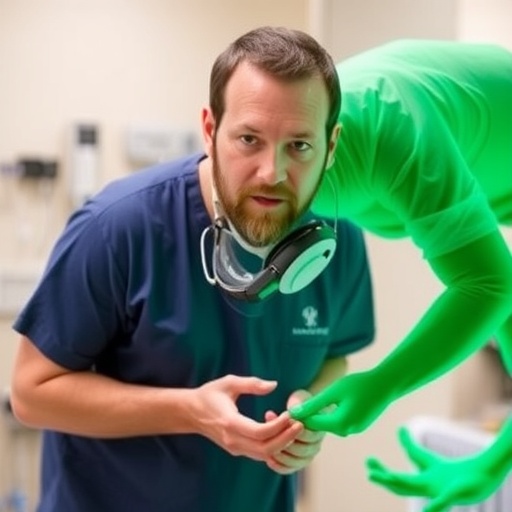
Baylor College of Medicine has launched a new research center dedicated to solving one of transplantation medicine’s most persistent problems: the shortage of human organs. Established through a research agreement with United Therapeutics Corporation, the Baylor College of Medicine Center for Xenoliver Transplantation and Immunomodulation will receive up to $5 million annually for five years. The center will investigate whether genetically modified pig organs can eventually provide a reliable source of livers for patients who might otherwise face long waits or die before a suitable human organ becomes available.
The initiative will focus particularly on patients with advanced organ failure and those whose immune systems contain antibodies that make conventional transplantation more difficult. These antibodies can recognize donor tissues as foreign and trigger rapid or severe rejection. In xenotransplantation, the biological distance between pigs and humans creates an even more complex immunological challenge. Researchers at Baylor will study how the human immune system identifies and attacks porcine tissue, while testing strategies intended to make a transplanted xenoliver more compatible with its recipient.
John Goss, chief of abdominal transplant in Baylor’s Michael E. DeBakey Department of Surgery, and William K. Decker, professor of pathology and immunology, will serve as co-directors of the new center. Their work will combine surgical expertise with research into immune regulation, tissue compatibility and transplant biology. The collaboration is designed not simply to examine whether a pig liver can function in a human body, but to understand the molecular and cellular mechanisms that determine whether the organ survives, adapts and performs its essential physiological roles.
A major component of the research will examine immunomodulation, or the deliberate adjustment of immune activity to promote tolerance. The investigators will explore the role of dendritic cells, specialized immune cells that process foreign proteins and help direct the adaptive immune response. Depending on the signals they receive, dendritic cells can activate aggressive immune reactions or contribute to a more tolerant state. Understanding how to influence these cells could help researchers reduce rejection without suppressing the recipient’s entire immune system, an approach that can leave transplant patients vulnerable to infections and cancer.
United Therapeutics is developing organs through several investigational platforms, including genetically edited pig organs intended for human transplantation. Its xenotransplantation program includes UKidney, UThymokidney and UHeart, all derived from pigs whose genomes have been modified to improve immunological acceptance and biological compatibility. Such edits may remove or alter pig molecules recognized by human antibodies, add human genes that help regulate blood clotting and inflammation, or reduce biological signals that provoke an immediate immune attack. The company’s partnership with Baylor extends this organ-manufacturing effort into the study of xenoliver transplantation.
The liver presents distinctive opportunities and obstacles for xenotransplantation. Unlike some organs, it performs a wide range of functions, including detoxifying blood, producing proteins, regulating metabolism and controlling aspects of immunity. A transplanted liver must therefore interact continuously with the recipient’s blood and immune system. Researchers must determine whether a genetically modified porcine liver can maintain these functions in a human physiological environment while avoiding complications such as antibody-mediated rejection, uncontrolled inflammation, abnormal coagulation or injury to the blood-vessel lining.
The need for alternative organs is substantial. Liver candidates are the second-largest group of people waiting for organ transplantation in the United States, with approximately 10,000 individuals currently on the national waiting list. The number of patients needing transplantation can exceed the supply of donated organs, and some candidates deteriorate rapidly while waiting. Others may be difficult to match with an available donor because of blood type, antibody profiles or other medical factors. Xenotransplantation could eventually provide organs on demand, potentially allowing physicians to intervene before irreversible organ failure develops.
Baylor leaders described the agreement as a convergence of the institution’s long history in transplantation and United Therapeutics’ efforts to manufacture transplantable organs. Baylor’s transplant program includes heart, lung, abdominal, liver and kidney transplantation, and the medical school has been involved in transplant research since the first heart transplant performed there in 1968. The new center will use this clinical background to connect laboratory findings with the practical requirements of surgery, organ preservation, patient selection and long-term post-transplant care.
The researchers emphasized that the objective is to make xenotransplantation a dependable medical option rather than to pursue only incremental improvements. The work will dissect both allogeneic immune responses, which occur between genetically different members of the same species, and xenogeneic responses, which arise between different species. By comparing these pathways, scientists hope to identify the barriers that are unique to pig-to-human transplantation and develop targeted methods to overcome them. Although significant scientific, regulatory and ethical questions remain, the Baylor-United Therapeutics collaboration could help determine whether xenolivers become a practical answer to the organ shortage.
Cite Scienmag News
Ophelia Keating. (August 10, 2026). Baylor College of Medicine secures multimillion-dollar deal to advance xenoliver transplantation research. Scienmag. https://scienmag.com/baylor-college-of-medicine-secures-multimillion-dollar-deal-to-advance-xenoliver-transplantation-research/
Ophelia Keating. "Baylor College of Medicine secures multimillion-dollar deal to advance xenoliver transplantation research." Scienmag, 10 August 2026, https://scienmag.com/baylor-college-of-medicine-secures-multimillion-dollar-deal-to-advance-xenoliver-transplantation-research/. Accessed 4 September 2026.
Ophelia Keating. "Baylor College of Medicine secures multimillion-dollar deal to advance xenoliver transplantation research." Scienmag. August 10, 2026. https://scienmag.com/baylor-college-of-medicine-secures-multimillion-dollar-deal-to-advance-xenoliver-transplantation-research/


