


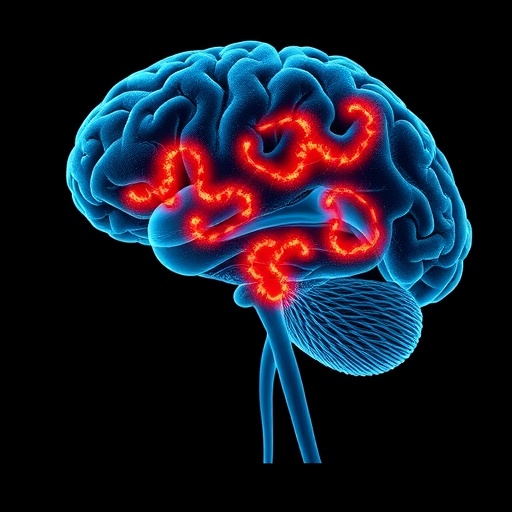
A new study is drawing attention to a potentially important link between the biological aging of the human body, brain development, and cognitive performance during young adulthood. Published in Translational Psychiatry, the research by L. Pelant, R. Marecek, A. Pačínková and colleagues investigates whether some young adults show signs of “premature” epigenetic aging and whether those biological differences are associated with brain development that diverges from normative patterns.
The concept is striking because chronological age and biological age are not always the same. Chronological age is simply the number of years a person has lived, while biological age reflects the condition and functioning of cells and tissues. Scientists estimate biological age using molecular markers, including epigenetic changes. These changes do not alter the DNA sequence itself. Instead, they influence how genes are switched on or off, often through chemical modifications such as DNA methylation, in which small molecular groups attach to specific regions of DNA.
DNA methylation patterns change across the lifespan in partly predictable ways. By examining these patterns, researchers can calculate an epigenetic age estimate and compare it with a person’s actual age. When the estimated biological age is higher than the chronological age, researchers may describe the difference as accelerated or premature epigenetic aging. This does not mean that an individual is inevitably destined to develop disease early, but it may indicate that the body has been exposed to biological processes associated with faster aging.
The new research focuses on young adulthood, a period when the brain is still undergoing important structural and functional refinement. Although childhood and adolescence are often considered the central stages of brain development, neural maturation continues into the twenties. During this period, the brain reorganizes connections between regions, improves the efficiency of communication networks, and strengthens systems involved in planning, attention, working memory, decision-making and emotional regulation.
Pelant and colleagues examined the relationship between epigenetic aging and deviations from normative brain development. Normative modeling is a statistical approach that estimates how an individual’s brain compares with expected patterns observed across a reference population. Instead of asking only whether a brain measure is high or low, this method can identify whether a person’s brain structure or function falls outside the typical range for their age. Such deviations may reveal subtle differences that would be missed by conventional group comparisons.
According to the study’s focus, young adults with signs of premature epigenetic aging also showed differences in brain development relative to normative expectations. The findings suggest that accelerated biological aging may be reflected not only in molecular measurements taken from the body, but also in the way the brain’s development is organized. However, the relationship should not be interpreted as proof that epigenetic aging directly causes altered brain development. The study is examining associations, and many biological, psychological, environmental and lifestyle factors may influence both outcomes.
The researchers also investigated cognitive performance, bringing the findings closer to questions that matter in everyday life. Cognitive abilities depend on distributed networks rather than a single brain region. Attention, memory, processing speed and executive functions emerge from the coordinated activity of multiple systems. If brain development deviates from age-related expectations, those differences may be associated with measurable variation in how efficiently a person performs cognitive tasks. The study therefore adds a functional dimension to the molecular and neuroimaging evidence.
The implications are potentially significant because young adulthood is often viewed as a period of peak health, yet it may already contain detectable differences in biological aging. If epigenetic measures, brain-based normative models and cognitive testing can be combined reliably, scientists may eventually develop more sensitive ways to identify individuals whose development is progressing along an atypical trajectory. Such tools could support earlier research into prevention and could help clarify how stress, sleep, nutrition, physical activity, mental health and other exposures interact with biological aging.
At the same time, the findings should be understood as an emerging piece of evidence rather than a diagnostic test or a prediction of an individual’s future. Epigenetic clocks can vary according to the tissues analyzed, the molecular algorithms used and the population in which they were developed. Brain measurements are also influenced by technical factors, and cognitive scores can change with education, motivation, fatigue and testing conditions. Long-term studies will be needed to determine whether premature epigenetic aging and atypical brain development persist over time, whether they can be modified, and how strongly they predict later health or cognitive outcomes.
The study’s broader message is that aging may begin as a subtle, multidimensional process long before visible symptoms appear. Molecular biology, brain imaging and cognitive science are increasingly being combined to map that process in greater detail. By linking epigenetic age with brain-development patterns and performance in young adults, the research opens a provocative window onto why people of the same chronological age can differ biologically—and why those differences may matter for the brain.
Cite Scienmag News
Glenn Wilkins. (August 6, 2026). Premature Epigenetic Aging and Abnormal Brain Development Linked to Young Adults’ Cognition. Scienmag. https://scienmag.com/premature-epigenetic-aging-and-abnormal-brain-development-linked-to-young-adults-cognition/
Glenn Wilkins. "Premature Epigenetic Aging and Abnormal Brain Development Linked to Young Adults’ Cognition." Scienmag, 6 August 2026, https://scienmag.com/premature-epigenetic-aging-and-abnormal-brain-development-linked-to-young-adults-cognition/. Accessed 4 September 2026.
Glenn Wilkins. "Premature Epigenetic Aging and Abnormal Brain Development Linked to Young Adults’ Cognition." Scienmag. August 6, 2026. https://scienmag.com/premature-epigenetic-aging-and-abnormal-brain-development-linked-to-young-adults-cognition/


