

Wednesday, July 29, 2026
Science
No Result
View All Result
  • Login
  • HOME
  • SCIENCE NEWS
  • CONTACT US
  • HOME
  • SCIENCE NEWS
  • CONTACT US
No Result
View All Result
Scienmag
No Result
View All Result
Home Science News Medicine

Bioinspired Porous Metal-Amino Acid Nanozymes Treat Atherosclerosis via Dual Pathways

July 29, 2026
in Medicine
Reading Time: 2 mins read
0
Bioinspired Porous Metal-Amino Acid Nanozymes Treat Atherosclerosis via Dual Pathways

Bioinspired Porous Metal-Amino Acid Nanozymes Treat Atherosclerosis via Dual Pathways

65
SHARES
587
VIEWS
Share on FacebookShare on Twitter
ADVERTISEMENT

Atherosclerosis remains stubbornly resistant to single-target therapies, largely because plaque progression is driven by intertwined processes—oxidative stress, chronic inflammation, and defective clearance of dying cells. Now, researchers report a bioinspired nanomedicine strategy that tackles these pathways simultaneously by turning chemistry into coordinated biology.

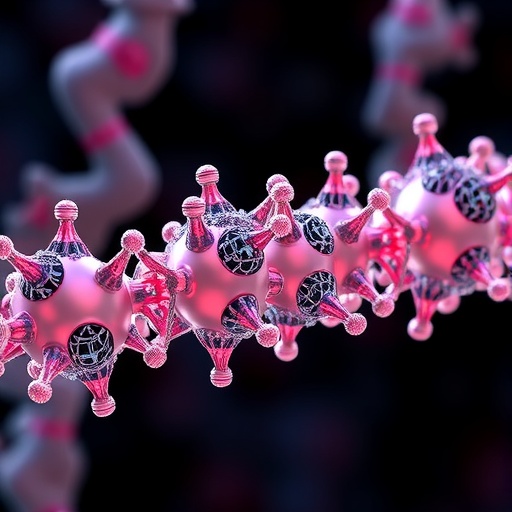
In a study published in Nature Communications, the team describes porous metal–amino acid nanozymes designed to behave like enzyme mimics inside the vascular environment. The architecture emphasizes accessible catalytic surfaces: rather than relying on abundant natural enzymes, the particles present tailored metal sites embedded in a porous framework.

According to the authors, the nanozymes can promote anti-oxidation activity by neutralizing reactive oxygen species in situ. This matters because oxidative damage accelerates lipid oxidation and amplifies inflammatory signaling, creating a self-reinforcing cycle within developing plaques.

Just as critical is what happens after oxidative stress is lowered. Dying cells and debris accumulate in plaques, fueling inflammation and impairing tissue remodeling. The researchers show that their catalytic platform also shifts the cellular response toward pro-efferocytosis, enhancing the clearance of apoptotic material by phagocytes.

The “multi-pathway” concept hinges on coupling catalysis with immune behavior. By reducing oxidative cues and improving clearance efficiency, the nanozymes aim to interrupt the inflammatory loop that otherwise sustains plaque growth.

Porosity is central to the approach. The porous structure increases contact between catalytic sites and biological substrates, improving functional delivery at the scale where vascular inflammation unfolds. In effect, the nanozymes act as a locally concentrated, reusable antioxidant-like and clearance-supporting system.

The study further highlights the importance of bioinspired composition, using amino acid–associated design principles to better integrate with biological milieus. This helps translate catalytic activity into functional outcomes rather than mere chemical reactivity.

While detailed translational considerations remain ahead, the work offers a blueprint for next-generation anti-atherosclerosis therapeutics: instead of neutralizing one molecule, engineer nanostructures that reprogram multiple steps of plaque pathology.

If validated across additional models and eventually clinical cohorts, these porous metal–amino acid nanozymes could redefine how “enzyme-like” nanomaterials are deployed against chronic vascular disease—by pairing redox control with immune cleanup in one platform.

Subject of Research: Atherosclerosis therapy using bioinspired porous nanozymes

Article Title: Bioinspired porous metal-amino acid nanozymes enable multi-pathway treatment of atherosclerosis through anti-oxidation and pro-efferocytosis.

Article References: Shao, S., Pan, W., Cheng, J. et al. Bioinspired porous metal-amino acid nanozymes enable multi-pathway treatment of atherosclerosis through anti-oxidation and pro-efferocytosis. Nat Commun (2026). https://doi.org/10.1038/s41467-026-75509-4

Image Credits: AI Generated

Tags: anti-inflammatory nanomedicine strategiesbioinspired metal-organic frameworks for cardiovascular repairBioinspired nanozymes for atherosclerosis therapycatalytic nanomaterials targeting plaque progressiondual pathway nanotherapeutics for vascular healthenhancing efferocytosis in atherosclerosisenzyme-mimicking nanomaterials for cardiovascular diseasenanozyme-based modulation of immune response in atherosclerosisoxidative stress reduction in atherosclerotic plaquesporous metal–amino acid nanozymes
Share26Tweet16
Previous Post

Palmitoylation boosts NKAα2 and improves diabetic cardiomyopathy via fumarate pathway

Next Post

Molecular Rotors Map the 3D Viscous Habitat of Mucus-Gliding Bacteria

Related Posts

RHOT1/2 Mitochondrial Vesicles Target Tumors and Enable In Situ Vaccination
Medicine

RHOT1/2 Mitochondrial Vesicles Target Tumors and Enable In Situ Vaccination

July 29, 2026
Palmitoylation boosts NKAα2 and improves diabetic cardiomyopathy via fumarate pathway
Medicine

Palmitoylation boosts NKAα2 and improves diabetic cardiomyopathy via fumarate pathway

July 29, 2026
3D Visualization Reveals Nanoplastic Distribution in Neonatal Mouse Brains
Medicine

3D Visualization Reveals Nanoplastic Distribution in Neonatal Mouse Brains

July 29, 2026
Transcriptomic Profiling Reveals Differences Between Human Brown and White Fat Depots
Medicine

Transcriptomic Profiling Reveals Differences Between Human Brown and White Fat Depots

July 29, 2026
Oligomeric alpha-Synuclein in Neural Extracellular Vesicles Signals Parkinson Non-Motor Symptoms
Medicine

Oligomeric alpha-Synuclein in Neural Extracellular Vesicles Signals Parkinson Non-Motor Symptoms

July 29, 2026
Economic Security, Health, and Religion Shape Life Satisfaction Among Older Urban Iranians
Medicine

Economic Security, Health, and Religion Shape Life Satisfaction Among Older Urban Iranians

July 29, 2026
Next Post
Molecular Rotors Map the 3D Viscous Habitat of Mucus-Gliding Bacteria

Molecular Rotors Map the 3D Viscous Habitat of Mucus-Gliding Bacteria

  • Mothers who receive childcare support from maternal grandparents show more

    Mothers who receive childcare support from maternal grandparents show more parental warmth, finds NTU Singapore study

    27656 shares
    Share 11059 Tweet 6912
  • University of Seville Breaks 120-Year-Old Mystery, Revises a Key Einstein Concept

    1061 shares
    Share 424 Tweet 265
  • Bee body mass, pathogens and local climate influence heat tolerance

    682 shares
    Share 273 Tweet 171
  • Researchers record first-ever images and data of a shark experiencing a boat strike

    546 shares
    Share 218 Tweet 137
  • Groundbreaking Clinical Trial Reveals Lubiprostone Enhances Kidney Function

    531 shares
    Share 212 Tweet 133
Science

Embark on a thrilling journey of discovery with Scienmag.com—your ultimate source for cutting-edge breakthroughs. Immerse yourself in a world where curiosity knows no limits and tomorrow’s possibilities become today’s reality!

RECENT NEWS

  • RHOT1/2 Mitochondrial Vesicles Target Tumors and Enable In Situ Vaccination
  • Early psychosis shows reduced low-frequency sensorimotor fluctuations tied to dexterity
  • Lithium’s Cognitive Potential in Alzheimer’s Reassessed: Cholinergic System and Connectivity
  • Molecular Rotors Map the 3D Viscous Habitat of Mucus-Gliding Bacteria

Categories

  • Agriculture
  • Anthropology
  • Archaeology
  • Athmospheric
  • Biology
  • Biotechnology
  • Blog
  • Bussines
  • Cancer
  • Chemistry
  • Climate
  • Earth Science
  • Editorial Policy
  • Marine
  • Mathematics
  • Medicine
  • Pediatry
  • Policy
  • Psychology & Psychiatry
  • Science Education
  • Social Science
  • Space
  • Technology and Engineering

Subscribe to Blog via Email

Enter your email address to subscribe to this blog and receive notifications of new posts by email.

Join 5,147 other subscribers

© 2025 Scienmag - Science Magazine

Welcome Back!

Login to your account below

Forgotten Password?

Retrieve your password

Please enter your username or email address to reset your password.

Log In
No Result
View All Result
  • HOME
  • SCIENCE NEWS
  • CONTACT US

© 2025 Scienmag - Science Magazine

Discover more from Science

Subscribe now to keep reading and get access to the full archive.

Continue reading
