

Tuesday, July 28, 2026
Science
No Result
View All Result
  • Login
  • HOME
  • SCIENCE NEWS
  • CONTACT US
  • HOME
  • SCIENCE NEWS
  • CONTACT US
No Result
View All Result
Scienmag
No Result
View All Result
Home Science News Earth Science

User-Centered Framework Enables Self-Sufficient Zero-Carbon Energy in High Altitudes

July 28, 2026
in Earth Science
Reading Time: 2 mins read
0
User-Centered Framework Enables Self-Sufficient Zero-Carbon Energy in High Altitudes

User-Centered Framework Enables Self-Sufficient Zero-Carbon Energy in High Altitudes

65
SHARES
587
VIEWS
Share on FacebookShare on Twitter
ADVERTISEMENT

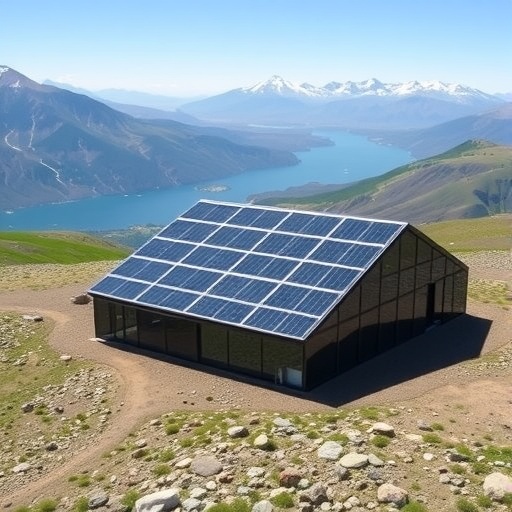
A new study in Communications Earth & Environment reports a user-centric renewable energy framework designed to power self-sufficient, zero-carbon infrastructure in high-altitude regions. The work, led by Guan, Fu, Liu and colleagues, tackles a persistent problem: remote communities often face unreliable grids, harsh weather, and complex logistics that make conventional infrastructure both costly and carbon intensive.

The proposed approach shifts planning from technology-first deployments to human-and-site requirements. Instead of treating solar, wind, storage, and power management as separate components, the framework coordinates them around daily usage patterns, service reliability targets, and site-specific constraints typical of high elevations.

At its core, the model integrates high-resolution energy-demand profiling with renewable resource estimates. By coupling local climate variability—such as seasonal solar attenuation and wind fluctuations—with adaptive generation scheduling, the system aims to maintain stable power supply even when conditions deteriorate.

A key element is an energy-management layer that uses real-time or near-real-time signals to balance supply and demand. This includes directing power flows between generation sources and storage, optimizing charging cycles, and prioritizing critical loads during periods of low renewable output.

The framework also emphasizes “self-sufficiency,” meaning the infrastructure is engineered to operate with minimal external fuel dependence. That concept is operationalized through a resilience logic: the design considers not only average energy production but also worst-case scenarios, reducing the risk of outages during extended cloudy or calm spells.

For high-altitude environments, the study highlights additional engineering pressures—maintenance accessibility, material durability under rapid temperature swings, and constraints on transporting spare parts. The proposed system architecture therefore supports modular expansion and straightforward operational tuning, which can lower lifecycle costs and improve long-term feasibility.

The authors frame their contribution as both technical and practical: the framework can guide decision-makers in selecting component sizes, control strategies, and service-level targets. By embedding user-centric assumptions into system design, the work claims improved alignment with real operational needs rather than generic energy benchmarks.

With the DOI ending in 03867-4, the research positions zero-carbon infrastructure not as an aspirational goal but as a design problem solvable through integrated modeling and adaptive control. If validated across diverse high-altitude contexts, the framework could accelerate viral-scale attention for renewable reliability where it has historically been hardest to achieve.

Subject of Research: High-altitude, self-sufficient zero-carbon infrastructure powered by renewables

Article Title: User-centric renewable energy framework for self-sufficient zero-carbon infrastructure in high-altitude regions

Article References: https://doi.org/10.1038/s43247-026-03867-4

Image Credits: AI Generated

DOI: 10.1038/s43247-026-03867-4

Keywords: High-altitude infrastructure; renewable energy; zero-carbon; self-sufficiency; energy management; user-centric design; resilience

Tags: adaptive energy scheduling for high-altitude microgridsclimate-resilient zero-carbon energy infrastructure in elevated terrainshighhuman-centric design of renewable energy systems in challenging environmentsintegrated solar and wind energy management in mountainous regionsreal-time energy demand and supply balancing in remote communitiesremote high-altitude renewable energy systems designed for autonomous operationself-sufficient off-grid renewable energy solutions for remote areassite-specific renewable energy deployment in high-altitude settingsuser-centered renewable energy planning for harsh environments
Share26Tweet16
Previous Post

Taiwan Study Uses Cluster Analysis to Profile Elderly Emergency Patients

Next Post

Standardized referral process boosts early intervention enrollment for opioid-exposed infants

Related Posts

Satellite era shows reduced global marine primary productivity and shifted hemispheres
Earth Science

Satellite era shows reduced global marine primary productivity and shifted hemispheres

July 28, 2026
Isotopic evidence reveals thermogenic methane beneath Greenland’s North Ice Sheet
Earth Science

Isotopic evidence reveals thermogenic methane beneath Greenland’s North Ice Sheet

July 28, 2026
Promises and pitfalls of Mediterranean climate adaptation tools
Earth Science

Promises and pitfalls of Mediterranean climate adaptation tools

July 28, 2026
Tailored Cu-N2S single atoms boost photo-Fenton activity via d–p hybridization
Earth Science

Tailored Cu-N2S single atoms boost photo-Fenton activity via d–p hybridization

July 28, 2026
Crystal Dislocations Govern Sc Incorporation in Hydrothermally Modified Beryl
Earth Science

Crystal Dislocations Govern Sc Incorporation in Hydrothermally Modified Beryl

July 28, 2026
Toward a theory for stable Earth albedo and 21st-century hemispheric symmetry
Earth Science

Toward a theory for stable Earth albedo and 21st-century hemispheric symmetry

July 28, 2026
Next Post
Standardized referral process boosts early intervention enrollment for opioid-exposed infants

Standardized referral process boosts early intervention enrollment for opioid-exposed infants

  • Mothers who receive childcare support from maternal grandparents show more

    Mothers who receive childcare support from maternal grandparents show more parental warmth, finds NTU Singapore study

    27656 shares
    Share 11059 Tweet 6912
  • University of Seville Breaks 120-Year-Old Mystery, Revises a Key Einstein Concept

    1061 shares
    Share 424 Tweet 265
  • Bee body mass, pathogens and local climate influence heat tolerance

    682 shares
    Share 273 Tweet 171
  • Researchers record first-ever images and data of a shark experiencing a boat strike

    546 shares
    Share 218 Tweet 137
  • Groundbreaking Clinical Trial Reveals Lubiprostone Enhances Kidney Function

    531 shares
    Share 212 Tweet 133
Science

Embark on a thrilling journey of discovery with Scienmag.com—your ultimate source for cutting-edge breakthroughs. Immerse yourself in a world where curiosity knows no limits and tomorrow’s possibilities become today’s reality!

RECENT NEWS

  • Milk’s Nutritional Profile Changes With Production Methods and Seasons
  • Mechanoresistant cancer cells reveal survival strategies in high-stress environments
  • Scientists Reshape Molecules Internally to Build New Chiral Nanocarbons
  • Largest study finds genetic risk factors linked to fibromyalgia

Categories

  • Agriculture
  • Anthropology
  • Archaeology
  • Athmospheric
  • Biology
  • Biotechnology
  • Blog
  • Bussines
  • Cancer
  • Chemistry
  • Climate
  • Earth Science
  • Editorial Policy
  • Marine
  • Mathematics
  • Medicine
  • Pediatry
  • Policy
  • Psychology & Psychiatry
  • Science Education
  • Social Science
  • Space
  • Technology and Engineering

Subscribe to Blog via Email

Enter your email address to subscribe to this blog and receive notifications of new posts by email.

Join 5,146 other subscribers

© 2025 Scienmag - Science Magazine

Welcome Back!

Login to your account below

Forgotten Password?

Retrieve your password

Please enter your username or email address to reset your password.

Log In
No Result
View All Result
  • HOME
  • SCIENCE NEWS
  • CONTACT US

© 2025 Scienmag - Science Magazine

Discover more from Science

Subscribe now to keep reading and get access to the full archive.

Continue reading
