

Wednesday, July 15, 2026
Science
No Result
View All Result
  • Login
  • HOME
  • SCIENCE NEWS
  • CONTACT US
  • HOME
  • SCIENCE NEWS
  • CONTACT US
No Result
View All Result
Scienmag
No Result
View All Result
Home Science News Earth Science

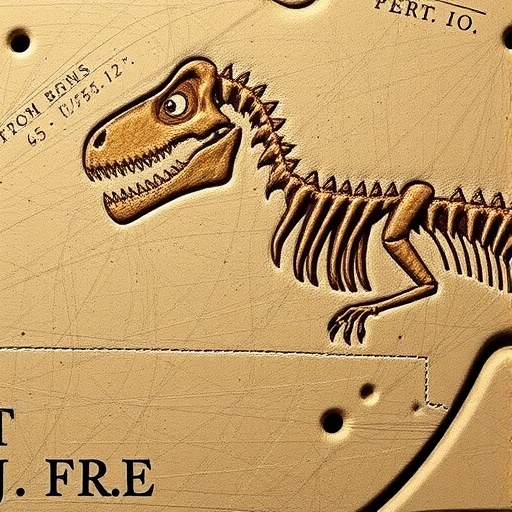
T. rex Likely Caused Tooth Marks on Cretaceous Fossil Bones in Wyoming

July 15, 2026
in Earth Science
Reading Time: 2 mins read
0
T. rex Likely Caused Tooth Marks on Cretaceous Fossil Bones in Wyoming

T. rex Likely Caused Tooth Marks on Cretaceous Fossil Bones in Wyoming

65
SHARES
587
VIEWS
Share on FacebookShare on Twitter
ADVERTISEMENT

A new study published July 15, 2026 in PLOS One reports that a cluster of fossilized dinosaur bones from northeastern Wyoming bears bite-related damage consistent with predation. The work focuses on tooth marks—punctures and scored depressions—that preserve behavioral clues far beyond what bones alone typically reveal.

The researchers analyzed more than 3,000 fossils from the late Cretaceous (~72–66 million years ago), drawn primarily from a bonebed of Edmontosaurus annectens, a large herbivorous dinosaur. Because tooth-like impressions can also originate from non-feeding processes, the team emphasized careful identification rather than assuming every hole or groove reflects a bite.

Using an interpretive framework built from earlier research and augmented with new observations, the scientists categorized multiple tooth-trace types. They documented features such as punctures on opposing surfaces and deep, curved scores that indicate how teeth likely contacted and displaced bone material during feeding.

Only 12 bones showed tooth traces, and within that subset the team found four specimens with distinctive patterns—shape, depth, and spacing—that collectively fit the dental signature expected for T. rex. The remaining tooth traces may reflect other predators present at the same time, potentially including additional theropod dinosaurs or crocodilians.

A key technical signal came from the absence of healing around most marks. In paleontological terms, this suggests the injuries were made around or after death, rather than during prolonged survival. Combined with earlier findings from the site, the results support a scenario in which carcasses were exposed, scavenged, and then eventually buried and fossilized.

The paper also addresses a central challenge in vertebrate ichnology: bite marks can resemble depressions caused by disease, insect activity, or post-mortem erosion. To strengthen ecological interpretations, the authors propose criteria to distinguish true tooth traces from alternative taphonomic explanations.

Overall, the study advances a practical tool for turning scratchy fossils into testable evidence of predator–prey interactions. By improving reliability in identifying tooth marks, it helps researchers reconstruct more accurate stories of how ancient ecosystems functioned.

For readers, the freely available article can be accessed here: https://plos.io/4eVZgJ7

Subject of Research: Animals
Article Title: Identification of tooth traces from a Cretaceous (Maastrichtian) Edmontosaurus annectens bonebed in the Lance Formation, Wyoming, U.S.A.
News Publication Date: 15-Jul-2026
Web References: https://plos.io/4eVZgJ7
References: C. T. Siviero B, Rega E, McLain MA, Brand LR, Nelsen D, Chadwick AV (2026) PLoS One 21(7): e0351939. https://doi.org/10.1371/journal.pone.0351939
Image Credits: C. T. Siviero et al., 2026, PLOS One, CC-BY 4.0
Keywords: dinosaur fossils, tooth traces, predation, Tyrannosaurus rex, Edmontosaurus annectens, taphonomy, ichnology, PLOS One

Tags: bone surface damage analysisCretaceous fossil bonesdinosaur bite marksdinosaur fossil taphonomydinosaur predation patternsEdmontosaurus annectens bonesfossilized tooth impressionsLate Cretaceous predator identificationpaleontological bite mark interpretationT. rex predation evidencetheropod feeding behaviorWyoming dinosaur fossils
Share26Tweet16
Previous Post

Trump 2025 Roadless Rule repeal could affect drinking water for 25 million

Next Post

Greenland snow reveals industrial impact through rising atmospheric methane levels

Related Posts

Economic Optimal Timing and Mix of Europe’s Coastal Adaptation to 2150
Earth Science

Economic Optimal Timing and Mix of Europe’s Coastal Adaptation to 2150

July 15, 2026
Bacteria form herds to evade predators, revealing new carbon cycle insight
Earth Science

Bacteria form herds to evade predators, revealing new carbon cycle insight

July 15, 2026
Warming Seas Drive Marine Fish to Expand Ranges and Migrate Deeper in Europe
Earth Science

Warming Seas Drive Marine Fish to Expand Ranges and Migrate Deeper in Europe

July 15, 2026
Coral Metabolomes Reflect Human Land Use and Associated Contaminant Loads
Earth Science

Coral Metabolomes Reflect Human Land Use and Associated Contaminant Loads

July 15, 2026
Noble gas records show deeper solar wind penetration on Moon’s far side
Earth Science

Noble gas records show deeper solar wind penetration on Moon’s far side

July 15, 2026
Sea level shifts north of Greenland reroute Arctic freshwater to North Atlantic
Earth Science

Sea level shifts north of Greenland reroute Arctic freshwater to North Atlantic

July 15, 2026
Next Post
Greenland snow reveals industrial impact through rising atmospheric methane levels

Greenland snow reveals industrial impact through rising atmospheric methane levels

  • Mothers who receive childcare support from maternal grandparents show more

    Mothers who receive childcare support from maternal grandparents show more parental warmth, finds NTU Singapore study

    27656 shares
    Share 11059 Tweet 6912
  • University of Seville Breaks 120-Year-Old Mystery, Revises a Key Einstein Concept

    1061 shares
    Share 424 Tweet 265
  • Bee body mass, pathogens and local climate influence heat tolerance

    682 shares
    Share 273 Tweet 171
  • Researchers record first-ever images and data of a shark experiencing a boat strike

    546 shares
    Share 218 Tweet 137
  • Groundbreaking Clinical Trial Reveals Lubiprostone Enhances Kidney Function

    531 shares
    Share 212 Tweet 133
Science

Embark on a thrilling journey of discovery with Scienmag.com—your ultimate source for cutting-edge breakthroughs. Immerse yourself in a world where curiosity knows no limits and tomorrow’s possibilities become today’s reality!

RECENT NEWS

  • Correction: Positive TKT–c-Myc loop promotes TACE resistance in hepatocellular carcinoma
  • Perseverance rover captures unprecedented record of ancient Mars asteroid impacts
  • Reheating Power Cycles Could Boost Electricity from LNG’s Wasted Cold Energy
  • ECOG-ACRIN ENDURANCE Trial Publishes Randomized Evidence on Lenalidomide Maintenance Duration in Multiple Myeloma

Categories

  • Agriculture
  • Anthropology
  • Archaeology
  • Athmospheric
  • Biology
  • Biotechnology
  • Blog
  • Bussines
  • Cancer
  • Chemistry
  • Climate
  • Earth Science
  • Editorial Policy
  • Marine
  • Mathematics
  • Medicine
  • Pediatry
  • Policy
  • Psychology & Psychiatry
  • Science Education
  • Social Science
  • Space
  • Technology and Engineering

Subscribe to Blog via Email

Enter your email address to subscribe to this blog and receive notifications of new posts by email.

Join 5,146 other subscribers

© 2025 Scienmag - Science Magazine

Welcome Back!

Login to your account below

Forgotten Password?

Retrieve your password

Please enter your username or email address to reset your password.

Log In
No Result
View All Result
  • HOME
  • SCIENCE NEWS
  • CONTACT US

© 2025 Scienmag - Science Magazine

Discover more from Science

Subscribe now to keep reading and get access to the full archive.

Continue reading
