


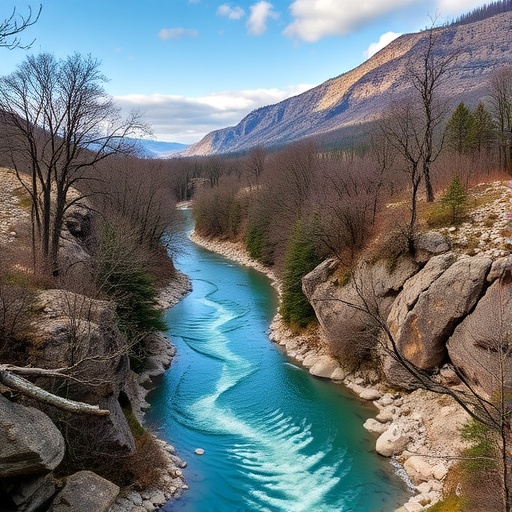
A new research paper examines how the United States’ “Roadless Rule”—a policy that has limited logging and road construction in national parks and wilderness areas—may translate into real-world benefits for both ecosystems and the people who depend on them. The study arrives amid renewed controversy over federal efforts to repeal or weaken the protections that restrict disturbance in previously roadless watersheds.
In the paper’s framing, the stakes are not abstract. Many of America’s rivers and streams are sustained by headwater areas that remained relatively undisturbed. When roads are built or harvesting expands, rainfall runoff patterns can change, erosion risk can rise, and sediment loads can increase. Those physical shifts can cascade downstream, affecting water quality even years later.
For communities, the concern is immediate: about 25 million Americans rely on drinking water sourced from watersheds that were previously classified as roadless. The researchers emphasize that watershed condition influences how easily water can be treated. More sediment and contaminants typically mean higher treatment costs and more frequent operational challenges.
The work also highlights how road building can alter habitat connectivity. Roads can fragment landscapes, facilitate invasive species, and change local microclimates, all of which can pressure aquatic and terrestrial biodiversity. In water systems, these ecosystem changes can influence nutrient cycling and the biological communities that help stabilize stream health.
Methodologically, the study evaluates the value of the Roadless Rule by connecting policy protections to measurable environmental outcomes and human benefits. This approach treats conservation as infrastructure—one that buffers water supplies and ecosystem services against disturbance-driven degradation.
The article, published in PLOS Water, provides a structured assessment of both “people” and “nature” outcomes, aiming to quantify what is gained when watersheds remain roadless. Its conclusions are relevant not only for conservation planning, but also for public health, budgeting, and risk management for water utilities.
With the policy landscape shifting in 2025 under the Trump administration’s actions, the findings offer a timely lens on how federal land decisions can reverberate through drinking-water systems. If road restrictions are loosened, the researchers suggest, the costs may extend beyond forests—into taps.
Finally, the paper’s transparency notes that the authors report no competing interests, and it lists support from the University of Washington and a contract involving Conservation Science Partners. As debates continue, the study adds a data-driven warning that watershed protection can function as a frontline safeguard for millions of people.
Cite Scienmag News
Margaret Porter. (July 15, 2026). Trump 2025 Roadless Rule repeal could affect drinking water for 25 million. Scienmag. https://scienmag.com/trump-2025-roadless-rule-repeal-could-affect-drinking-water-for-25-million/
Margaret Porter. "Trump 2025 Roadless Rule repeal could affect drinking water for 25 million." Scienmag, 15 July 2026, https://scienmag.com/trump-2025-roadless-rule-repeal-could-affect-drinking-water-for-25-million/. Accessed 3 September 2026.
Margaret Porter. "Trump 2025 Roadless Rule repeal could affect drinking water for 25 million." Scienmag. July 15, 2026. https://scienmag.com/trump-2025-roadless-rule-repeal-could-affect-drinking-water-for-25-million/


