


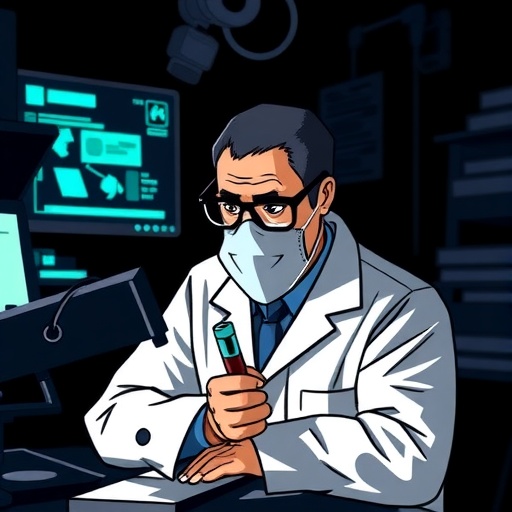
Watchdog journalism plays a crucial role in keeping science honest, but new qualitative research shows it is far more demanding than most readers imagine. Led by University of Amsterdam media scholar Alice Fleerackers, the study highlights how reporters investigating research integrity issues must combine legal caution with deep technical scrutiny—often under newsroom constraints.
The work investigates a specialised form of critical science reporting that follows suspicious claims through to evidence-based conclusions. Instead of relying on a quick expert quote, journalists reconstruct timelines, review papers and supplementary materials, and assess methodological choices that can be difficult to interpret even for specialists.
Fleerackers points out that these inquiries commonly require weeks or months of labour. Journalists may need to map data pathways, examine how results were produced, and compare reported findings with what can be substantiated across documents and sources. In practice, this means watchdog work is investigative, document-heavy, and time-sensitive.
Yet the study finds a recurring tension: practical feasibility can override public interest. When budgets shrink, expert access becomes harder, and legal or fact-checking capacity is limited, editorial teams may choose stories that are faster to verify and likely to perform better online.
A major challenge is that evidence thresholds are high because reputational and legal risks are real. Even when integrity problems are clearly newsworthy, the time required to reach defensible conclusions—and the risk of being wrong—can prevent publication.
Access barriers also shape what reaches the public. Institutions and communications departments can act as gatekeepers, limiting what journalists can see, whom they can contact, and how quickly they can obtain key documentation.
The research also notes that national context and legislation affect risk levels and transparency. Cross-border reporting can therefore involve additional complications, from procedural requirements to uncertainty about how allegations should be framed.
To strengthen science communication, the study recommends expanding newsroom capacity for investigative work through time, training, and dedicated support. It also calls for collaborations or targeted funding involving universities and research integrity bodies.
Finally, the researchers argue that carefully investigated stories can improve public understanding of what goes wrong in science—and how corrective measures can reduce harm. In an era of viral headlines, rigorous watchdog reporting remains a key safeguard for trust.
Cite Scienmag News
Courtney Benton. (July 15, 2026). Science Journalism Watchdog Crucial Yet Vulnerable Amid Mounting Pressures. Scienmag. https://scienmag.com/science-journalism-watchdog-crucial-yet-vulnerable-amid-mounting-pressures/
Courtney Benton. "Science Journalism Watchdog Crucial Yet Vulnerable Amid Mounting Pressures." Scienmag, 15 July 2026, https://scienmag.com/science-journalism-watchdog-crucial-yet-vulnerable-amid-mounting-pressures/. Accessed 4 September 2026.
Courtney Benton. "Science Journalism Watchdog Crucial Yet Vulnerable Amid Mounting Pressures." Scienmag. July 15, 2026. https://scienmag.com/science-journalism-watchdog-crucial-yet-vulnerable-amid-mounting-pressures/


