

Wednesday, July 15, 2026
Science
No Result
View All Result
  • Login
  • HOME
  • SCIENCE NEWS
  • CONTACT US
  • HOME
  • SCIENCE NEWS
  • CONTACT US
No Result
View All Result
Scienmag
No Result
View All Result
Home Science News Social Science

CUNY Study Confirms Discovery of New African Monkey Species

July 15, 2026
in Social Science
Reading Time: 2 mins read
0
CUNY Study Confirms Discovery of New African Monkey Species

CUNY Study Confirms Discovery of New African Monkey Species

65
SHARES
587
VIEWS
Share on FacebookShare on Twitter
ADVERTISEMENT

A research team, partly led by Christopher Gilbert (CUNY Graduate Center and Hunter College), has confirmed a previously unknown African monkey species in the rainforests of the Democratic Republic of Congo. The discovery, described as one of the most significant primate findings in decades, highlights how much mammal biodiversity in Central Africa remains undocumented.

Named Colobus congoensis—locally called “Likweli”—the species represents only the fifth new monkey species identified in Africa over the past 75 years. The study appears in PLOS One, and the authors argue that the evidence meets the high threshold required to validate a new evolutionary lineage rather than a regional variant of a known taxon.

The work integrates four complementary lines of evidence: genetics, anatomy, field observations, and local ecological knowledge. Researchers used museum holdings alongside comparative datasets, examining skull morphology, pelage traits, and skeletal characteristics to demonstrate that this monkey is distinct from other African colobus species.

Gilbert’s team focused on formal anatomical diagnosis after field researchers recovered specimens enabling high-resolution comparisons. Extensive reference collections from the Yale Peabody Museum and the American Museum of Natural History were analyzed, with key measurements compiled in a comparative database used to separate C. congoensis from its closest congeners.

Genetic analyses placed the new species within the genus Colobus while estimating that it diverged from its nearest known relative, Colobus satanas, roughly 4–5 million years ago. Independent anatomical assessments supported the same species-level conclusion.

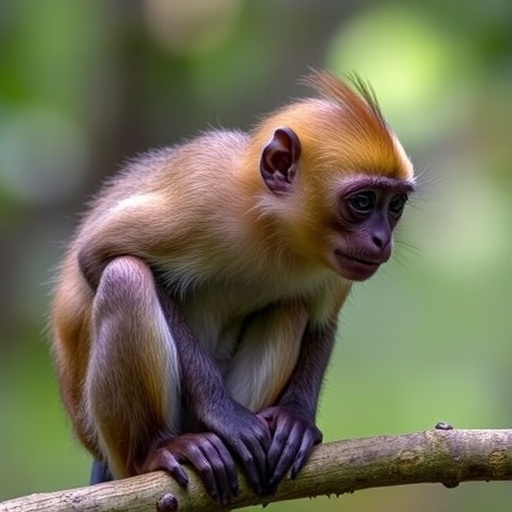
The species is immediately recognizable for a glossy black coat, cape-like fur, a sweeping tail, and orange-cream facial markings. At about 15 pounds, it is smaller than its closest relatives and exhibits distinctive cranial, dental, and skeletal traits.

Beyond morphology, the researchers documented unique vocalizations. The Likweli’s deep, resonant roaring calls show structural differences from related colobus species, strengthening the behavioral case for taxonomic distinctiveness.

However, the monkey’s conservation outlook is concerning. Between 2018 and 2022, observers recorded only 114 sightings across an estimated 1,700 square kilometers, suggesting a restricted distribution vulnerable to habitat loss and hunting pressure.

The authors propose Endangered status, emphasizing that most confirmed habitat lies within Lomami National Park—making protection of the region a central priority for both biodiversity and evolutionary research.

Subject of Research: Animals
Article Title: Likweli: A remarkable new species of Colobus monkey from the Lomami National Park, Democratic Republic of Congo
News Publication Date: 15-Jul-2026
Web References: http://dx.doi.org/10.1371/journal.pone.0349857
References: 10.1371/journal.pone.0349857
Image Credits: Bernard Bonanga

Keywords: primates, genetics, evolutionary biology, anthropology, animals

Tags: African mammal biodiversityAfrican monkey species discoveryanatomical and skeletal distinctions in primatesColobus congoensis identificationCUNY primate biodiversity studiesecological knowledge in species discoverygenetic analysis of African monkeysmuseum collections in primate researchnew primate species in Congoprimate taxonomy and classificationrainforest primates researchsignificance of primate discoveries in Africa
Share26Tweet16
Previous Post

New African monkey species discovered deep in Congo rainforest

Next Post

Trump 2025 Roadless Rule repeal could affect drinking water for 25 million

Related Posts

Study Shows Time Online Shapes Outcomes, Not Just Content Exposure
Social Science

Study Shows Time Online Shapes Outcomes, Not Just Content Exposure

July 15, 2026
Loneliness Is Making People Sick, Doctors Say Can’t Cure It Alone
Social Science

Loneliness Is Making People Sick, Doctors Say Can’t Cure It Alone

July 15, 2026
Randomized trial finds digital training improves depression care for frontline workers
Social Science

Randomized trial finds digital training improves depression care for frontline workers

July 15, 2026
Indian Street Dog Crisis Raises New Questions on Tropical Urban Multispecies Coexistence
Social Science

Indian Street Dog Crisis Raises New Questions on Tropical Urban Multispecies Coexistence

July 15, 2026
Hanyang Study Finds Carbon Pricing Boosts Greener Tourist Intentions
Social Science

Hanyang Study Finds Carbon Pricing Boosts Greener Tourist Intentions

July 15, 2026
Study Finds Loneliness Strongly Linked to Worse Mental Health and Wellbeing
Social Science

Study Finds Loneliness Strongly Linked to Worse Mental Health and Wellbeing

July 15, 2026
Next Post
Trump 2025 Roadless Rule repeal could affect drinking water for 25 million

Trump 2025 Roadless Rule repeal could affect drinking water for 25 million

  • Mothers who receive childcare support from maternal grandparents show more

    Mothers who receive childcare support from maternal grandparents show more parental warmth, finds NTU Singapore study

    27656 shares
    Share 11059 Tweet 6912
  • University of Seville Breaks 120-Year-Old Mystery, Revises a Key Einstein Concept

    1061 shares
    Share 424 Tweet 265
  • Bee body mass, pathogens and local climate influence heat tolerance

    682 shares
    Share 273 Tweet 171
  • Researchers record first-ever images and data of a shark experiencing a boat strike

    546 shares
    Share 218 Tweet 137
  • Groundbreaking Clinical Trial Reveals Lubiprostone Enhances Kidney Function

    531 shares
    Share 212 Tweet 133
Science

Embark on a thrilling journey of discovery with Scienmag.com—your ultimate source for cutting-edge breakthroughs. Immerse yourself in a world where curiosity knows no limits and tomorrow’s possibilities become today’s reality!

RECENT NEWS

  • Perseverance rover captures unprecedented record of ancient Mars asteroid impacts
  • Reheating Power Cycles Could Boost Electricity from LNG’s Wasted Cold Energy
  • ECOG-ACRIN ENDURANCE Trial Publishes Randomized Evidence on Lenalidomide Maintenance Duration in Multiple Myeloma
  • Tiny Water Droplets May Unlock Solutions for Global Plastic Waste Dissolving

Categories

  • Agriculture
  • Anthropology
  • Archaeology
  • Athmospheric
  • Biology
  • Biotechnology
  • Blog
  • Bussines
  • Cancer
  • Chemistry
  • Climate
  • Earth Science
  • Editorial Policy
  • Marine
  • Mathematics
  • Medicine
  • Pediatry
  • Policy
  • Psychology & Psychiatry
  • Science Education
  • Social Science
  • Space
  • Technology and Engineering

Subscribe to Blog via Email

Enter your email address to subscribe to this blog and receive notifications of new posts by email.

Join 5,146 other subscribers

© 2025 Scienmag - Science Magazine

Welcome Back!

Login to your account below

Forgotten Password?

Retrieve your password

Please enter your username or email address to reset your password.

Log In
No Result
View All Result
  • HOME
  • SCIENCE NEWS
  • CONTACT US

© 2025 Scienmag - Science Magazine

Discover more from Science

Subscribe now to keep reading and get access to the full archive.

Continue reading
