

Wednesday, July 15, 2026
Science
No Result
View All Result
  • Login
  • HOME
  • SCIENCE NEWS
  • CONTACT US
  • HOME
  • SCIENCE NEWS
  • CONTACT US
No Result
View All Result
Scienmag
No Result
View All Result
Home Science News Medicine

Oncogene Inactivation–Triggered Senescence Enables Tumor Relapse

July 15, 2026
in Medicine
Reading Time: 2 mins read
0
Oncogene Inactivation–Triggered Senescence Enables Tumor Relapse

Oncogene Inactivation–Triggered Senescence Enables Tumor Relapse

65
SHARES
587
VIEWS
Share on FacebookShare on Twitter
ADVERTISEMENT

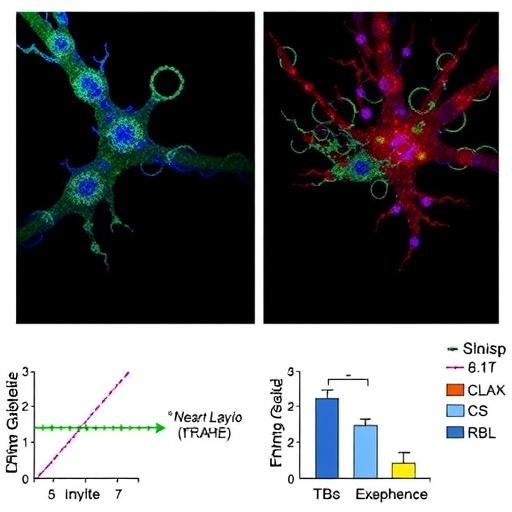
A new study in Nature Communications reveals how cancer cells can use the body’s own defenses against them. The work, by Schmitt, Hönig, Norcia and colleagues, examines what happens after oncogenes are abruptly switched off—an approach often considered for targeted cancer therapies. Instead of leading to lasting tumor control, turning off an oncogenic driver can trigger a cellular stress response that includes oncogene inactivation-induced senescence.

Senescence is frequently described as a brake on uncontrolled growth. However, the research shows that this growth arrest is not necessarily the end of the story. The authors report that senescent states can become a launching pad for later relapse, particularly when tumor cells find ways to restore proliferative capacity over time.

Using experimental tumor models, the team traced the dynamics of senescence emergence and subsequent tumor outgrowth. Their data indicate that senescence does not simply silence cancer biology; it can reshape the tumor microenvironment and influence neighboring cells’ behavior. In this way, the “paused” cells act as an active component of the relapse process rather than passive end-stage tissue.

The study emphasizes mechanisms tied to how senescent cells communicate with their surroundings. Senescent tumor cells can alter signaling pathways through sustained secretion of factors that affect immune activity, inflammatory tone, and tissue remodeling. These changes can reduce the effectiveness of senescence-based suppression and help selected cancer cell populations regain fitness.

Importantly, the researchers connect relapse potential to the timing and persistence of senescence. Tumors that enter senescence-like arrest after oncogene shutdown may initially shrink, but residual, stress-adapted cell states can re-emerge as proliferative lesions. Thus, the same therapeutic maneuver can yield short-term benefit followed by long-term risk.

“Our findings highlight a paradox” is essentially the message of the paper: blocking an oncogene can provoke a senescent barrier, yet that barrier may also facilitate escape. The work therefore suggests that successful targeted therapy may require combining oncogene inactivation with strategies that prevent senescent cells from promoting relapse.

Beyond treatment implications, the research provides a framework for interpreting clinical patterns of tumor dormancy and recurrence following targeted interventions. It also raises the possibility that biomarkers of senescence state and senescence-associated secretory activity could help forecast relapse trajectories.

DOI: 10.1038/s41467-026-75021-9

Tags: cancer cell senescencecancer therapy resistancecellular stress response in cancerimmune modulation by senescent cellsoncogene inactivationrelapse after oncogene suppressionsenescence-associated secretory phenotypetargeted cancer therapytumor cell proliferative capacitytumor cell signaling pathwaystumor microenvironmenttumor relapse mechanisms
Share26Tweet16
Previous Post

Cross-Scale Intelligence Framework Enables Predictions for Aquatic Ecosystem Health

Next Post

COVID-19 fatigue linked to hippocampal immune and metabolic changes

Related Posts

Researchers Improve Allergy Testing to Detect Antibodies Behind Reactions
Medicine

Researchers Improve Allergy Testing to Detect Antibodies Behind Reactions

July 15, 2026
Regulatory Hurdles Undermine Cell Therapy Approvals: Lessons from IND and BLA Failures
Medicine

Regulatory Hurdles Undermine Cell Therapy Approvals: Lessons from IND and BLA Failures

July 15, 2026
Machine Learning Method Widens Accurate Use of Martin-Hopkins LDL Risk Equation
Medicine

Machine Learning Method Widens Accurate Use of Martin-Hopkins LDL Risk Equation

July 15, 2026
SIRT5-SUCLG2 Desuccinylation Axis Delays Ovarian Aging Through Mitochondrial-Epigenetic Control
Medicine

SIRT5-SUCLG2 Desuccinylation Axis Delays Ovarian Aging Through Mitochondrial-Epigenetic Control

July 15, 2026
Quality Improvement Project Enhances Neonatology Research Experience for Families
Medicine

Quality Improvement Project Enhances Neonatology Research Experience for Families

July 15, 2026
Day After Mass Shooting Sees Rise in Traffic Accidents
Medicine

Day After Mass Shooting Sees Rise in Traffic Accidents

July 15, 2026
Next Post
COVID-19 fatigue linked to hippocampal immune and metabolic changes

COVID-19 fatigue linked to hippocampal immune and metabolic changes

  • Mothers who receive childcare support from maternal grandparents show more

    Mothers who receive childcare support from maternal grandparents show more parental warmth, finds NTU Singapore study

    27656 shares
    Share 11059 Tweet 6912
  • University of Seville Breaks 120-Year-Old Mystery, Revises a Key Einstein Concept

    1061 shares
    Share 424 Tweet 265
  • Bee body mass, pathogens and local climate influence heat tolerance

    682 shares
    Share 273 Tweet 171
  • Researchers record first-ever images and data of a shark experiencing a boat strike

    546 shares
    Share 218 Tweet 137
  • Groundbreaking Clinical Trial Reveals Lubiprostone Enhances Kidney Function

    531 shares
    Share 212 Tweet 133
Science

Embark on a thrilling journey of discovery with Scienmag.com—your ultimate source for cutting-edge breakthroughs. Immerse yourself in a world where curiosity knows no limits and tomorrow’s possibilities become today’s reality!

RECENT NEWS

  • Novel Prognostic Biomarker and Oncogenic Driver Identified in Colorectal Cancer
  • ROS Dynamics Controlled by Polyoxometalate-Functionalized Fe3O4 Nanozyme for Infected Wound Healing
  • Researchers Improve Allergy Testing to Detect Antibodies Behind Reactions
  • Warming Seas Drive Marine Fish to Expand Ranges and Migrate Deeper in Europe

Categories

  • Agriculture
  • Anthropology
  • Archaeology
  • Athmospheric
  • Biology
  • Biotechnology
  • Blog
  • Bussines
  • Cancer
  • Chemistry
  • Climate
  • Earth Science
  • Editorial Policy
  • Marine
  • Mathematics
  • Medicine
  • Pediatry
  • Policy
  • Psychology & Psychiatry
  • Science Education
  • Social Science
  • Space
  • Technology and Engineering

Subscribe to Blog via Email

Enter your email address to subscribe to this blog and receive notifications of new posts by email.

Join 5,146 other subscribers

© 2025 Scienmag - Science Magazine

Welcome Back!

Login to your account below

Forgotten Password?

Retrieve your password

Please enter your username or email address to reset your password.

Log In
No Result
View All Result
  • HOME
  • SCIENCE NEWS
  • CONTACT US

© 2025 Scienmag - Science Magazine

Discover more from Science

Subscribe now to keep reading and get access to the full archive.

Continue reading
