


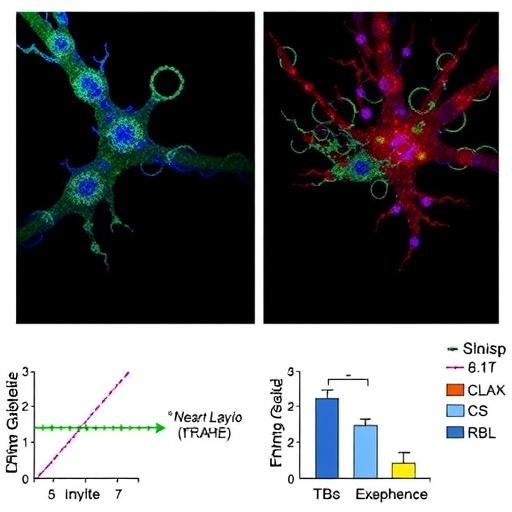
A new study in Nature Communications reveals how cancer cells can use the body’s own defenses against them. The work, by Schmitt, Hönig, Norcia and colleagues, examines what happens after oncogenes are abruptly switched off—an approach often considered for targeted cancer therapies. Instead of leading to lasting tumor control, turning off an oncogenic driver can trigger a cellular stress response that includes oncogene inactivation-induced senescence.
Senescence is frequently described as a brake on uncontrolled growth. However, the research shows that this growth arrest is not necessarily the end of the story. The authors report that senescent states can become a launching pad for later relapse, particularly when tumor cells find ways to restore proliferative capacity over time.
Using experimental tumor models, the team traced the dynamics of senescence emergence and subsequent tumor outgrowth. Their data indicate that senescence does not simply silence cancer biology; it can reshape the tumor microenvironment and influence neighboring cells’ behavior. In this way, the “paused” cells act as an active component of the relapse process rather than passive end-stage tissue.
The study emphasizes mechanisms tied to how senescent cells communicate with their surroundings. Senescent tumor cells can alter signaling pathways through sustained secretion of factors that affect immune activity, inflammatory tone, and tissue remodeling. These changes can reduce the effectiveness of senescence-based suppression and help selected cancer cell populations regain fitness.
Importantly, the researchers connect relapse potential to the timing and persistence of senescence. Tumors that enter senescence-like arrest after oncogene shutdown may initially shrink, but residual, stress-adapted cell states can re-emerge as proliferative lesions. Thus, the same therapeutic maneuver can yield short-term benefit followed by long-term risk.
“Our findings highlight a paradox” is essentially the message of the paper: blocking an oncogene can provoke a senescent barrier, yet that barrier may also facilitate escape. The work therefore suggests that successful targeted therapy may require combining oncogene inactivation with strategies that prevent senescent cells from promoting relapse.
Beyond treatment implications, the research provides a framework for interpreting clinical patterns of tumor dormancy and recurrence following targeted interventions. It also raises the possibility that biomarkers of senescence state and senescence-associated secretory activity could help forecast relapse trajectories.
Cite Scienmag News
Nathaniel Bowman. (July 15, 2026). Oncogene Inactivation–Triggered Senescence Enables Tumor Relapse. Scienmag. https://scienmag.com/oncogene-inactivation-triggered-senescence-enables-tumor-relapse/
Nathaniel Bowman. "Oncogene Inactivation–Triggered Senescence Enables Tumor Relapse." Scienmag, 15 July 2026, https://scienmag.com/oncogene-inactivation-triggered-senescence-enables-tumor-relapse/. Accessed 4 September 2026.
Nathaniel Bowman. "Oncogene Inactivation–Triggered Senescence Enables Tumor Relapse." Scienmag. July 15, 2026. https://scienmag.com/oncogene-inactivation-triggered-senescence-enables-tumor-relapse/


