


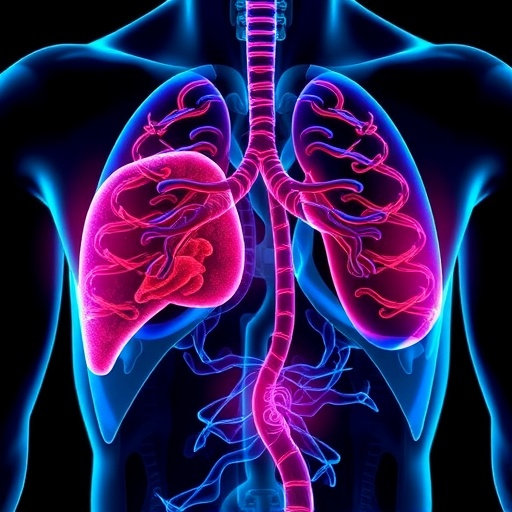
Hepatocellular carcinoma (HCC), a formidable global health challenge, continues to exhibit high mortality rates primarily due to insufficient early diagnostic biomarkers and its late-stage detection. Recent breakthroughs in multi-omics analyses combined with advancements in liquid biopsy technologies have begun to transform the landscape of prognosis and therapeutic monitoring for this devastating malignancy. By integrating genomic, transcriptomic, and immune profiling, researchers have identified gene signatures that not only predict patient survival outcomes but also their responsiveness to immune checkpoint inhibitors (ICIs), marking a significant stride toward personalized oncology.
The molecular heterogeneity of HCC underpins its notorious resistance to standard therapies. Key driver mutations in genes such as TP53, present in approximately half of cases, TERT promoter mutations in nearly 60%, and aberrations in the Wnt/β-catenin pathway cumulatively orchestrate tumor aggressiveness and facilitate evasion of immune surveillance. Epigenetic modifications, including DNA methylation patterns and the regulatory roles of non-coding RNAs, further complicate tumor behavior, creating a dynamic microenvironment that influences disease progression and therapy response.
Gene expression panels comprising distinct sets of genes—ranging from small 4-gene signatures to more comprehensive 9-gene arrays—have demonstrated superior prognostic value compared to traditional staging systems like BCLC or TNM. These panels stratify patients by risk of recurrence and overall survival, enabling more tailored decisions regarding transplant eligibility, adjuvant treatments, and post-therapy surveillance. Public genomic repositories such as TCGA and GEO have been instrumental in validating these signatures, despite challenges posed by RNA degradation in formalin-fixed samples.
Beyond tumor genomics, the tumor microenvironment (TME) critically dictates patient outcomes. Transcriptomic analyses reveal that an immune “hot” TME, characterized by elevated CD8A and GZMB expression indicating active cytotoxic T cell infiltration, is associated with improved prognosis and greater sensitivity to ICIs. Conversely, “cold” tumors exhibit Wnt-driven immune exclusion and are frequently resistant to immunotherapy. Stromal components and cytokines such as VEGFA and IL6 play pivotal roles in modulating tumor-stroma interactions and metastatic potential, highlighting additional layers of complexity.
Immune checkpoint blockade, although revolutionary, displays unpredictable clinical efficacy in HCC. Gene expression-based immune signatures related to interferon-gamma signaling pathways—incorporating transcripts like CXCL9, CXCL10, IDO1, and STAT1—outperform single biomarker assessments for predicting anti-PD-1/PD-L1 therapy response. Large-scale trials, including CheckMate 040 and atezolizumab/bevacizumab studies, underscore the promise of multi-gene scores in refining patient selection. Moreover, innovative combinational approaches, such as employing oncolytic viruses or localized radiation, aim to convert immunologically “cold” tumors into “hot” ones, thereby potentiating the efficacy of ICIs.
Emerging evidence champions multi-omics integration as a superior strategy, combining genomic mutations, transcriptome dynamics, epigenetic landscape, proteomic alterations, and metabolomic shifts to construct robust predictive models. Non-coding RNAs like circPRDM4, HOTAIR, and MALAT1 not only regulate PD-L1 expression but also modulate immune evasion mechanisms, positioning them as compelling targets for overcoming immunotherapy resistance.
Nevertheless, despite these technological and scientific advances, translating multi-omics and liquid biopsy signatures into routine clinical workflows remains impeded by several challenges. Cross-platform reproducibility, clinical validation in diverse patient populations, ethical considerations surrounding data privacy, and standardization of assays are crucial hurdles that must be addressed through multidisciplinary collaborations. Successfully integrating these approaches promises to usher in a new era of personalized medicine in HCC, improving early detection, predicting therapeutic response with precision, and ultimately enhancing patient survival.
Cite Scienmag News
Nathaniel Bowman. (July 14, 2026). New Insights into Liver Cancer Gene Signatures for Prognosis and Therapy. Scienmag. https://scienmag.com/new-insights-into-liver-cancer-gene-signatures-for-prognosis-and-therapy/
Nathaniel Bowman. "New Insights into Liver Cancer Gene Signatures for Prognosis and Therapy." Scienmag, 14 July 2026, https://scienmag.com/new-insights-into-liver-cancer-gene-signatures-for-prognosis-and-therapy/. Accessed 3 September 2026.
Nathaniel Bowman. "New Insights into Liver Cancer Gene Signatures for Prognosis and Therapy." Scienmag. July 14, 2026. https://scienmag.com/new-insights-into-liver-cancer-gene-signatures-for-prognosis-and-therapy/


