

Tuesday, July 14, 2026
Science
No Result
View All Result
  • Login
  • HOME
  • SCIENCE NEWS
  • CONTACT US
  • HOME
  • SCIENCE NEWS
  • CONTACT US
No Result
View All Result
Scienmag
No Result
View All Result
Home Science News Technology and Engineering

JMIR News: CMR-CLIP, Stroke Rehab Simulators, and Menopause Tracking Apps

July 14, 2026
in Technology and Engineering
Reading Time: 2 mins read
0
JMIR News: CMR-CLIP, Stroke Rehab Simulators, and Menopause Tracking Apps

JMIR News: CMR-CLIP, Stroke Rehab Simulators, and Menopause Tracking Apps

65
SHARES
587
VIEWS
Share on FacebookShare on Twitter
ADVERTISEMENT

On July 14, 2026, JMIR Publications highlighted three high-impact “News and Perspectives” stories showing how digital tools are entering everyday clinical workflows—moving from experimental demos to systems that can scale care, shorten waits, and support patients at home. From AI-assisted imaging to immersive rehabilitation and risk-aware app guidance, the common theme is clear: software is becoming a new kind of healthcare infrastructure.

First, researchers reported an AI model designed to streamline cardiac magnetic resonance (CMR) interpretation. In “AI Model Improves Interpretation of Cardiac Magnetic Resonance Imaging Scans,” a vision-language system called CMR-CLIP matches images to clinical-text prompts rather than relying only on manually labeled diagnostic categories. Trained on more than 11,000 deidentified examinations, the model learns to connect scan appearance with described conditions, offering a path to faster, more consistent reporting.

A key promise is equity in access. Expert CMR reading is specialized and unevenly distributed across hospitals, creating bottlenecks when communities lack dedicated cardiac imaging specialists. By automating parts of the reporting pipeline, the approach could help democratize interpretation and reduce delays in decision-making.

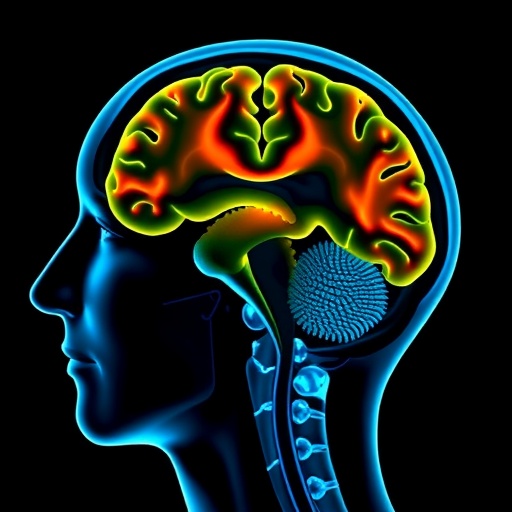
Second, the rehabilitation story turns to virtual reality (VR) as a training partner for poststroke recovery. “On the Road Again: Virtual Reality for Poststroke Rehabilitation” describes immersive driving simulators that let patients practice motor and cognitive control safely. With adaptive interfaces—such as left-foot pedals and one-handed steering supports—VR enables repeated task practice tailored to individual needs.

Clinical reasoning behind the technology emphasizes learning through repetition. The repeated, realistic simulations are intended to stimulate new neural pathways involved in motor control and decision-making, with the article noting that current efforts in driving may extend to daily activities, balance, and gait training.

Third, JMIR addressed the growing world of mobile menopause applications. “Menopause Apps Offer Empowerment, but Pose Risks” frames the trend as a double-edged sword: symptom tracking can empower users and improve communication with clinicians, yet many apps may not provide evidence-based medical guidance.

The story flags concerns about medical oversight and testing practices. A referenced review found that only a minority of menopause apps involved medical professionals or used evidence-based information. The piece also warns that some products promote unreliable at-home hormone testing and collect user data in ways that can fuel marketing of expensive, unregulated “bio-identical” hormones.

Together, the three stories portray a future where digital health tools are judged not only by novelty, but by technical performance, clinical safety, and real-world usefulness. Whether it’s AI reading scans, VR rebuilding skills, or apps supporting women through transitions, the next wave is about trustworthy impact.

Keywords

Artificial intelligence; Cardiac imaging; Virtual reality; Menopause apps; Medical imaging; MRI

Tags: AI cardiac imagingat-home rehabilitation technologyautomated medical image interpretationCMR-CLIP modeldigital health for patient self-managementdigital health toolshealth equity through automationhealthcare software infrastructureimmersive therapy for stroke recoverymenopause tracking health appsscalable clinical workflowsstroke rehabilitation virtual reality
Share26Tweet16
Previous Post

New Insights into Liver Cancer Gene Signatures for Prognosis and Therapy

Next Post

Genomic data reveal widespread hybridization and invasion history of saltcedar

Related Posts

SwRI and SMU to Create AI Controller for Multi-Modal Microgrids, Storage
Technology and Engineering

SwRI and SMU to Create AI Controller for Multi-Modal Microgrids, Storage

July 14, 2026
New Framework Links Neural Superposition to Sparse Interpretable Codes
Technology and Engineering

New Framework Links Neural Superposition to Sparse Interpretable Codes

July 14, 2026
AI-driven Generative Model Revolutionizes Information Metamaterial Design
Technology and Engineering

AI-driven Generative Model Revolutionizes Information Metamaterial Design

July 14, 2026
Space launch costs may drop over 90% by 2040, revolutionizing space market
Technology and Engineering

Space launch costs may drop over 90% by 2040, revolutionizing space market

July 14, 2026
Vacuum-Deposited Perovskite Solar Cells Enhanced by Controlled Crystallization
Technology and Engineering

Vacuum-Deposited Perovskite Solar Cells Enhanced by Controlled Crystallization

July 14, 2026
Europe advances integrated charging and energy systems for optimal V2G deployment
Technology and Engineering

Europe advances integrated charging and energy systems for optimal V2G deployment

July 14, 2026
Next Post
Genomic data reveal widespread hybridization and invasion history of saltcedar

Genomic data reveal widespread hybridization and invasion history of saltcedar

  • Mothers who receive childcare support from maternal grandparents show more

    Mothers who receive childcare support from maternal grandparents show more parental warmth, finds NTU Singapore study

    27656 shares
    Share 11059 Tweet 6912
  • University of Seville Breaks 120-Year-Old Mystery, Revises a Key Einstein Concept

    1061 shares
    Share 424 Tweet 265
  • Bee body mass, pathogens and local climate influence heat tolerance

    682 shares
    Share 273 Tweet 171
  • Researchers record first-ever images and data of a shark experiencing a boat strike

    546 shares
    Share 218 Tweet 137
  • Groundbreaking Clinical Trial Reveals Lubiprostone Enhances Kidney Function

    531 shares
    Share 212 Tweet 133
Science

Embark on a thrilling journey of discovery with Scienmag.com—your ultimate source for cutting-edge breakthroughs. Immerse yourself in a world where curiosity knows no limits and tomorrow’s possibilities become today’s reality!

RECENT NEWS

  • First Space Diagnostic X-rays Signal a New Era for Astronaut Health
  • SwRI and SMU to Create AI Controller for Multi-Modal Microgrids, Storage
  • Treatment delays in colorectal cancer linked to higher metastasis risk thresholds
  • Genomic data reveal widespread hybridization and invasion history of saltcedar

Categories

  • Agriculture
  • Anthropology
  • Archaeology
  • Athmospheric
  • Biology
  • Biotechnology
  • Blog
  • Bussines
  • Cancer
  • Chemistry
  • Climate
  • Earth Science
  • Editorial Policy
  • Marine
  • Mathematics
  • Medicine
  • Pediatry
  • Policy
  • Psychology & Psychiatry
  • Science Education
  • Social Science
  • Space
  • Technology and Engineering

Subscribe to Blog via Email

Enter your email address to subscribe to this blog and receive notifications of new posts by email.

Join 5,146 other subscribers

© 2025 Scienmag - Science Magazine

Welcome Back!

Login to your account below

Forgotten Password?

Retrieve your password

Please enter your username or email address to reset your password.

Log In
No Result
View All Result
  • HOME
  • SCIENCE NEWS
  • CONTACT US

© 2025 Scienmag - Science Magazine

Discover more from Science

Subscribe now to keep reading and get access to the full archive.

Continue reading
