


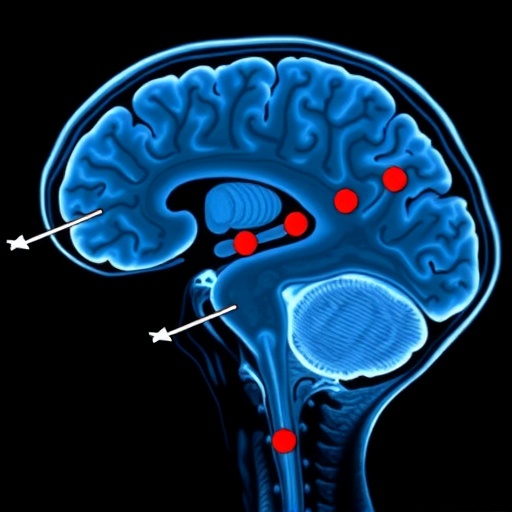
A groundbreaking study heralds a new era in early diagnosis of neurodegenerative disorders by harnessing the power of spatiotemporal deep learning and functional MRI (fMRI) data. Researchers have developed an advanced artificial intelligence (AI) framework capable of detecting isolated REM sleep behavior disorder (iRBD) and Parkinson’s disease (PD) at their nascent stages, potentially transforming clinical approaches to these conditions.
Traditional diagnostic methods for iRBD and PD often rely on clinical symptoms that manifest well after significant neural damage has occurred. Early detection remains a critical challenge, as subtle neural alterations precede overt motor and cognitive symptoms by years. The innovative method presented by the research team addresses this gap by exploiting intricate patterns within brain activity data captured through fMRI scans.
fMRI, which maps dynamic brain functions by measuring blood oxygen level-dependent signals, provides a rich reservoir of spatiotemporal information. By applying deep learning algorithms attuned to both the spatial distribution and temporal evolution of neural activity, the researchers could pinpoint aberrant brain patterns signaling the earliest pathological changes linked to iRBD and PD.
Central to the study’s success is a novel deep neural network architecture designed to integrate spatial and temporal features simultaneously. This spatiotemporal approach surpasses conventional models that analyze either static structural images or temporal sequences in isolation. As a result, the AI system achieves superior sensitivity and specificity in distinguishing disease states from healthy brain function.
The research analyzed a substantial cohort of individuals, including those diagnosed with iRBD—a prodromal syndrome highly predictive of Parkinsonian disorders—and early-stage PD patients. The AI-driven analysis of their fMRI data revealed distinct neural signatures that conventional imaging overlooked, offering a window into early disease-related brain dynamics.
Notably, the detection of iRBD carries immense clinical significance because it serves as a harbinger for eventual Parkinson’s disease in many cases. By identifying this disorder at its inception, clinicians may intervene earlier, potentially slowing or modifying disease progression through emerging neuroprotective therapies.
Furthermore, the study underscores the feasibility of integrating AI-powered diagnostic tools into routine neuroimaging workflows. The automated and objective nature of this approach promises to enhance diagnostic accuracy, reduce reliance on subjective clinical assessments, and enable large-scale screening initiatives.
While additional validation with larger, multicenter datasets is necessary, these initial findings pave the way for a paradigm shift in how neurodegenerative diseases are detected and managed. The fusion of cutting-edge AI with advanced imaging techniques exemplifies the potential of computational neuroscience to revolutionize medicine.
As the global burden of Parkinson’s disease continues to rise, innovations like these provide hope for earlier, more precise interventions that could vastly improve patient outcomes. This study represents a significant leap forward in decoding the complex neurobiological underpinnings of movement disorders before clinical symptoms emerge.
Basaia, S., Pisano, S., Sarasso, E. et al. Spatiotemporal deep learning for early detection of isolated REM sleep behavior disorder and Parkinson’s disease using functional MRI data.
npj Parkinsons Dis. (2026). https://doi.org/10.1038/s41531-026-01477-7
Cite Scienmag News
Cassandra Pierce. (July 14, 2026). Deep Learning Detects REM Sleep Disorder and Parkinson’s Early via fMRI. Scienmag. https://scienmag.com/deep-learning-detects-rem-sleep-disorder-and-parkinsons-early-via-fmri/
Cassandra Pierce. "Deep Learning Detects REM Sleep Disorder and Parkinson’s Early via fMRI." Scienmag, 14 July 2026, https://scienmag.com/deep-learning-detects-rem-sleep-disorder-and-parkinsons-early-via-fmri/. Accessed 4 September 2026.
Cassandra Pierce. "Deep Learning Detects REM Sleep Disorder and Parkinson’s Early via fMRI." Scienmag. July 14, 2026. https://scienmag.com/deep-learning-detects-rem-sleep-disorder-and-parkinsons-early-via-fmri/


