


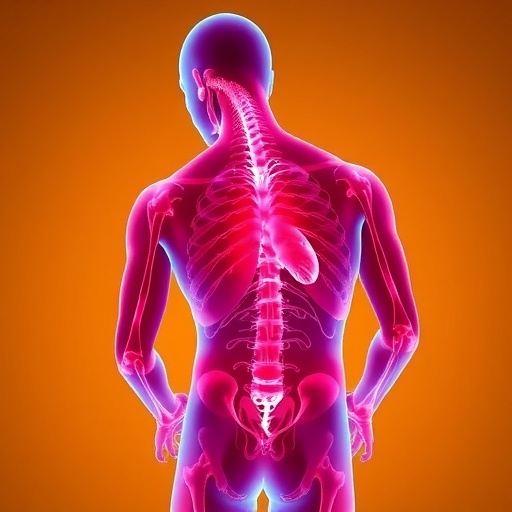
For decades, the enigma of myotonic dystrophy type 1 (DM1) has baffled researchers, with its genetic roots traced to a mutation producing toxic RNA. This defective RNA disrupts normal RNA splicing, affecting thousands of genes and leading to widespread cellular dysfunction. Yet, the exact pathways through which this molecular chaos translates to the debilitating muscle symptoms characteristic of DM1 remained elusive—until now.
A groundbreaking study published in Nature Communications challenges long-held assumptions about a hallmark DM1 symptom: myotonia, or muscle stiffness. Contrary to viewing myotonia as merely a secondary inconvenience, the research, led by Dr. John Lueck of the University of Rochester, reveals that myotonia significantly exacerbates muscle damage. By genetically modifying a mouse model to eliminate myotonia—without correcting the underlying toxic RNA mutation—the team observed remarkable improvements in muscle health.
This finding pivots the understanding of DM1 pathophysiology. The toxic RNA continues to exist and cause genetic misprocessing, but the absence of myotonia seemed to downregulate the severity of muscle degeneration. Muscles not only lost their stiffness but also exhibited stronger contraction forces, improved tissue architecture, and more normalized gene expression profiles. Essentially, myotonia appears to serve as a pathological amplifier—turning up the “volume” on muscle injury.
DM1 arises from expansions of repeated DNA segments in the DMPK gene, which generate toxic RNA molecules binding and sequestering key splicing factors. This leads to aberrant splicing of multiple genes, including one encoding a chloride ion channel crucial for muscle relaxation. The malfunction of this channel induces hyperexcitability of muscle fibers, underpinning the prolonged contractions seen in myotonia.
While therapeutic efforts have predominantly targeted the eradication of toxic RNA, these new insights indicate that directly addressing myotonia itself could yield significant clinical benefits. Drugs like mexiletine and ranolazine, which reduce muscle stiffness, have previously seen limited use due to side effects, but this study suggests a renewed focus on optimizing such treatments alongside RNA-focused therapies.
Dr. Lueck emphasizes that the study isolates the effect of myotonia on disease progression, highlighting that interventions dampening muscle hyperexcitability may slow muscle degradation—even if the genetic mutation remains uncorrected. This opens fresh avenues for combination therapies that not only tackle the root genetic cause but also mitigate downstream pathological manifestations.
The research not only shifts the conceptual framework for DM1 treatment but also underscores the intricate relationship between genetic mutations and the functional consequences in muscle physiology. By turning down myotonia, it may be possible to preserve muscle strength and delay disease progression, bringing hope to the many individuals affected by this complex neurogenetic disorder.
Cite Scienmag News
Juliet Wilcox. (July 14, 2026). Reducing Muscle Stiffness Could Help Myotonic Dystrophy Patients. Scienmag. https://scienmag.com/reducing-muscle-stiffness-could-help-myotonic-dystrophy-patients/
Juliet Wilcox. "Reducing Muscle Stiffness Could Help Myotonic Dystrophy Patients." Scienmag, 14 July 2026, https://scienmag.com/reducing-muscle-stiffness-could-help-myotonic-dystrophy-patients/. Accessed 4 September 2026.
Juliet Wilcox. "Reducing Muscle Stiffness Could Help Myotonic Dystrophy Patients." Scienmag. July 14, 2026. https://scienmag.com/reducing-muscle-stiffness-could-help-myotonic-dystrophy-patients/


