


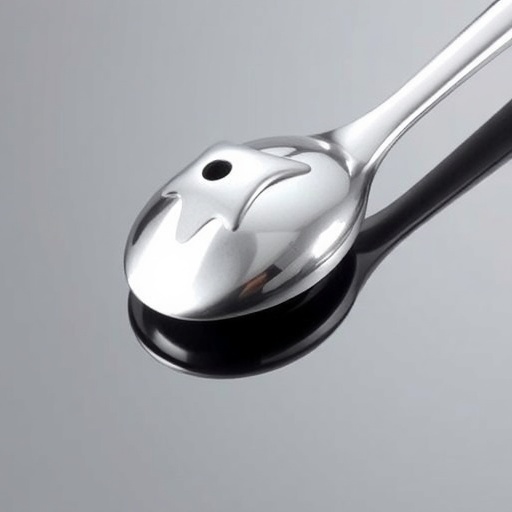
A South Korean research team has unveiled a groundbreaking silver-plated coating technology that combines enhanced hardness and exceptional wear resistance without compromising friction reduction—a long-standing challenge in materials engineering. Developed by the Korea Institute of Materials Science (KIMS), this innovative Ag–PTFE composite plating method harnesses a fluorinated surfactant to stabilize PTFE nanoparticles within a cyanide-free acidic silver plating bath, yielding a coating that could revolutionize durability in electrical contacts.
Silver is prized in electrical components such as connectors, relays, and switches for its excellent conductivity. However, its softness makes it vulnerable to surface wear and scratches from repeated mechanical contact, which can degrade electrical reliability. To address this, the KIMS team incorporated polytetrafluoroethylene (PTFE), a solid lubricant better known as Teflon, into silver coatings. PTFE’s lubricating properties reduce friction, but dispersing its nanoparticles uniformly in plating baths has been a technical impediment, as agglomeration detrimentally affects coating integrity.
The breakthrough lies in the team’s precise control over PTFE dispersion using the fluorinated surfactant FC-4 in a cyanide-free acidic bath. By finely tuning the bath’s acidity, surfactant concentration, and PTFE content, the researchers prevented nanoparticle clumping, achieving stable, homogeneous co-deposition of PTFE and silver ions. Computational molecular dynamics simulations and empirical analyses illuminated how FC-4 molecules surround PTFE particles, maintaining their dispersion during the electroplating process.
This uniform dispersion allows PTFE particles to act as embedded solid lubricants within the silver matrix. Concurrently, the surfactant-assisted plating results in finer, denser silver grains, which enhance the coating’s hardness. The resulting composite coating demonstrates approximately a 23% increase in hardness compared to traditional silver plating while maintaining a remarkably low coefficient of friction below 0.2. This dual improvement breaks the conventional trade-off between surface hardness and lubrication.
Beyond mechanical properties, the new technology offers environmental and safety benefits by eliminating cyanide, a toxic chemical commonly used in silver plating baths. This substitution simplifies wastewater treatment and reduces occupational hazards. The approach holds promise for scalable industrial applications, especially in electric vehicle connectors and electronic devices, where components endure constant friction under demanding conditions.
As the electrification of transportation and electronics continues to accelerate, reliable electrical contacts are critical to system longevity and performance. This Ag–PTFE composite coating could extend service life, lower maintenance costs, and enhance device reliability. The KIMS team is now focused on validating the coating under real-world operating conditions and scaling the process for mass production.
Published in the journal Surface and Coatings Technology, this research heralds a significant advance in materials science, combining nanoscale engineering with sustainable chemistry. It strengthens Korea’s position in high-value electrical contact materials and opens the door to safer, longer-lasting silver coatings in future technologies.
Keywords
Silver plating, PTFE nanoparticles, wear resistance, hardness enhancement, surfactant-assisted electrodeposition, cyanide-free plating, electrical contacts, friction reduction, nanocomposite coating, electric vehicle connectors
Cite Scienmag News
Denise Maddox. (July 14, 2026). Durable Silver Plating Developed for Extended Use. Scienmag. https://scienmag.com/durable-silver-plating-developed-for-extended-use/
Denise Maddox. "Durable Silver Plating Developed for Extended Use." Scienmag, 14 July 2026, https://scienmag.com/durable-silver-plating-developed-for-extended-use/. Accessed 3 September 2026.
Denise Maddox. "Durable Silver Plating Developed for Extended Use." Scienmag. July 14, 2026. https://scienmag.com/durable-silver-plating-developed-for-extended-use/


