

Thursday, September 3, 2026
Science
No Result
View All Result
  • Login
  • HOME
  • SCIENCE NEWS
  • CONTACT US
  • HOME
  • SCIENCE NEWS
  • CONTACT US
No Result
View All Result
Scienmag
No Result
View All Result
Home Science News Agriculture

Harnessing Neglected Livestock for Sustainable Food Systems in the Global South

July 8, 2026
in Agriculture
Alan Morgan
By Alan Morgan Scienmag Editorial Profile - Precision Agriculture
Reading Time: 3 mins read
0
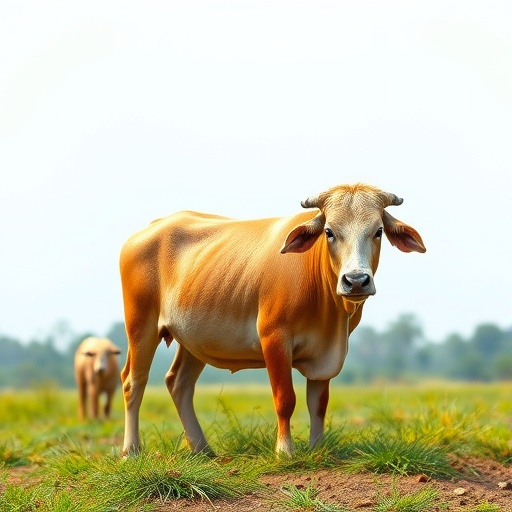
Harnessing Neglected Livestock for Sustainable Food Systems in the Global South

Harnessing Neglected Livestock for Sustainable Food Systems in the Global South

65
SHARES
587
VIEWS
Share on FacebookShare on Twitter
ADVERTISEMENT

In a rapidly warming world, the urgent need for sustainable livestock systems has propelled attention toward indigenous ruminant breeds and underutilized forage species across Asia. These native resources present a promising avenue for climate-resilient agriculture, combining adaptive traits with environmental benefits that conventional high-input systems fail to deliver.

Indigenous cattle and small ruminants exhibit exceptional ability to thrive on fibrous tropical forages, outperforming their exotic counterparts in digestibility and nutrient utilization. This superior metabolic compatibility points to a long co-evolution with local vegetation. Notably, tannin-rich legumes such as Leucaena leucocephala mitigate enteric methane emissions by up to 61% without reducing feed intake, highlighting their dual role in reducing greenhouse gases while providing quality nutrition.

Their integration with high-protein forages like Stylosanthes guianensis enables indigenous goats to achieve productivity gains while fixing atmospheric nitrogen, diminishing reliance on synthetic fertilizers. This synergy strengthens agro-ecological sustainability by improving soil health and reducing chemical inputs.

Despite this potential, buffalo production systems in regions like Sri Lanka remain markedly underutilized. Buffaloes, traditionally employed for seasonal draft power during rice cultivation, experience extended dormant periods with minimal milking, limiting dairy output. This pattern curtails the species’ inherent capacity to produce high-butterfat milk, prized in culturally significant fermented dairy products such as Meekiri. Although demand for Meekiri is robust, production stays small-scale and geographically constrained, impeding integration into formal dairy value chains.

These underexploited systems exemplify a “value paradox,” where animals highly adapted to low-input and climate-stress environments are insufficiently harnessed to bolster rural livelihoods or national dairy supplies. Addressing this gap could transform buffalo production into a resilient pillar of sustainable food systems.

Beyond livestock, the role of forage diversity extends to ecosystem services that amplify economic returns. For instance, intercropping forage legumes like Desmodium intortum with grasses enhances biomass yield and crude protein content while improving soil physicochemical properties. Such intercropping also suppresses parasitic weeds and reduces agrochemical needs through effective push-pull farming strategies.

Multipurpose browse species such as Gliricidia sepium integrated into agroforestry provide vital nutrition and bolster resilience in small ruminants, which selectively forage diverse plants to optimize nutrient intake. These complex interactions between animal genetics and forage ecosystems embody circular economy principles where waste is remobilized into productive inputs.

However, systemic barriers impede wider adoption of these indigenous resources. Challenges include weak breeding programs, fragmented seed supply systems, and policy neglect favoring exotic breeds and commercialized fodder crops. Overcoming these hurdles requires a multidimensional approach combining scientific research, policy realignment, and market development to unlock the full potential of neglected germplasm.

In sum, leveraging the adaptive traits and ecological services of indigenous ruminants and forage species offers a transformative pathway to build climate-resilient, low-input food systems in the Global South. Strategically addressing the underutilization and embedding these resources within value chains are critical steps to achieve sustainable livestock production and rural development targets.


Subject of Research: Indigenous ruminant breeds and underutilized forage species for sustainable and climate-resilient livestock systems in Asia.

Article Title: Integrating neglected and underutilized livestock resources for resilient and sustainable food systems in Global South: a holistic perspective.

Article References: Dasanayaka, S., Somasiri, N., Pathirana, I., Zamaratskaia, G., & Priyashantha, H. (2026). Integrating neglected and underutilized livestock resources for resilient and sustainable food systems in Global South: a holistic perspective. npj Sustainable Agriculture, 4(1), Article 60. https://doi.org/10.1038/s44264-026-00163-8

Image Credits: AI Generated

DOI: 10.1038/s44264-026-00163-8

Keywords: agro-ecological sustainability, climate adaptation in the Global South, climate-resilient agriculture, forage-legume integration, indigenous breeds, low-input livestock farming, methane emission mitigation, native ruminant breeds, soil health improvement, sustainable livestock practices, tropical forage species, underutilized buffalo systems

Cite Scienmag News

Alan Morgan. (July 8, 2026). Harnessing Neglected Livestock for Sustainable Food Systems in the Global South. Scienmag. https://scienmag.com/harnessing-neglected-livestock-for-sustainable-food-systems-in-the-global-south/


Alan Morgan. "Harnessing Neglected Livestock for Sustainable Food Systems in the Global South." Scienmag, 8 July 2026, https://scienmag.com/harnessing-neglected-livestock-for-sustainable-food-systems-in-the-global-south/. Accessed 3 September 2026.

Alan Morgan. "Harnessing Neglected Livestock for Sustainable Food Systems in the Global South." Scienmag. July 8, 2026. https://scienmag.com/harnessing-neglected-livestock-for-sustainable-food-systems-in-the-global-south/

Tags: agro-ecological sustainabilityclimate adaptation in the Global Southclimate-resilient agricultureforage-legume integrationindigenous breedslow-input livestock farmingmethane emission mitigationnative ruminant breedssoil health improvementsustainable livestock practicestropical forage speciesunderutilized buffalo systems
Share26Tweet16
Previous Post

Proteomic Analysis Identifies Prognostic Subgroups in SMARCA-Deficient Esophageal Cancer

Next Post

Storm Daniel Flooding in Libya Highlights Urgent Need for Rapid Assessments

Related Posts

Scientists uncover genes controlling grain yield in harsh growing conditions
Agriculture

Scientists uncover genes controlling grain yield in harsh growing conditions

September 3, 2026
BraABCB transporter genes shed light on hormone responses in Chinese flowering cabbage
Agriculture

BraABCB transporter genes shed light on hormone responses in Chinese flowering cabbage

September 3, 2026
Dietary Polyphenols Modulate NF-κB Signaling in Inflammation-Driven Diseases Including Cancer
Agriculture

Dietary Polyphenols Modulate NF-κB Signaling in Inflammation-Driven Diseases Including Cancer

September 3, 2026
Infrared Thermometry Reveals Water Stress in Medicinal Plants Before the Eye Can See
Agriculture

Infrared Thermometry Reveals Water Stress in Medicinal Plants Before the Eye Can See

September 3, 2026
FIMBRIN2 Drives ABA-Induced Stomatal Closure via Actin Remodeling in Guard Cells
Agriculture

FIMBRIN2 Drives ABA-Induced Stomatal Closure via Actin Remodeling in Guard Cells

September 3, 2026
New Rice Varieties Show Stable, High Yields Across Assam’s Flood-Prone Landscapes
Agriculture

New Rice Varieties Show Stable, High Yields Across Assam’s Flood-Prone Landscapes

September 3, 2026
Next Post
Storm Daniel Flooding in Libya Highlights Urgent Need for Rapid Assessments

Storm Daniel Flooding in Libya Highlights Urgent Need for Rapid Assessments

  • Mothers who receive childcare support from maternal grandparents show more optimized

    Mothers who receive childcare support from maternal grandparents show more parental warmth, finds NTU Singapore study

    27656 shares
    Share 11059 Tweet 6912
  • University of Seville Breaks 120-Year-Old Mystery, Revises a Key Einstein Concept

    1061 shares
    Share 424 Tweet 265
  • Bee body mass, pathogens and local climate influence heat tolerance

    682 shares
    Share 273 Tweet 171
  • Researchers record first-ever images and data of a shark experiencing a boat strike

    546 shares
    Share 218 Tweet 137
  • Groundbreaking Clinical Trial Reveals Lubiprostone Enhances Kidney Function

    531 shares
    Share 212 Tweet 133
Science

Embark on a thrilling journey of discovery with Scienmag.com—your ultimate source for cutting-edge breakthroughs. Immerse yourself in a world where curiosity knows no limits and tomorrow’s possibilities become today’s reality!

RECENT NEWS

  • Browser-based studio simplifies WRF modeling and data assimilation setup
  • Scientists uncover genes controlling grain yield in harsh growing conditions
  • BraABCB transporter genes shed light on hormone responses in Chinese flowering cabbage
  • Cyclin gene evolution in Arabidopsis and Brassica links polyploid duplication to flowering time

Categories

  • Agriculture
  • Anthropology
  • Archaeology
  • Athmospheric
  • Biology
  • Biotechnology
  • Blog
  • Bussines
  • Cancer
  • Chemistry
  • Climate
  • Earth Science
  • Editorial Policy
  • Marine
  • Mathematics
  • Medicine
  • Pediatry
  • Policy
  • Psychology & Psychiatry
  • Science Education
  • Social Science
  • Space
  • Technology and Engineering

Subscribe to Blog via Email

Enter your email address to subscribe to this blog and receive notifications of new posts by email.

Join 5,151 other subscribers

© 2025 Scienmag - Science Magazine

Welcome Back!

Login to your account below

Forgotten Password?

Retrieve your password

Please enter your username or email address to reset your password.

Log In
No Result
View All Result
  • HOME
  • SCIENCE NEWS
  • CONTACT US

© 2025 Scienmag - Science Magazine

Discover more from Science

Subscribe now to keep reading and get access to the full archive.

Continue reading