

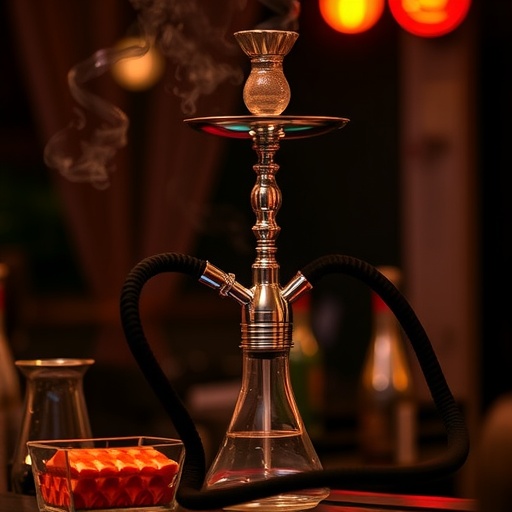
For decades, the waterpipe—known variously as hookah, shisha, or narghile—has enjoyed a reputation as a gentler, more social way to consume tobacco. The sight of smoke bubbling through glass flasks and the sweet aroma of flavored molasses have convinced many that the water somehow filters out the worst of the toxins. That belief, deeply embedded in cafés and college dorms worldwide, is about to face a rigorous scientific stress test. Researchers at The University of Texas at Arlington have launched a major study to dissect how the physical design of a waterpipe and the method used to heat the tobacco alter the chemistry of the smoke and the exposure experienced by users.
Ziyad Ben Taleb, an associate professor of kinesiology who directs the Nicotine and Tobacco Research Laboratory at UT Arlington, has secured a two-year, $442,763 grant from the National Institute on Drug Abuse to conduct the investigation. The core question is deceptively simple: does switching from traditional charcoal to the new generation of electronic heating elements make hookah smoking any safer, and does the size of the pipe matter? “There is a new trend of electronic heating elements that heat the tobacco without combustion,” Ben Taleb explained. “There are marketing claims that these are safer, but we don’t know. That’s why this study is needed.” The study, which began on May 1 and runs through April 2028, aims to fill a critical data gap that regulators at the U.S. Food and Drug Administration are keenly watching.
The technology at the center of the debate mirrors the heat-not-burn logic that has already disrupted the cigarette market. Instead of a glowing charcoal disc that drives the temperature well past 400°C and produces a complex aerosol laden with carbon monoxide, polycyclic aromatic hydrocarbons, and volatile aldehydes, electronic heads use a resistive heating coil or a ceramic element wrapped around the tobacco bowl. The temperature is held below the combustion threshold—typically between 150°C and 250°C—so the tobacco is baked rather than burned, theoretically generating fewer products of incomplete combustion. Yet the chemistry of heated, unburned tobacco is anything but straightforward. The glycerol and flavorings so central to hookah tobacco can decompose into toxic compounds such as acrolein and formaldehyde even at those lower temperatures, and the nicotine delivery profile may shift in ways that alter the addictive potential.
To tease apart these variables, Ben Taleb and his team are recruiting 60 established hookah smokers who will each attend multiple smoking sessions in a controlled laboratory setting. Every participant will use both a large waterpipe and a smaller, more portable version, and with each size they will try both traditional charcoal heating and the electronic alternative. By crossing two pipe sizes with two heating modalities in a within-subjects design, the researchers will be able to isolate the contribution of each factor to the total inhaled dose of toxicants. Sophisticated puff topography equipment will record every inhalation in real time—measuring volume, duration, and flow rate—while a suite of ambient and exhaled breath sensors tracks carbon monoxide, nicotine, particulate matter, and a panel of volatile organic compounds. Blood and urine samples collected before and after each session will allow the team to quantify biomarkers of exposure and acute cardiovascular stress.
The numbers that have emerged from the lab’s earlier work make a powerful case for urgency. In previous studies, Ben Taleb found that the average hookah session, which lasts about 45 minutes, can deliver more than thirty times the carbon monoxide of a single cigarette. Even more striking, users inhale nearly 100 liters of smoke on average per session, with some individual puffs exceeding two or three liters—a volume so large it fills and empties the lungs far beyond normal tidal breathing. Carbon monoxide binds to hemoglobin more than 200 times more tightly than oxygen, and such high exposures can quickly push carboxyhemoglobin levels into a range that impairs oxygen delivery to the heart and brain, particularly in poorly ventilated settings.
The pervasive myth that the water bowl acts as a protective filter compounds the risk. Ben Taleb is unequivocal on this point: “There is a misconception that hookah is safer because the smoke passes through water. In reality, the water cools the smoke, but it does not filter it.” Cooling the smoke may actually make the inhalation more comfortable, allowing users to take deeper and more prolonged drags without the irritating heat that would otherwise trigger a cough reflex. The result is a larger dose of the very compounds the water is wrongly assumed to remove. Even water-soluble toxins such as formaldehyde and acetaldehyde are only partially captured by the water; hydrophobic components like tar and many carcinogens pass through essentially unimpeded.
Hookah smoking is “highly prevalent and has been rising in popularity among young people worldwide,” according to a 2025 study that Ben Taleb’s group has referenced. The design of the study reflects that demographic reality: the targeted participants are established but not necessarily daily users, capturing the pattern of episodic, social consumption that characterizes much of the youth hookah trend. The inclusion of small waterpipes is particularly timely; portable, discreet models have proliferated in online marketplaces, making it easier to smoke at home or at gatherings, often with the illusion that the reduced size means reduced risk.
The implications of the findings extend directly to the regulatory arena. The FDA has authority over all tobacco products, including waterpipe tobacco and accessories, but has struggled to issue product standards for a market segment where the engineering diversity is vast and the health evidence remains thin. Data showing that a specific heating method systematically increases exposure to carcinogens or cardiovascular toxicants could justify restrictions on certain designs or warning labels tailored to waterpipe use. Conversely, if the electronic heads prove to deliver measurably lower levels of key toxicants without shifting users toward more frequent or deeper inhalation, they could become part of a harm-reduction continuum—though Ben Taleb is careful not to prejudge the outcome.
“My responsibility as a researcher is to empower people with evidence so they can make informed decisions about their health,” he said. “Also, agencies like the FDA need data on how different product configurations affect exposure, addiction and health. If we find that certain designs or heating methods increase risk, that information can help guide future public health policies.” Over the next three years, the quiet laboratory sessions on the UT Arlington campus will peel back the layers of a centuries-old social ritual, replacing folklore with flow meters, biomarkers, and a dose of hard science that could reshape the way the world thinks about the pipe.
Subject of Research: The effect of waterpipe size and heating source (charcoal vs. electronic) on toxicant exposure and puffing behavior
Article Title: Unclouding the Hookah: A Deep Look at Whether Electronic Heating Makes Waterpipes Safer
News Publication Date: May 2025
Web References: EurekAlert! multimedia ID c4506be9-2e49-4cfe-8f43-7433f32ade5b
References: A 2025 study on global hookah prevalence among young people (details not provided in release)
Image Credits: Herschel Heath / UT Arlington
Keywords
hookah, waterpipe, electronic heating, charcoal, carbon monoxide, nicotine, tobacco smoke, toxicant exposure, puff topography, public health, FDA regulation, harm reduction


