

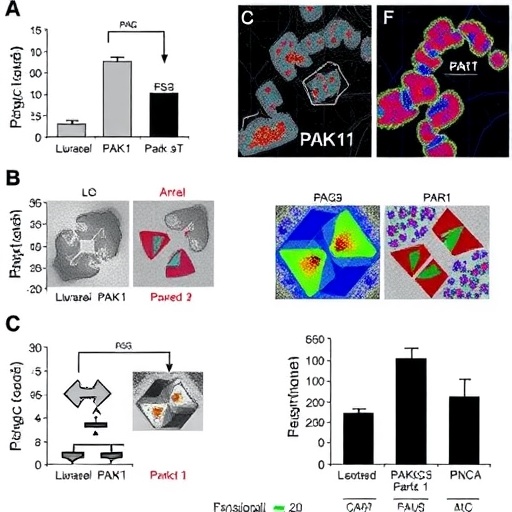
A new molecular strategy could crack open a stubborn bottleneck in ovarian cancer therapy, offering hope to patients whose tumors resist one of the most important drug classes of the past decade. Scientists have discovered that disabling a specific kinase rewires cancer cells’ ability to repair DNA, rendering them exquisitely vulnerable to PARP inhibitors—drugs that already revolutionized treatment for women with BRCA mutations but too often lose their edge. The work, published in Genes & Diseases, shows how p21-activated kinase 1 (PAK1) acts as a master safeguard of homologous recombination repair, and that stripping it away creates a synthetic lethality that even HR-proficient tumors cannot escape.
Ovarian cancer remains the deadliest gynecologic malignancy, largely because it is diagnosed after the disease has already scattered throughout the peritoneal cavity. The arrival of PARP inhibitors opened a new frontier by trapping cancer cells that already had disabled homologous recombination (HR) machinery—most famously through BRCA1 or BRCA2 loss—into catastrophic genomic chaos. But the clinic has learned a hard lesson: many tumors are HR-proficient from the start, and even those that respond eventually acquire compensatory mutations or re-activate HR pathways, blunting the drugs. The search for ways to force HR deficiency pharmacologically has therefore become one of oncology’s most urgent quests.
The research team, spanning the Chinese Academy of Medical Sciences, Peking Union Medical College, the Chinese Academy of Sciences, and the Mayo Clinic, began by mining the cBioPortal cancer genomics database. They found that PAK1, a serine/threonine kinase better known for its roles in cytoskeletal dynamics and cell proliferation, is not only overexpressed across numerous cancers but shows a strikingly adverse association with overall survival in ovarian cancer patients. Digging deeper, they noticed a positive correlation between PAK1 activity and HR repair signatures. This observation suggested that PAK1 might be more than a passenger—it could be actively maintaining the DNA repair apparatus that shields tumors from PARP inhibitors.
To test this, the scientists used both genetic silencing and a small-molecule inhibitor called IPA-3, which allosterically locks PAK1 into an inactive conformation. In a series of elegant functional assays, they demonstrated that PAK1 loss does not perturb non-homologous end joining—the cell’s more error-prone double-strand break repair pathway—but specifically cripples homologous recombination. The efficiency of HR repair, measured with integrated fluorescent reporter systems, dropped sharply. Crucially, the defect depended on the kinase activity itself, not just a scaffolding function. Cells depleted of PAK1 formed far fewer RAD51 foci after DNA damage, the hallmark of a stalled HR process, confirming that the kinase is an essential conductor of the RAD51 nucleoprotein filament assembly that searches for and invades homologous templates.
When the team combined PAK1 inhibition with the PARP inhibitor olaparib, the effect was synergistic and lethal. Ovarian cancer cells exposed to both agents accumulated unresolved replication stress, as evidenced by stalled replication forks in DNA fiber assays, and a surge in DNA double-strand breaks marked by phosphorylated histone H2AX. Downstream, the apoptotic machinery kicked into overdrive. The combination pushed cells past a tipping point that neither drug could achieve alone, effectively converting HR-proficient cells into HR-deficient ones and then hitting them with the very agent designed to exploit that deficiency. This mechanistic one-two punch suggests a generalizable strategy: using kinase inhibitors to transiently pharmacologically induce HR deficiency, creating a therapeutic window for PARP inhibitor assault.
Translationally, the promise held up in three-dimensional patient-derived organoids and in multiple mouse models. Cell line-derived xenografts treated with olaparib and IPA-3 showed markedly reduced tumor growth, lower proliferation indices, and enhanced apoptosis compared to monotherapy arms, without exacerbating liver toxicity. Patient-derived xenografts—models that more faithfully recapitulate human tumor heterogeneity and microenvironment—mirrored these results, reinforcing the idea that the combination could work across diverse genetic backgrounds. Because IPA-3 targets the kinase’s regulatory domain rather than the ATP-binding pocket, its selectivity profile avoids many off-target effects that plague other kinase inhibitors, an attractive feature for eventual clinical development.
Beyond the immediate therapeutic application, the study reframes PAK1 as a critical node connecting cellular stress sensing to genomic integrity. While the kinase has been studied in cancer invasion and metastasis, its role in homologous recombination now suggests that tumors may co-opt this signaling hub to survive the replication stress inherent to uncontrolled proliferation. The findings also illustrate a powerful principle: by deepening our understanding of DNA repair circuitry, we can rationally design combination regimens that convert ubiquitous cellular vulnerabilities into tumor-specific fatal weaknesses. For the thousands of women diagnosed each year with ovarian cancer that does not harbor BRCA defects, a clinical trial built around this kinase–PARP axis cannot come soon enough.
Subject of Research: PAK1 inhibition synergistically enhances PARP inhibitor efficacy in ovarian cancer by impairing homologous recombination repair.
Article Title: PAK1 inhibition synergistically enhances the anti-tumor efficacy of PARP inhibitors in ovarian cancers
News Publication Date: [Not available]
Web References: https://doi.org/10.1016/j.gendis.2025.101887
References: Genes & Diseases, DOI: 10.1016/j.gendis.2025.101887
Image Credits: Changying Li, Xinyan Li, Ming Gao, Min Deng, Ye-Xiong Li, Zhenkun Lou


