

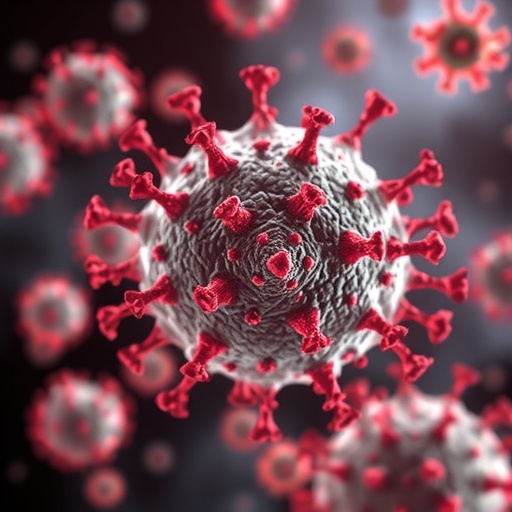
A new class of antiviral compounds is taking shape in German laboratories, aiming to slam a universal door shut on respiratory viruses before they can hijack our cells. Chemist Alexander Titz and biologist Christian Sieben, along with their teams, are designing molecules that impersonate the sugar-studded surface of human cells so convincingly that influenza viruses, SARS-CoV-2, and other pandemic threats bind to the decoy instead of launching an infection. The initiative, powered by renewed support from the Volkswagen Foundation, looks to build a broadly applicable platform for viral entry inhibitors – a radical departure from the current one-bug-one-drug paradigm.
Virtually every respiratory virus initiates its invasion by latching onto specific glycans that decorate the outer face of host cells, collectively known as the glycocalyx. Foremost among these molecular handholds are sialic acids, nine-carbon sugars that cap many carbohydrate chains and protrude into the extracellular space. Influenza A viruses exploit a lectin called hemagglutinin to grab terminal sialic acid residues with relatively modest affinity; however, the sheer abundance of these sugars on the airway epithelium turns the weak individual interactions into an irresistible avidity. Coronaviruses, including some SARS-related strains, similarly recognize sialic acids via the N-terminal domain of their spike glycoprotein, often using them as attachment factors that concentrate viral particles near the cell surface before a proteinaceous receptor like ACE2 is engaged.
Titz and Sieben’s strategy is to subvert this recognition system with “sialomimetics” – synthetic molecules that replicate the essential chemical features of sialic acid but are embedded in scaffolds designed for far tighter binding. The team draws on medicinal chemistry and structural biology to sculpt ligands that slot deeper into the binding pockets of viral lectins, forming additional hydrophobic contacts and hydrogen bonds not possible for the native sugar. Moreover, by clustering these mimetics on polyvalent backbones – dendrimers, polymers, or even nanoparticle surfaces – the compounds can collectively present a high local concentration of binding motifs, outcompeting the cell surface under physiological conditions. In essence, the virus finds itself swarmed by soluble decoys that irreversibly occupy its receptor-binding proteins, leaving no free capacity for host attachment.
During the first funding phase, the collaborators screened libraries of candidates and identified several lead molecules that block infection in cell culture models at submicromolar concentrations, while showing minimal cytotoxicity. Their mode of action was corroborated by biophysical techniques such as surface plasmon resonance and cryo-electron microscopy, which visualized the mimetics locked into hemagglutinin and spike proteins. The current phase of funding will allow the chemists to iteratively optimize these leads, improving metabolic stability, pharmacokinetics, and scalability, while the biologists will test their breadth against a panel of zoonotic viruses with spillover potential – including avian and swine influenza subtypes, as well as bat coronaviruses that have not yet adapted to humans.
“We block the very first step of infection, and we do so for many different viruses at the same time,” says Titz, who also leads a group at the Helmholtz Institute for Pharmaceutical Research Saarland. “Specific drugs are available for only a handful of viruses. There is no such thing as a broad-spectrum antibiotic against viruses. This is the key to broadly effective therapies.” The approach is fundamentally host-targeting in the sense that it relies on a conserved viral dependency on sialic acid, yet it is pathogen-specific enough to avoid disrupting normal glycan-mediated physiological processes, because the tailored mimetics exploit subtle differences between viral and endogenous lectins.
Sieben, who heads the Nano Infection Biology group at the Helmholtz Centre for Infection Research, emphasizes that the platform nature of the technology is its biggest asset. “Our goal is to create a drug-development platform that can be used not only against influenza and coronaviruses but also for future pandemics caused by as-yet-unknown viruses.” His team is using super-resolution microscopy to track the spatial dynamics of viral binding on model membranes, feeding these observations back into the design of ever more potent multivalent architectures. The idea is that once the viral binding site for sialic acid is structurally characterized – even rapidly during an outbreak – a matching sialomimetic can be synthesized from a modular kit of building blocks.
The work bridges two institutions with deep expertise in infection research. The Helmholtz Institute for Pharmaceutical Research Saarland contributes medicinal chemistry and natural product know-how, while the Helmholtz Centre for Infection Research offers high-containment virology and advanced imaging. Together, they are pushing the concept of carbohydrate-based antivirals from a niche academic curiosity toward a pre-clinical pipeline. Should the optimization succeed, the first-in-class entry inhibitor could enter animal models, bringing the vision of a single spray or inhaler that wards off multiple respiratory pathogens one step closer to reality.
Subject of Research: Development of sialomimetic compounds as broad-spectrum viral entry inhibitors targeting influenza, coronaviruses, and other zoonotic respiratory viruses.
Article Title: Sugar Mimics May Offer a Universal Key to Block Respiratory Viruses
News Publication Date: Not provided in the source material.
Web References: Not available.
References: Not available.
Image Credits: Not available.
Keywords: Antivirals, broad-spectrum antiviral, sialomimetics, sialic acid, glycocalyx, viral entry, influenza virus, coronavirus, SARS-CoV-2, pandemic preparedness, hemagglutinin, spike protein, lectin, multivalency.


