


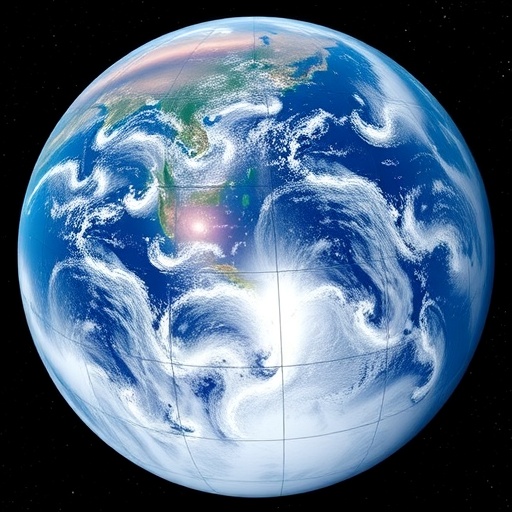
In an era increasingly defined by the acceleration of climate change and the intensification of extreme weather events, meteorological science stands at a pivotal junction. The advent of global kilometer-scale models marks a revolutionary leap forward, drastically enhancing our ability to simulate and understand storms with unprecedented detail. Historically, global climate models operated at resolutions equivalent to having roughly ten thousand pixels to depict the entire Earth, rendering expansive storm systems as indistinct, blurry entities. These early models missed critical nuances of storm dynamics such as precise morphology, storm longevity, and the geographic localization of the most intense rainfall. This limitation heavily impaired predictive accuracy, particularly regarding mesoscale convective systems (MCSs), which are intricate clusters of thunderstorms responsible for many of the world’s flash floods and destructive wind events.
The technological breakthrough embodied in current kilometer-scale models is nothing short of extraordinary. Operating at an effective resolution of approximately 2.8 kilometers per grid cell, these cutting-edge simulations generate over 50 million pixels per atmospheric layer on a global scale. This quantum leap in resolution allows individual thunderstorm updrafts and precipitation bands to emerge naturally within the simulations, without the need to rely on the coarse approximations, or convective parameterizations, that previously constrained our understanding. This direct representation provides a much clearer window into the complex processes governing storm behavior, promising to dramatically improve weather forecasting and climate impact assessments.
A defining test of these advanced models came with analysis of East Asia’s catastrophic 2020 summer rainfall. This event shattered longstanding precipitation records across multiple regions, inundating ten Chinese provinces, saturating Japan with over a meter of rainfall in just three days, and stretching South Korea’s rainy season far beyond its climatological norm. Scientists harnessed six leading global kilometer-scale models from prominent weather and climate research institutions worldwide, including the European Centre for Medium-Range Weather Forecasts, the Max Planck Institute, and the Chinese Academy of Sciences. This multinational collaboration leveraged the World Climate Research Programme’s Global KM-Scale Modeling Hackathon to scrutinize model performance against satellite observations during this extraordinary meteorological episode.
The results from the comparative study were encouraging yet nuanced. The models accurately captured crucial large-scale storm characteristics such as the spatial distribution of precipitation, storm lifespan, translation speed, and diurnal patterns. This highlights the tremendous strides that kilometer-scale modeling has made in distilling the dynamic complexities of MCSs. However, despite their enhanced resolution and sophistication, the models exhibited congruent biases. They systematically overpredict the number of MCSs, particularly short-lived systems, while underestimating their size and duration. Furthermore, simulated storms were found to be disproportionately intense, exhibiting excessive rainfall rates within their convective cores relative to satellite data.
These systematic discrepancies underscore the persistent challenges in parameterizing critical microphysical processes and cloud dynamics at global scales. The overly abundant, small, and intense storm simulations hint at inaccuracies in how cloud formation, precipitation processes, and atmospheric turbulence are coupled within these models. Addressing these biases is not merely an academic exercise but an imperative step toward refining predictive skill, especially as extreme weather threatens increasingly populated and vulnerable regions. Enhancing physical process representations—including cloud microphysics, boundary-layer turbulence, and atmosphere-ocean-land interactions—will be crucial for these models to achieve operational reliability.
The broader implications of this work resonate profoundly with disaster preparedness and climate adaptation strategies. Understanding the true behavior of MCSs helps forecast flash floods, intense rainfall, and damaging wind events with greater confidence. In May 2026, an extreme rain event struck the middle and lower Yangtze River basin in eastern China, triggering the country’s first national-level Red Alert for torrential rains and flash floods. Such events, frequently driven by MCS activity, underline the urgent need for accurate high-resolution storm modeling to inform early warning systems and risk mitigation policies.
Moreover, long-term analyses reveal a troubling trend: MCS-associated precipitation is becoming both more frequent and more intense over the East Asian summer monsoon rainband, contributing disproportionately to the observed increase in total precipitation. This trend correlates strongly with global warming, emphasizing the role of rising temperatures in amplifying extreme weather phenomena. Kilometer-scale Earth system models, therefore, hold promise not only for immediate weather forecasting but also for projecting climate-driven shifts in storm behavior under diverse warming scenarios.
European initiatives such as nextGEMS, WarmWorld, and Destination Earth exemplify the cutting edge of computational meteorology, successfully executing multi-decadal continuous runs of kilometer-scale models like ICON and IFS. These simulation efforts aggregate vast volumes of high-resolution data, enabling scientists to dissect the interplay of atmospheric processes on timescales ranging from hours to decades. The forthcoming KM-scale Global Modelling Summit 2026 in Hamburg, Germany, will provide a vital platform to disseminate insights, foster collaboration, and chart the path forward for kilometer-scale weather and climate modeling. These gatherings underscore the collaborative spirit necessary to tackle the complexities of a warming world.
Looking ahead, the ambition of the meteorological community is straightforward yet monumental: to simulate high-impact weather phenomena with pinpoint temporal and spatial accuracy, ultimately translating these detailed 50-megapixel simulations into actionable insights for disaster resilience. The journey involves continuous refinement of model physics, enhanced data assimilation techniques, and the integration of multidisciplinary scientific knowledge. As global climate challenges intensify, the deployment of such high-fidelity modeling systems will be indispensable in safeguarding lives, infrastructure, and ecosystems.
In summary, the transition from low-resolution, parameterization-dependent global climate models to next-generation kilometer-scale simulations marks a watershed moment in atmospheric sciences. Although current models demonstrate remarkable capability in reproducing the general features of mesoscale convective systems that drove record-breaking rainfall in East Asia’s 2020 summer, they also reveal persistent biases that must be resolved. These insights chart a clear course for future research and operational improvements, promising a new era where detailed, accurate storm projections enhance human capacity to adapt to a changing climate.
News Publication Date: 16-Jun-2026
Web References:
- Advances in Atmospheric Sciences (https://doi.org/10.1007/s00376-026-5756-7)
- World Climate Research Programme (https://www.wcrp-climate.org/)
- Global KM-Scale Modeling Hackathon (https://www.wcrp-esmo.org/activities/wcrp-global-km-scale-hackathon-2025)
- KM-scale Global Modelling Summit 2026 (https://km-scale-summit-26.org/)
References:
- Li Puxi et al., Advances in Atmospheric Sciences, DOI: 10.1007/s00376-026-5756-7
- Related Study on Rainfall Trends: https://doi.org/10.1029/2023GL103595
Cite Scienmag News
Russell Cooper. (June 16, 2026). 50-Megapixel Earth Models Reveal Storms in Unmatched Detail — Yet Exhibit Four Key Blind Spots. Scienmag. https://scienmag.com/50-megapixel-earth-models-reveal-storms-in-unmatched-detail-yet-exhibit-four-key-blind-spots/
Russell Cooper. "50-Megapixel Earth Models Reveal Storms in Unmatched Detail — Yet Exhibit Four Key Blind Spots." Scienmag, 16 June 2026, https://scienmag.com/50-megapixel-earth-models-reveal-storms-in-unmatched-detail-yet-exhibit-four-key-blind-spots/. Accessed 5 September 2026.
Russell Cooper. "50-Megapixel Earth Models Reveal Storms in Unmatched Detail — Yet Exhibit Four Key Blind Spots." Scienmag. June 16, 2026. https://scienmag.com/50-megapixel-earth-models-reveal-storms-in-unmatched-detail-yet-exhibit-four-key-blind-spots/


