


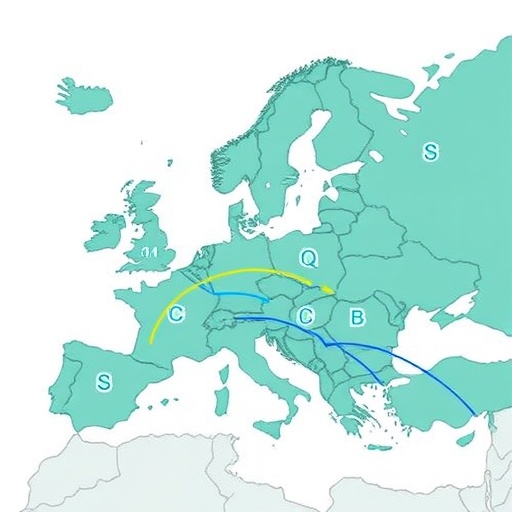
The European Union has set an ambitious target to reduce its greenhouse gas emissions by 90 percent by the year 2040 compared to 1990 levels. This bold objective is framed within the 2025 climate law, which permits a portion — specifically five percentage points — to be fulfilled through climate mitigation efforts conducted outside the EU’s borders. A recent study conducted by the Potsdam Institute for Climate Impact Research (PIK) introduces an innovative mechanism aimed at optimizing this external climate action: performance-based Jurisdictional Reward Funds. The study posits that this mechanism not only amplifies the effectiveness of international climate efforts but also mitigates the risk of counterproductive incentives often associated with cross-border carbon credit schemes, all while requiring a relatively modest financial commitment of approximately five billion euros annually.
Ottmar Edenhofer, a director at PIK and chair of the EU climate advisory board, underscores the importance of recognizing international flexibility embedded in the EU’s 2040 climate goals. He cautions against dismissing this provision as merely a loophole for easing domestic obligations. Instead, Edenhofer explains that external climate actions serve as a stabilizing element, ensuring that the political ambition within Brussels remains robust and pragmatic, even amid fluctuating policies in major global players like China and the United States. This perspective marks a paradigm shift in considering external carbon mitigation not as a compromise but as a strategic complement to domestic efforts.
At the core of this external engagement lies a controversial provision of the Paris Agreement: the ability for countries to offset their own emission reductions by financing emission cuts abroad and counting these reductions towards their national targets. Critics have argued that such international carbon credits risk undermining the integrity of climate commitments, as projects funded might have proceeded regardless of external financing. Moreover, granting credits at the governmental scale can distort incentives by motivating countries to set initially lenient targets to maximize future rewards. However, the PIK study contends that these challenges can be effectively addressed through careful design and implementation.
The study’s proposed solution — Jurisdictional Reward Funds — operates on a performance-based framework that incentivizes governments in developing and emerging economies to exceed established climate benchmarks. Rather than traditional voluntary carbon markets, which have struggled with verification and additionality issues, this model relies on fixed-budget remuneration contingent on measurable achievements. For example, countries demonstrating exemplary reductions in deforestation rates would receive proportional rewards. The transparent and standardized criteria embedded in this system ensure that all eligible countries face the same expectations and compensation conditions, thereby fostering fairness and competition.
A particularly striking aspect of this proposal is cost efficiency. Drawing on empirical insights from recent international rainforest conservation funds and fossil fuel market analyses, the researchers estimate that implementing this mechanism to cover a 5-percent greenhouse gas reduction beyond EU borders would cost approximately five billion euros annually by 2040. This corresponds to a remarkably low unit price of just 21 euros per tonne of avoided CO₂ emissions, a figure that compares favorably to many existing carbon pricing schemes. Notably, the research envisions a diversified allocation where coal phase-out commands the largest share of funds while forest conservation, albeit crucial, constitutes a smaller fraction.
The financial underpinning is complemented by strategic benefits within the EU’s own climate policy framework, especially its Emissions Trading System (ETS). Integrating such internationally sourced carbon credits into the ETS market has the potential to temper carbon price volatility, thus fostering a more predictable investment environment for clean technologies. The study projects that the introduction of these credits from 2036 to 2050 could lower the average carbon price in the EU ETS by 40 to 45 percent relative to a no-credit scenario. This moderation does not dilute the imperative for decarbonization; instead, it helps maintain strong incentives as global cooperation drives carbon pricing beyond EU boundaries upward.
Importantly, the study highlights the dynamic interplay between the EU and other major emitters such as China and the United States. Should these powerhouses adopt similar reward fund mechanisms to their advantage, the pool of cost-effective emission reductions worldwide would contract over time. Consequently, the EU would need to shoulder a larger share of its climate target domestically, leading to higher internal costs. However, this reallocation would be indicative of a globally intensified climate effort that collectively pushes the planet toward more ambitious mitigation outcomes, strengthening international climate governance and reducing the risk of unilateral policy failures.
The essence of this mechanism is its ability to foster an automatic alignment and synchronization between the EU’s climate policies and those of other major emitters. International climate action becomes a reinforcing feedback loop: as more countries adopt performance-based reward schemes, the collective endeavor escalates in ambition and efficacy. This not only benefits global climate stability but also insulates individual actors from geopolitical and economic uncertainties that might otherwise hinder national policy consistency.
In practical terms, this approach could channel substantial resources toward forest conservation — a critical carbon sink — while accelerating the phase-out of fossil fuels like coal and oil. This balanced portfolio approach addresses both supply-side and demand-side drivers of emissions, anchoring mitigation efforts in tangible outcomes such as reduced deforestation rates and decreased fossil fuel consumption. The transparency and predictability built into the Jurisdictional Reward Funds also enhance accountability, allowing all stakeholders to monitor and verify progress rigorously.
From a governance perspective, establishing such reward funds necessitates comprehensive oversight mechanisms that ensure that climate actions financed abroad are genuinely additional, verifiable, and permanent. The study stresses that these funds should reward only efforts that meet universally agreed-upon targets, thereby preventing gaming of the system or dilution of the EU’s climate ambition. The equitable application to all eligible countries further helps build trust and cooperation, essential elements for sustained global climate partnerships.
This innovative framework also injects renewed vigor into the international carbon market debate, which has historically been marred by skepticism and fragmented implementation. By centering rewards on jurisdictional performance rather than isolated projects, the approach promotes systemic transformation rather than piecemeal fixes. It incentivizes countries to embed climate action into their national development pathways, creating synergies with socioeconomic objectives such as biodiversity conservation and sustainable resource management.
Ultimately, the PIK study presents a compelling vision of how the EU can harness international climate action to meet its stringent emissions reductions cost-effectively, while simultaneously reinforcing global cooperation. By investing in mechanisms that reward measurable and additional climate progress abroad, the EU leverages its financial capacity to foster a global transition toward low-carbon economies. This strategy upholds the integrity of domestic climate policy, dampens economic risks associated with market volatility, and encourages a more multipolar governance landscape where emerging economies also take on substantive climate responsibilities.
As the global climate diplomacy landscape evolves and the urgency for rapid decarbonization intensifies, performance-based Jurisdictional Reward Funds could become a cornerstone in the next generation of climate finance instruments. They offer a scalable, transparent, and fair pathway to bridge national ambitions with global imperatives, ensuring that climate targets are not isolated domestic promises but part of a concerted international effort. The implications of this research extend far beyond Europe, signaling a strategic blueprint for climate cooperation in a complex and interconnected world.
Cite Scienmag News
Courtney Benton. (June 16, 2026). Innovative Strategy Unveiled for the EU’s Cross-Border Climate Initiatives. Scienmag. https://scienmag.com/innovative-strategy-unveiled-for-the-eus-cross-border-climate-initiatives/
Courtney Benton. "Innovative Strategy Unveiled for the EU’s Cross-Border Climate Initiatives." Scienmag, 16 June 2026, https://scienmag.com/innovative-strategy-unveiled-for-the-eus-cross-border-climate-initiatives/. Accessed 3 September 2026.
Courtney Benton. "Innovative Strategy Unveiled for the EU’s Cross-Border Climate Initiatives." Scienmag. June 16, 2026. https://scienmag.com/innovative-strategy-unveiled-for-the-eus-cross-border-climate-initiatives/


