


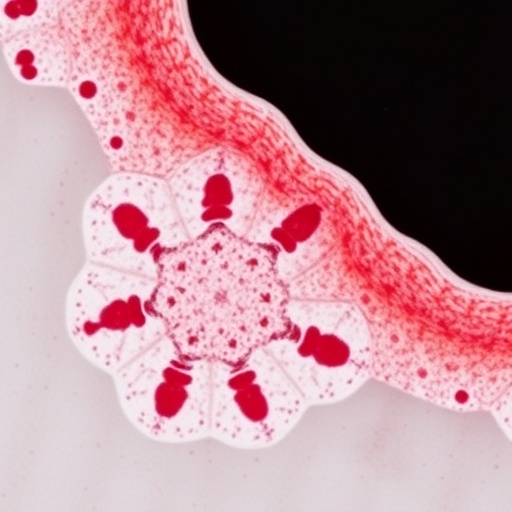
In the ceaseless battle against SARS-CoV-2, the virus responsible for the COVID-19 pandemic, the scientific community continues to encounter new challenges posed by emerging variants. A groundbreaking study recently published in Nature Communications sheds light on two novel Omicron subvariants, BA.2.86 and JN.1, which exhibit an expanded cellular tropism in the human proximal intestinal epithelium. This finding has vast implications for our understanding of viral evolution, tissue infectivity, and potential pathways for transmission.
Traditionally, SARS-CoV-2 has been studied extensively for its primary infection sites, chiefly the respiratory tract. However, the virus’s ability to infect other organ systems, notably the gastrointestinal tract, had been observed in earlier stages of the pandemic. The current research delves deeper into this underexplored aspect, revealing that these recent Omicron derivatives possess an enhanced capacity to infect cells lining the small intestine, which could contribute to altered disease dynamics and clinical manifestations.
The study meticulously employed ex vivo models using biopsied human proximal intestinal epithelial cells to assess the tropism of BA.2.86 and JN.1 variants. Utilizing primary human tissues ensures that findings are physiologically relevant, circumventing limitations of immortalized cell lines or animal models that might not fully recapitulate human biology. Through advanced immunofluorescence imaging and viral replication assays, the investigators demonstrated a pronounced viral entry and replication efficiency within the intestinal epithelial layer.
One of the most striking revelations relates to the viral entry mechanisms of these variants. Both BA.2.86 and JN.1 possess spike protein mutations that enhance binding affinity not only to the canonical ACE2 receptor but also to alternative co-receptors or facilitating factors prevalent in intestinal epithelial cells. This expanded receptor engagement broadens the virus’s cell tropism beyond the respiratory epithelium, potentially facilitating fecal-oral transmission or prolonged gut viral shedding.
At the molecular level, structural analyses of the spike receptor-binding domain (RBD) mutations highlight conformational changes that stabilize the interaction with epithelial surface proteins. This structural plasticity may permit the virus to sidestep existing cellular restrictions and innate defenses prevalent in the gut mucosa. Additionally, transcriptomic profiling of infected intestinal cells reveals modulation of innate immune signaling, including suppressed interferon responses, allowing for efficient viral replication despite the mucosal immune barrier.
Clinically, these discoveries raise critical questions regarding disease presentation and progression. Expanded intestinal tropism could explain prolonged gastrointestinal symptoms observed in some COVID-19 patients, as well as the detection of viral RNA in stool samples well beyond respiratory clearance. Moreover, the possibility that the gut may serve as a reservoir for viral replication suggests considerations for transmission and viral persistence, potentially impacting public health strategies.
The research also probes the implications for vaccine efficacy and therapeutic interventions. Current vaccines primarily induce systemic immune responses targeting the spike protein but may be less effective in mucosal compartments such as the gut. Understanding that BA.2.86 and JN.1 can efficiently replicate in intestinal tissue underscores the need for vaccine platforms or boosters that elicit robust mucosal immunity, potentially through intranasal or oral delivery systems.
Furthermore, antiviral drug targeting might require reformulation or combination approaches to address viral replication across multiple anatomical sites. Inhibitors designed to block viral entry or replication in respiratory cells might not fully suppress intestinal infection, necessitating a broader pharmacodynamic scope.
In terms of epidemiological impact, the expanded tissue tropism also has ramifications. The gastrointestinal tract is a site rich in microbial flora that could interact with or influence viral infection dynamics. This complex interplay may affect viral shedding patterns, mutation rates, and even virus-host co-evolution. The study’s insights exhort surveillance systems to incorporate gastrointestinal sampling to better capture the epidemiological footprint of emerging variants.
Importantly, from a virological perspective, the adaptability of SARS-CoV-2 to infect multiple tissue types reiterates its evolutionary plasticity. These findings reinforce the notion that the virus can undergo significant phenotypic shifts, enhancing its survival and transmissibility in the host environment. Consequently, monitoring such adaptations becomes crucial to anticipate future variants with altered pathogenesis or transmission potential.
The study also opens avenues for further basic science research. Understanding the cellular determinants of viral tropism could unravel specific host factors that facilitate or restrict infection. Targeting these molecules may represent novel therapeutic strategies distinct from viral protein-centric approaches. Additionally, characterizing the interplay between viral infection and host microbiota in the gut could shed light on immune regulation and disease outcomes.
Another intriguing consideration is the potential for these variants to contribute to long COVID syndromes. Persistent viral replication or antigen presence in the gastrointestinal tract might trigger chronic inflammation or immune dysregulation, manifesting as prolonged symptoms. Investigating these connections may provide critical insights into managing and treating post-acute COVID-19 conditions.
Collaboration between virologists, immunologists, gastroenterologists, and public health experts will be essential to translate these discoveries into clinical practice and policy. Integrating knowledge of viral tropism into diagnostic criteria, patient management, and containment measures could enhance comprehensive COVID-19 control.
In summary, the emergence of SARS-CoV-2 Omicron subvariants BA.2.86 and JN.1 with expanded tropism for human proximal intestinal epithelium represents a significant evolutionary step. This expansion challenges existing paradigms, urging the scientific community to broaden its investigative lens beyond the respiratory system. By delineating the molecular and cellular underpinnings of this tropism, the study offers vital clues for vaccine design, therapeutic development, and epidemiological monitoring.
As the global community continues to grapple with COVID-19, such research epitomizes the necessity of vigilance and adaptability in understanding this dynamic virus. The intricate dance between viral mutation and host interaction will remain at the forefront of combating the pandemic’s long-term impacts.
The findings underscore that SARS-CoV-2 is not static; it is a shape-shifter capable of expanding its infective reach in the human body, necessitating equally nimble scientific and healthcare responses. The revelation of gut tropism invites new perspectives on transmission pathways, symptomatology, and viral persistence, heralding a new phase in coronavirus research.
With the continuous evolution of SARS-CoV-2, interdisciplinary efforts will be crucial to preempt and mitigate the impacts of such viral shifts. Continued surveillance, coupled with innovative therapeutic strategies and vaccination approaches, will be paramount to maintaining control over the pandemic and preparing for future challenges posed by emerging variants.
Cite Scienmag News
Kristina Jarvis. (June 5, 2026). Omicron BA.2.86, JN.1 Broaden Intestinal Cell Tropism. Scienmag. https://scienmag.com/omicron-ba-2-86-jn-1-broaden-intestinal-cell-tropism/
Kristina Jarvis. "Omicron BA.2.86, JN.1 Broaden Intestinal Cell Tropism." Scienmag, 5 June 2026, https://scienmag.com/omicron-ba-2-86-jn-1-broaden-intestinal-cell-tropism/. Accessed 3 September 2026.
Kristina Jarvis. "Omicron BA.2.86, JN.1 Broaden Intestinal Cell Tropism." Scienmag. June 5, 2026. https://scienmag.com/omicron-ba-2-86-jn-1-broaden-intestinal-cell-tropism/


