


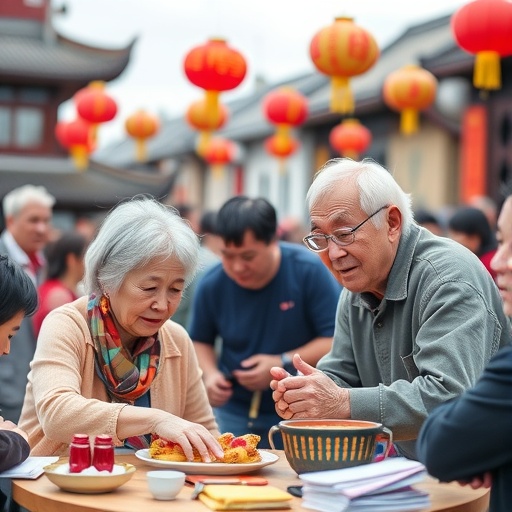
In an increasingly aging global population, understanding the factors influencing physical activity among older adults is of paramount importance for public health strategies worldwide. A pioneering study published in BMC Geriatrics shines a spotlight on an often overlooked demographic: older Chinese adults living in the United Kingdom. This qualitative descriptive study delves into the complex landscape of barriers and facilitators that shape the physical activity behaviors of this community, unveiling critical insights with broad implications for health promotion and social integration.
Physical activity is universally recognized as a cornerstone of healthy aging, contributing significantly to the prevention of chronic diseases, improvement of mental health, and enhancement of overall quality of life. Yet, the degree to which older adults engage in these activities varies dramatically across cultural and ethnic lines, influenced by a mosaic of social, environmental, and personal factors. The study by Yang, Zhang, McGarrigle, and colleagues provides a nuanced exploration of these dynamics within the context of the UK’s Chinese elderly population, a group whose experiences often remain obscured in mainstream health discourse.
The researchers employed a qualitative descriptive methodology to capture the lived experiences of older Chinese adults, utilizing in-depth interviews that allowed participants to express their perspectives freely. This approach enabled the identification of both tangible and intangible obstacles, alongside supportive elements, that affect their willingness and ability to maintain physical activity routines. Importantly, the analysis identified culturally specific issues alongside universal challenges that resonate across older populations.
One of the salient barriers uncovered relates to linguistic and communication challenges. Many older Chinese adults experience difficulties in navigating the predominantly English-speaking healthcare and community recreational systems. This linguistic divide not only hinders access to information about available activities but also exacerbates feelings of isolation, reducing motivation to participate. The study highlights that when language barriers persist unchecked, older adults may disengage from potentially beneficial programs entirely.
Cultural perceptions of aging and physical activity emerged as another critical factor. Within traditional Chinese culture, attitudes toward aging often emphasize rest and avoidance of strenuous activities, viewing such behaviors as a form of respect towards one’s aging body. This mindset can counteract prevailing public health messages advocating for exercise and movement, creating a cultural dissonance that participants struggled to reconcile. The researchers advocate for culturally sensitive messaging that harmonizes health promotion with deep-rooted cultural values.
Environmental and social factors also play a fundamental role in shaping physical activity habits. The study reveals that access to suitable community spaces, safety concerns, and social support networks heavily influence engagement levels. Older Chinese adults reported limited availability of culturally familiar or linguistically accessible exercise venues, as well as apprehension about unfamiliar locations. Additionally, social isolation or lack of companionship significantly diminished motivation for regular activity, underscoring the social dimension of exercise.
Conversely, the study identifies multiple facilitators of physical activity uptake. Key among these is the presence of strong family support, which often functions as a motivational backbone for older adults. Family encouragement not only boosts confidence but also enables access to resources, whether that be transportation to community centers or participation in group exercises. This dynamic illustrates the intergenerational nature of health behaviors and the potential leverage points for intervention.
Community organizations and peer groups emerged as vital platforms for fostering physical activity. Programs that incorporated cultural elements, such as traditional Chinese dance or Tai Chi sessions, were particularly effective in promoting participation. These activities provided familiar, culturally resonant environments that alleviated anxieties about engaging in unfamiliar exercises, enhancing both enjoyment and adherence. This finding suggests that culturally tailored interventions are not just preferable but essential.
Healthcare providers’ roles in encouraging physical activity were also highlighted. Participants noted a lack of proactive outreach by medical professionals concerning physical activity, which represents a missed opportunity for early intervention. When healthcare practitioners took time to understand cultural contexts and offered personalized advice, older adults were more inclined to initiate or maintain activity routines. Thus, training healthcare staff in cultural competence emerges as a critical step.
Technology’s potential influence was another notable theme. While digital tools and mobile applications can facilitate exercise tracking and virtual classes, the technological literacy of older Chinese adults varied widely. Some embraced these innovations avidly, finding them empowering, while others faced challenges due to limited experience or lack of trust in digital platforms. Addressing this digital divide is crucial as health promotion increasingly integrates technology.
The study also discussed the psychological impacts related to physical activity. Feelings of depression, anxiety, or low self-esteem frequently hindered motivation, with some participants expressing fears about injury or exacerbating existing health conditions. These emotional and cognitive barriers point to the necessity of holistic interventions that incorporate mental health support alongside physical exercise.
Economic factors cannot be overlooked; financial constraints often limited access to paid exercise programs or suitable equipment. Older adults on fixed incomes face difficult choices, and physical activity promotion must consider affordability to avoid inadvertently deepening disparities. Subsidized programs or free community initiatives emerge as effective solutions worth expanding.
Interestingly, the research underscored the adaptability and resilience of the population studied. Despite multiple obstacles, many older Chinese adults demonstrated resourcefulness in finding ways to stay active, including walking in local parks, participating in informal group exercises, or following home-based routines. Recognizing and amplifying these existing strengths can inform more empowering intervention designs.
The authors call for multi-level strategies that address individual beliefs, enhance community infrastructure, and engage healthcare systems sensitively to cultural nuances. They highlight the need for partnership with Chinese community organizations to co-develop accessible programs that resonate culturally and socially. This integrative approach promises higher uptake and sustainability.
This research contributes significantly to our understanding of the intersection between aging, ethnicity, and physical activity, offering a valuable template for examining other minority populations. With the global population aging and societies becoming increasingly diverse, such targeted insights enable more inclusive health promotion efforts, reducing disparities and improving population health outcomes broadly.
The implications stretch beyond the UK context, inviting policymakers, practitioners, and researchers worldwide to reflect upon and reinvent how physical activity is encouraged among older adults from diverse cultural backgrounds. The findings emphasize that one-size-fits-all strategies fall short, advocating for tailored, empathetic, and culturally grounded approaches that honor the experiences and preferences of older individuals.
As populations continue to shift culturally and demographically, this study exemplifies the critical role qualitative research plays in unpacking lived realities and informing practice beyond mere statistics. By elevating the voices of older Chinese adults, it paves the way for more equitable, effective, and compassionate public health interventions that promote healthy aging in all communities.
Cite Scienmag News
Ophelia Keating. (June 4, 2026). Challenges and Boosts to UK Older Chinese Activity. Scienmag. https://scienmag.com/challenges-and-boosts-to-uk-older-chinese-activity/
Ophelia Keating. "Challenges and Boosts to UK Older Chinese Activity." Scienmag, 4 June 2026, https://scienmag.com/challenges-and-boosts-to-uk-older-chinese-activity/. Accessed 4 September 2026.
Ophelia Keating. "Challenges and Boosts to UK Older Chinese Activity." Scienmag. June 4, 2026. https://scienmag.com/challenges-and-boosts-to-uk-older-chinese-activity/


