


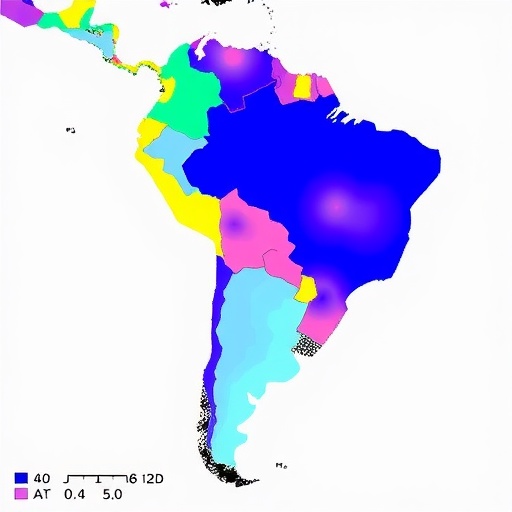
A blood test linked to one of Alzheimer’s disease’s most closely watched molecular signals is moving into a population rarely represented in biomarker research. A study led by P.V. Martino-Adami, J. Coutinho de Alvarenga and P. Freccero examines the diagnostic performance of plasma pTau217 in genetically admixed South American populations, according to a forthcoming report in Nature Communications. The work focuses on whether a simple blood measurement can identify Alzheimer’s-related pathology reliably across people whose genetic backgrounds reflect centuries of migration, intermarriage and population mixing.
Plasma pTau217 measures a chemically modified form of tau, a protein that normally helps stabilize the internal structure of nerve cells. In Alzheimer’s disease, tau undergoes abnormal phosphorylation and begins to accumulate in characteristic tangles inside neurons. The amino-acid position known as threonine 217 has attracted particular attention because changes in pTau217 levels can track the biological processes associated with amyloid-beta accumulation and tau pathology, sometimes before substantial cognitive decline becomes obvious. Unlike brain imaging or cerebrospinal-fluid sampling, a blood test could be more accessible, less invasive and easier to deploy at large scale.
The significance of the South American setting goes beyond geography. Many diagnostic studies have been conducted primarily in populations of European ancestry, creating uncertainty about how well their findings apply to people with different genetic ancestries, environmental exposures, health-care access and patterns of disease. South American populations are often genetically admixed, combining varying proportions of Indigenous American, European, African and other ancestries. That complexity can influence disease risk, biomarker distributions and the performance of statistical thresholds used to classify patients.
Diagnostic performance is not determined by a biomarker’s biological association alone. Researchers typically assess whether a test separates people with and without a target condition by examining measures such as sensitivity, specificity and the area under the receiver operating characteristic curve. Sensitivity reflects how effectively a test detects people who have the disease, while specificity measures how well it avoids false-positive results among those who do not. Predictive values also depend on disease prevalence, meaning that a test that performs well in a specialist clinic may behave differently in primary care or community screening.
The study’s focus on pTau217 therefore addresses a central challenge in modern Alzheimer’s research: translating a promising molecular signal into a dependable clinical tool. A reliable plasma marker could help identify individuals for confirmatory testing, support earlier evaluation of memory complaints and improve recruitment for clinical trials aimed at slowing disease progression. It could also make it easier to distinguish Alzheimer’s biology from other causes of cognitive impairment, although a blood result would not necessarily explain every symptom or replace a comprehensive neurological assessment.
Genetic admixture introduces both opportunities and technical complications. A biomarker may be influenced by genetic variants that affect protein production, clearance or immune responses, while factors such as kidney function, age, vascular disease and medication use can also alter blood-based measurements. Laboratory platforms may differ in antibody specificity, calibration and analytical sensitivity. For that reason, a diagnostic threshold established in one cohort cannot automatically be assumed to work in another. Evaluating pTau217 in admixed populations can reveal whether performance remains stable or whether interpretation requires population-specific adjustment.
The research arrives as blood-based Alzheimer’s biomarkers are rapidly approaching routine clinical use. Advances in ultrasensitive immunoassays and mass-spectrometry methods have made it possible to detect very small concentrations of phosphorylated tau in plasma. Yet accessibility alone does not guarantee equity. If validation studies exclude communities from Latin America and other underrepresented regions, the benefits of biomarker-driven diagnosis could be distributed unevenly. Evidence from South American populations is consequently important not only for scientific completeness but also for designing diagnostic systems that do not embed ancestry-related disparities into laboratory medicine.
The citation identifies the study and its population, but it does not provide numerical findings such as sensitivity, specificity, cohort size or the assay platform. Those details will determine how strongly the results support clinical adoption and whether the test performs consistently across ancestry groups and disease stages. Even so, the study’s premise highlights a powerful shift in Alzheimer’s diagnostics: the future may depend not only on finding biomarkers that work, but on proving that they work for the full diversity of people who may need them. By putting genetically admixed South American populations at the center of evaluation, the researchers are testing whether pTau217 can live up to its promise beyond the populations that first made it famous.
Cite Scienmag News
Ophelia Keating. (August 6, 2026). Plasma pTau217 Shows Diagnostic Performance Across Genetically Admixed South American Populations. Scienmag. https://scienmag.com/plasma-ptau217-shows-diagnostic-performance-across-genetically-admixed-south-american-populations/
Ophelia Keating. "Plasma pTau217 Shows Diagnostic Performance Across Genetically Admixed South American Populations." Scienmag, 6 August 2026, https://scienmag.com/plasma-ptau217-shows-diagnostic-performance-across-genetically-admixed-south-american-populations/. Accessed 4 September 2026.
Ophelia Keating. "Plasma pTau217 Shows Diagnostic Performance Across Genetically Admixed South American Populations." Scienmag. August 6, 2026. https://scienmag.com/plasma-ptau217-shows-diagnostic-performance-across-genetically-admixed-south-american-populations/


