


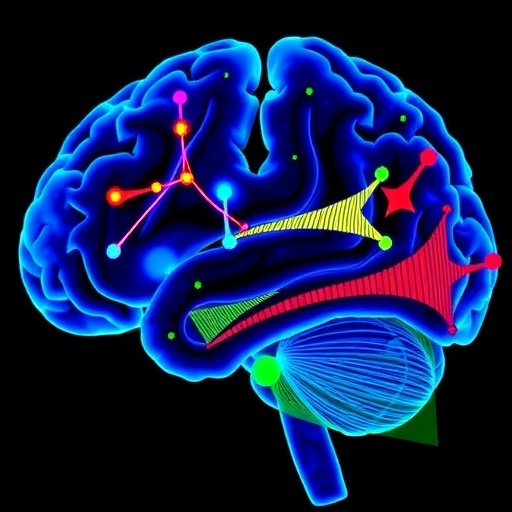
Tau buildup in a handful of specific brain regions may signal which people with mild cognitive impairment will go on to develop Alzheimer’s disease, according to a new study that tracked tau deposition over time in 126 patients and used a combination of machine learning and statistical modeling to pinpoint the regions that matter most.
The research, conducted by a team at Shandong Second Medical University in Weifang, China, and published in BMC Medical Imaging, analyzed longitudinal tau-PET imaging data from participants in the Alzheimer’s Disease Neuroimaging Initiative (ADNI). Rather than treating tau as a single, uniform burden across the brain, the investigators asked a more granular question: which regions of tau accumulation carry the strongest warning about conversion from mild cognitive impairment (MCI) to full Alzheimer’s disease?
Tau is one of the two hallmark proteins of Alzheimer’s disease, the other being beta-amyloid. While amyloid plaques can accumulate for decades without obvious cognitive decline, tau—especially when it forms neurofibrillary tangles inside neurons—tracks much more closely with the actual death of brain cells and the erosion of memory and thinking abilities. Tau PET imaging, which uses radioactive tracers that bind to the pathological protein, allows researchers to visualize and quantify this burden in living patients rather than relying on autopsy data.
To identify the key regions, the team applied three complementary analytical methods to the imaging data: penalized generalized estimating equations (PGEE), which use a smoothly clipped absolute deviation penalty to screen variables while accounting for repeated measures in the same person; mixed-effects gradient boosting (MEGB); and mixed-effects random forest (MERF), two machine learning approaches that model longitudinal trajectories while capturing nonlinear relationships and individual variability. Only regions jointly identified by all three methods were carried forward, a deliberately conservative strategy designed to reduce the risk of false discoveries.
Six brain regions passed this triple filter: the entorhinal cortex, the amygdala, the inferior parietal cortex, the middle temporal gyrus, the parahippocampal gyrus, and the ventral posterior cingulate cortex. Many of these are familiar territory in Alzheimer’s research. The entorhinal cortex, a gateway structure connecting the hippocampus to the rest of the cortex, is typically the earliest site of tau accumulation and is central to memory function. The parahippocampal gyrus and amygdala, both parts of the medial temporal lobe’s memory circuitry, follow closely behind in the disease’s stereotypical spread pattern.
The researchers then constructed a multilevel joint model—a sophisticated statistical framework that simultaneously analyzes the longitudinal trajectory of tau deposition and the time-to-event process of conversion from MCI to Alzheimer’s disease. Joint models are powerful because they link the two processes, allowing the evolving tau measurements over repeated scans to directly inform the estimated risk of disease progression at each moment in time. This is a step beyond simpler approaches that rely on a single baseline scan, which can miss the dynamics of how tau evolves in individual patients.
The results revealed a striking hierarchy among the six regions. The entorhinal cortex showed the strongest association with progression risk, with a hazard ratio of 3.763 (95% confidence interval: 2.237–6.801), meaning that higher tau burden in this region roughly quadrupled the risk of converting to Alzheimer’s disease. The amygdala followed closely at a hazard ratio of 3.732 (95% CI: 2.326–6.164), and the inferior parietal cortex at 3.511 (95% CI: 2.109–6.013). The middle temporal gyrus (hazard ratio 2.770, 95% CI: 1.972–3.955) and the parahippocampal gyrus (hazard ratio 2.522, 95% CI: 1.833–3.529) also showed significant associations.
Notably, one region did not make the cut of meaningful predictors. The ventral posterior cingulate cortex, despite being jointly selected by all three screening methods, showed a hazard ratio of 1.354 with a confidence interval spanning 0.858 to 2.164—an interval that includes 1.0, indicating the association with progression risk was not statistically significant. This kind of heterogeneity across regions, the authors emphasize, is exactly why the multilevel joint modeling approach matters: tau in different brain areas is not equally informative about a patient’s future.
Perhaps the most clinically consequential finding concerns the timing of tau accumulation. When the researchers examined whether the rate of tau buildup—the trajectory or slope over repeated scans—or the current level of tau burden was the better predictor of progression, the answer was clear: current tau burden, rather than its accumulation rate, emerged as the dominant factor associated with the risk of conversion. In practical terms, where a patient’s tau levels stand right now matters more for predicting near-term progression than how fast those levels have been climbing.
This distinction has implications for how tau PET data might be used in clinical trials and, eventually, in clinical practice. Anti-amyloid therapies have recently received regulatory approval, but the field has long recognized that tau pathology is the stronger correlate of neuronal injury and cognitive decline. If the amount of tau in specific regions at a given visit is the most informative signal, then monitoring those regions could help identify MCI patients at highest risk who might benefit most from early intervention—and could serve as sensitive outcome measures in trials of tau-targeting therapies.
The study’s data came from the ADNI database, a widely used public resource that has followed hundreds of older adults with serial imaging, fluid biomarkers, and cognitive assessments. All participants provided written informed consent, and the analysis used de-identified data under the ADNI data use agreement. Using longitudinal tau-PET data—repeated scans from the same individuals over time—allowed the team to model within-person trajectories as well as between-person differences, a distinction captured by the mixed-effects and multilevel structure of their models.
The methodological pipeline itself represents a growing trend in Alzheimer’s research: combining classical biostatistics with machine learning to handle the high dimensionality of brain imaging. Tau PET scans yield standardized uptake value ratios (SUVRs) for dozens of distinct brain regions, and identifying which of these carry prognostic weight requires variable selection methods robust to correlation among regions and repeated measurements. The triangulation across PGEE, MEGB, and MERF gives the findings a level of robustness that any single method alone would not provide.
The work was supported by the National Natural Science Foundation of China, the Natural Science Foundation of Shandong Province, and regional science and technology programs, and it is published open access. The authors, led by Yanxia Wang, Xinyu Yang, Yonghua Ma, and Aimin Wang as co-first authors, with Suzhen Wang and Fuyan Shi as corresponding authors, note that the study is citable under a permanent DOI while the final version of record is being completed.
For the field, the study adds a quantitative layer to a picture that has been forming for years: tau spreads through the brain along predictable pathways, and the specific regions it reaches—and how much of it settles there—encode information about how quickly a person will decline. By showing that the entorhinal cortex, amygdala, inferior parietal cortex, middle temporal gyrus, and parahippocampal gyrus each independently raise the risk of conversion from MCI to Alzheimer’s disease, and by quantifying that risk with region-specific hazard ratios, the study moves the field closer to a personalized, imaging-based prognostic tool.
That tool remains on the horizon rather than in the clinic. The findings are based on 126 participants, and hazard ratios from observational models describe associations, not certainty about any individual patient’s trajectory. Validation in independent cohorts, and integration with other biomarkers such as amyloid status and fluid markers of neurodegeneration, will be needed before tau PET in these five regions can guide individual clinical decisions. But as the search for effective Alzheimer’s treatments intensifies, knowing exactly where to look—and what level of tau in those places means for the road ahead—gives researchers and clinicians a sharper map of the disease’s most decisive early chapter.
Cite Scienmag News
Cassandra Pierce. (September 4, 2026). Dynamic tau buildup predicts Alzheimer’s progression risk in mild cognitive impairment. Scienmag. https://scienmag.com/dynamic-tau-buildup-predicts-alzheimers-progression-risk-in-mild-cognitive-impairment/
Cassandra Pierce. "Dynamic tau buildup predicts Alzheimer’s progression risk in mild cognitive impairment." Scienmag, 4 September 2026, https://scienmag.com/dynamic-tau-buildup-predicts-alzheimers-progression-risk-in-mild-cognitive-impairment/. Accessed 4 September 2026.
Cassandra Pierce. "Dynamic tau buildup predicts Alzheimer’s progression risk in mild cognitive impairment." Scienmag. September 4, 2026. https://scienmag.com/dynamic-tau-buildup-predicts-alzheimers-progression-risk-in-mild-cognitive-impairment/


