


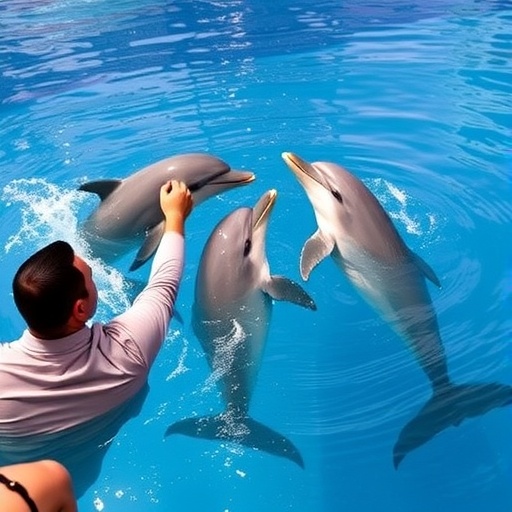
Wild bottlenose dolphins in Sarasota Bay have long been admired for their intricate and dynamic social structures. However, a groundbreaking new study published in the journal Animal Behaviour reveals that these coastal cetaceans’ social networks are not only shaped by natural ecological factors but are increasingly influenced by human activities and environmental stressors. Conducted by researchers at Oregon State University in collaboration with the Sarasota Dolphin Research Program, this extensive observational study sheds new light on how human-driven behaviors and environmental disturbances interplay to reshape dolphin sociality and foraging strategies.
For over two decades, scientists have meticulously documented the lives of Sarasota Bay’s resident bottlenose dolphins, accumulating a wealth of data invaluable for understanding their behaviors. This latest investigation specifically examined how risky foraging behaviors tied to human interaction—such as pilfering bait from fishing lines, scavenging refuse, and approaching humans for food—affect dolphin social associations. Interestingly, these dolphins tend to cluster socially with others exhibiting similar human-centric foraging tactics, suggesting that such behaviors not only impact individual survival but also influence the broader social architecture.
Environmental adversity compounds these effects. The early 2000s saw intense harmful algal blooms, colloquially known as red tides, in Sarasota Bay. These toxic events drastically reduced the availability of key fish species, forcing dolphins to adapt by expanding their foraging range and potentially increasing their dependence on anthropogenic food sources. The study found that during these red tide episodes, the correlation between shared human-centric foraging and social bonds weakened. This finding hints that resource scarcity may prompt bottlenose dolphins to temporarily prioritize natural prey aggregation over socially-driven foraging patterns linked to human interaction.
Lead author Dr. Kyra Bankhead of Oregon State University emphasizes the significance of these findings. “Our data reveal that human activities can sculpt the social fabric of wild dolphin communities, especially when they coincide with environmental shocks such as harmful algal blooms,” she said. The implication is profound: social bonds among dolphins are not fixed but fluctuate in response to overlapping pressures from anthropogenic disturbances and natural ecological changes.
Notably, the study observed a marked increase in the proportion of dolphins engaging in risky human-associated foraging behavior over time: from 12% before the red tide period to 22% during, and soaring to 41% afterward. This trend raises concerns about the escalating influence of human interactions on dolphin behavior and the potential for these behaviors to spread through social learning and network effects within the population. The perpetuation of such behaviors could have maladaptive consequences, including heightened vulnerability to injury from fishing gear or boats, impaired reproductive success, and even mortality.
The Sarasota Dolphin Research Program, operated by Brookfield Zoo Chicago, provided the essential long-term dataset enabling this analysis. With over 56 years of continuous study, it represents the world’s longest-running research program on a wild dolphin population. The program’s enduring commitment offers unparalleled insight into the complex interplay of social structure, health, ecology, and anthropogenic factors influencing these charismatic marine mammals.
From an ecological standpoint, the findings extend our understanding of how environmental stressors like algal blooms can ripple through animal societies. During periods of prey scarcity, dolphins may aggregate more tightly around limited natural food sources, diminishing the influence of human-related foraging behaviors on their social bonds. Yet, once such acute environmental pressures ease, human-centric foraging tactics appear to gain renewed prominence, diffusing throughout the social network. Such dynamics underscore the importance of viewing animal social behavior through the lens of multifaceted and interacting environmental drivers.
The practical implications for wildlife conservation and public awareness are clear. Despite appearances, feeding or interacting with wild dolphins can provoke unintended harm. As Katherine McHugh, deputy director of the Sarasota Dolphin Research Program, notes, “What may seem like benign human generosity actually alters dolphin behavior in lasting and potentially dangerous ways.” In the U.S., laws explicitly prohibit feeding or attempting to feed wild marine mammals. Boaters and anglers are encouraged to adopt responsible practices such as refraining from discarding bait near dolphins, reeling in fishing lines promptly, and maintaining respectful distances to reduce the risk of harmful encounters.
Understanding the social consequences of human interference in dolphin populations is critical as climate change and coastal habitat degradation amplify the frequency and severity of environmental disturbances like harmful algal blooms. Changes in social structure may affect the transmission of learned behaviors, foraging efficiency, and overall resilience of these highly social, long-lived animals. Protecting their social integrity is therefore an essential component of broader conservation efforts.
Randall Wells, director emeritus of the Sarasota Dolphin Research Program, underscores the value of long-term research in grasping these complex interactions. “Our decades of study reveal not only the immediate dangers posed by human interaction but the deeper, more insidious ways in which such interactions reshape dolphin communities over time,” he explained. This nuanced understanding informs management strategies aimed at preserving the wildness and well-being of these emblematic marine mammals.
As coastal ecosystems worldwide face mounting anthropogenic pressures, the Sarasota Bay scenario provides a microcosm of broader challenges. The interplay between human behavior, environmental change, and animal social systems serves as a potent reminder of the intricate connections linking human activity and wildlife ecology. Mitigating risks to dolphins demands concerted efforts spanning public education, legal enforcement, and habitat conservation.
In sum, this study offers compelling evidence that the social networks and foraging behaviors of wild bottlenose dolphins are malleable and vulnerable to the dual forces of environmental stress and human interference. As these pressures escalate, so too does the urgency to foster coexistence strategies that honor the ecological and social complexity of these remarkable marine mammals. The best path forward lies in ensuring they remain truly wild—free to navigate the challenges of a changing seascape on their own terms.
News Publication Date: 29-Apr-2026
Cite Scienmag News
Violet Maxwell. (May 28, 2026). New Study Reveals How Human Activity Transforms Dolphin Social Behavior. Scienmag. https://scienmag.com/new-study-reveals-how-human-activity-transforms-dolphin-social-behavior/
Violet Maxwell. "New Study Reveals How Human Activity Transforms Dolphin Social Behavior." Scienmag, 28 May 2026, https://scienmag.com/new-study-reveals-how-human-activity-transforms-dolphin-social-behavior/. Accessed 3 September 2026.
Violet Maxwell. "New Study Reveals How Human Activity Transforms Dolphin Social Behavior." Scienmag. May 28, 2026. https://scienmag.com/new-study-reveals-how-human-activity-transforms-dolphin-social-behavior/


