


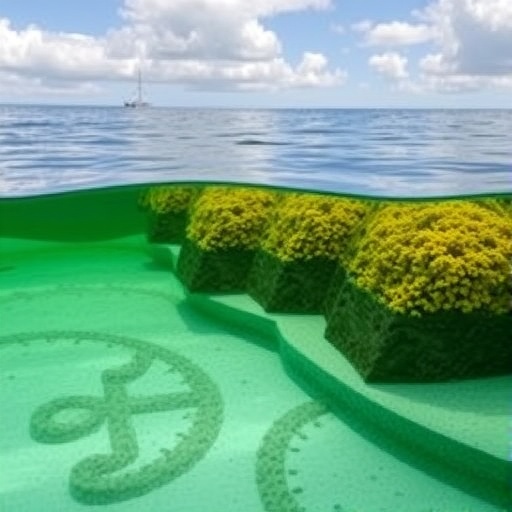
(Santa Barbara, Calif.) A growing international effort is taking the first steps toward evaluating whether sinking terrestrial plant biomass into the deep, oxygen-free ocean could lock away carbon for centuries. Researchers say the challenge is not just scientific but logistical and political—requiring ports, local economies, and cross-border collaboration at a scale large enough to matter for climate mitigation. The initial push came from a workshop led by UC Santa Barbara scientists, with outcomes published in Biogeosciences.
The urgency is driven by the need for durable carbon removal strategies that complement rapid greenhouse-gas emission cuts. Plant biomass naturally captures carbon from the atmosphere, but most of that carbon is returned relatively quickly when organic matter decays. The core proposal is to interrupt that cycle by transporting plant-derived material to the ocean’s depths, where it could persist far longer.
However, earlier versions of “ocean biomass sinking” have raised alarms. Critics point to ecological disruption on the seafloor, chemical shifts in surrounding waters, and the possibility that stored carbon could re-enter the water column before remaining permanently. These uncertainties have made the approach controversial and difficult to validate.
To reduce those risks, UCSB biogeochemist Morgan Raven and colleagues focus on marine anoxic carbon storage (MACS): targeting natural basins where dissolved oxygen cannot penetrate. Such regions can form due to restricted circulation or strong density stratification, including brine-driven or salt-enhanced conditions. In these settings, oxygen-free chemistry can help preserve organic matter in a “pickled” environment.
Previous work from Raven’s NOISE Lab identified promising MACS candidates, with the Black Sea often highlighted for its size and relative isolation. Other potential sites include the Orca Basin in the Gulf of Mexico, brine pools, and anoxic carbon sinks that can develop near some river deltas. Yet knowing where to store carbon is only part of the equation.
During the workshop in Bucharest, participants—including local scientists, startups, policy experts, and NGOs—assessed what is known and what remains unknown. They examined candidate sites, likely biomass sources (such as agricultural residues and forestry management excess), and the emissions that could be generated by harvesting and transporting the material.
Researchers also discussed how MACS operations might alter water-column chemistry, from surface layers down to the anoxic basin itself. A central question is whether ocean circulation and stratification—especially under changing rainfall patterns—could change over time and affect how stable the carbon burial remains.
The resulting Biogeosciences paper concludes that MACS could, in principle, reach the “enormous scale” required to contribute meaningfully to climate mitigation, as defined by the US National Academies in 2022. It also lays out a targeted research agenda, emphasizing modeling studies and site-specific constraints that must be answered before any informed deployment.
Raven stresses the work is early, but believes the workshop succeeded in building a coalition across disciplines. “There’s a chance, based on what we know today, that this approach could work,” she says—“if we pool the expertise of all these people from all these different fields.”
Cite Scienmag News
Violet Maxwell. (July 27, 2026). UCSB-Led Researchers Assess Anoxic Marine Basins for Carbon Sequestration Potential. Scienmag. https://scienmag.com/ucsb-led-researchers-assess-anoxic-marine-basins-for-carbon-sequestration-potential/
Violet Maxwell. "UCSB-Led Researchers Assess Anoxic Marine Basins for Carbon Sequestration Potential." Scienmag, 27 July 2026, https://scienmag.com/ucsb-led-researchers-assess-anoxic-marine-basins-for-carbon-sequestration-potential/. Accessed 5 September 2026.
Violet Maxwell. "UCSB-Led Researchers Assess Anoxic Marine Basins for Carbon Sequestration Potential." Scienmag. July 27, 2026. https://scienmag.com/ucsb-led-researchers-assess-anoxic-marine-basins-for-carbon-sequestration-potential/


