

Monday, August 17, 2026
Science
No Result
View All Result
  • Login
  • HOME
  • SCIENCE NEWS
  • CONTACT US
  • HOME
  • SCIENCE NEWS
  • CONTACT US
No Result
View All Result
Scienmag
No Result
View All Result
Home Science News Marine

Which Fish Could Next Invade the Mediterranean Sea?

July 27, 2026
in Marine
Reading Time: 2 mins read
0
Which Fish Could Next Invade the Mediterranean Sea?

Which Fish Could Next Invade the Mediterranean Sea?

65
SHARES
587
VIEWS
Share on FacebookShare on Twitter
ADVERTISEMENT

More than 120 Red Sea fish species have crossed into the Mediterranean since the opening of the Suez Canal over 150 years ago. Now, researchers at Tel Aviv University have built a statistical forecasting model designed to identify which species are most likely to become the next wave of migrants.

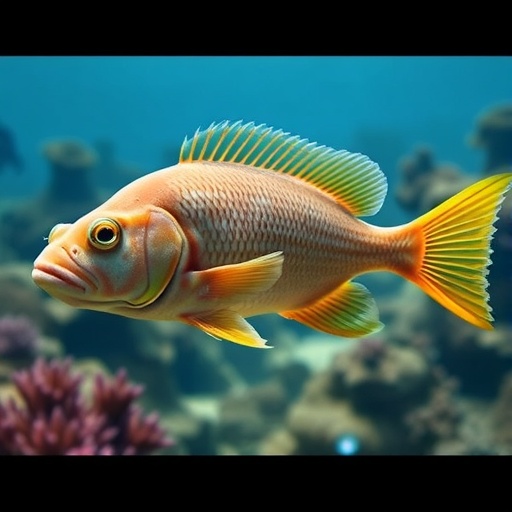
Using extensive field observations from both seas, the team ranked Red Sea species by invasion potential and highlighted three particularly high-risk candidates: the stellate pufferfish (Arothron stellatus), the cinnabar goatfish (Parupeneus heptacantha), and the yellowspotted trevally (Turrum fulvoguttatum).

The work, led by Dr. Shahar Chaikin under the supervision of Prof. Jonathan Belmaker, was published in the Journal of Animal Ecology and aims to move beyond explaining past invasions toward anticipating future ones—especially as Mediterranean warming accelerates the northward movement of tropical species.

To generate the evidence base for their model, the scientists deployed stereoscopic baited remote underwater video systems (stereo-BRUVs) across depths from 5 to 150 meters in the Gulf of Eilat and along Israel’s Mediterranean coast. They then analyzed hundreds of hours of footage covering 179 fish populations.

A key technical result overturned a common expectation: invasion success was not best predicted by whether a species is a “generalist” that tolerates many habitats. Instead, the strongest predictor was its lack of dependence on coral reefs.

Dr. Chaikin explains that the Mediterranean contains far fewer coral reef habitats than the Red Sea. Fish that rely on coral reefs are therefore less likely to complete the journey through the corridor of unsuitable conditions, whereas reef-independent species are more likely to establish.

The study also quantified behavioral shifts after arrival. Rather than retaining Red Sea habitat choices, successful migrants rapidly reconfigure their preferences to exploit resources available in the Mediterranean environment.

Importantly, the researchers found that invaders do not necessarily occupy “empty” ecological niches. They often use the same habitats as native species, implying intensified competition for food, shelter, and space—an effect likely to reshape local community dynamics.

Finally, the authors argue that “watchlists” derived from models like theirs could support early detection and improve management decisions. As conditions warm, predictive frameworks may become an essential tool for protecting marine ecosystems before new species become entrenched.

Subject of Research: Marine invasive species forecasting; Red Sea–Mediterranean Lessepsian migration
Article Title: Predicting future fish invasions into the Mediterranean from the Red Sea
News Publication Date:
Web References: https://doi.org/10.1111/1365-2656.70293
References: 10.1111/1365-2656.70293
Image Credits: Tel Aviv University
Keywords: Lessepsian migration, marine invasions, stereoscopic BRUV, coral reef dependence, ecological competition, Mediterranean warming, invasive species prediction

Tags: climate change impact on marine invasionsfish invasion forecastinghigh-risk invasive fish candidatesInvasive fish speciesmarine bioinvasionsmarine ecology researchMediterranean Seapredicting future marine invasionsRed Sea migrationstereo-BRUVs underwater videoSuez Canaltropical fish species
Share26Tweet16
Previous Post

Structure Reveals How Crimean-Congo Hemorrhagic Fever Virus Polymerase Is Inhibited

Next Post

Rising Temperatures Shrink Habitat as Tropical Insects Face Space Shortages

Related Posts

Study reveals benefits of co-firing wastewater sludge at thermal power plants
Marine

Study reveals benefits of co-firing wastewater sludge at thermal power plants

August 15, 2026
Ocean-derived sugars rise high into atmosphere, influencing Arctic climate
Marine

Ocean-derived sugars rise high into atmosphere, influencing Arctic climate

August 14, 2026
Sargassum Waste Transformed into High-Performance Carbon-Capture Material
Marine

Sargassum Waste Transformed into High-Performance Carbon-Capture Material

August 13, 2026
One Country, Two Oceans, and Twenty Times More Sharks
Marine

One Country, Two Oceans, and Twenty Times More Sharks

August 13, 2026
Ocean iron fertilization removes CO2—but what does nature pay?
Marine

Ocean iron fertilization removes CO2—but what does nature pay?

August 13, 2026
Climate Change Speed Influences Atlantic Meridional Overturning Circulation Stability
Marine

Climate Change Speed Influences Atlantic Meridional Overturning Circulation Stability

August 13, 2026
Next Post
Rising Temperatures Shrink Habitat as Tropical Insects Face Space Shortages

Rising Temperatures Shrink Habitat as Tropical Insects Face Space Shortages

  • Mothers who receive childcare support from maternal grandparents show more

    Mothers who receive childcare support from maternal grandparents show more parental warmth, finds NTU Singapore study

    27656 shares
    Share 11059 Tweet 6912
  • University of Seville Breaks 120-Year-Old Mystery, Revises a Key Einstein Concept

    1061 shares
    Share 424 Tweet 265
  • Bee body mass, pathogens and local climate influence heat tolerance

    682 shares
    Share 273 Tweet 171
  • Researchers record first-ever images and data of a shark experiencing a boat strike

    546 shares
    Share 218 Tweet 137
  • Groundbreaking Clinical Trial Reveals Lubiprostone Enhances Kidney Function

    531 shares
    Share 212 Tweet 133
Science

Embark on a thrilling journey of discovery with Scienmag.com—your ultimate source for cutting-edge breakthroughs. Immerse yourself in a world where curiosity knows no limits and tomorrow’s possibilities become today’s reality!

RECENT NEWS

  • GLP-1 Drugs Raise Treatment-Related Stigma Concerns, Researchers Call for Conceptual Clarity
  • Reforestation Drove China’s Forest Carbon Sink Between 1986 and 2019
  • Delayed brain energy network development in preterm youth linked to poorer cognition
  • Microbes’ Superoxide Production Drives Biological Nitrogen Dioxide Formation in Soils

Categories

  • Agriculture
  • Anthropology
  • Archaeology
  • Athmospheric
  • Biology
  • Biotechnology
  • Blog
  • Bussines
  • Cancer
  • Chemistry
  • Climate
  • Earth Science
  • Editorial Policy
  • Marine
  • Mathematics
  • Medicine
  • Pediatry
  • Policy
  • Psychology & Psychiatry
  • Science Education
  • Social Science
  • Space
  • Technology and Engineering

Subscribe to Blog via Email

Enter your email address to subscribe to this blog and receive notifications of new posts by email.

Join 5,150 other subscribers

© 2025 Scienmag - Science Magazine

Welcome Back!

Login to your account below

Forgotten Password?

Retrieve your password

Please enter your username or email address to reset your password.

Log In
No Result
View All Result
  • HOME
  • SCIENCE NEWS
  • CONTACT US

© 2025 Scienmag - Science Magazine

Discover more from Science

Subscribe now to keep reading and get access to the full archive.

Continue reading
