


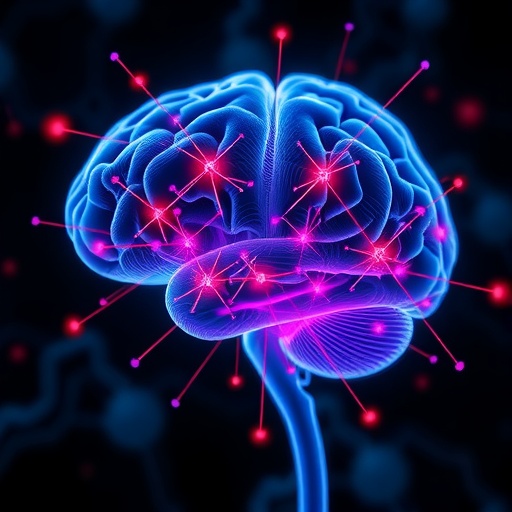
In the relentless quest to unravel the complexities of brain aging and neurodegenerative diseases, a groundbreaking study led by Li, Zhang, Li, and colleagues, published in Nature Communications in 2026, has spotlighted the potential of brain maintenance biomarkers derived from intricate structural and functional interactions. This study propels our understanding of the brain’s biological resilience mechanisms to new heights, offering unprecedented insights that could revolutionize diagnostics and therapeutic strategies for neurodegeneration.
The human brain, a symphony of billions of neurons and their connections, undergoes profound transformations across the lifespan. While aging naturally leads to some degree of cognitive decline, not all individuals experience neurodegenerative diseases such as Alzheimer’s or Parkinson’s at the same rate or intensity. This research pivots on the hypothesis that certain biomarkers—measurable indicators of biological processes—can reflect the brain’s maintenance capabilities, effectively distinguishing resilient brains from those susceptible to pathological deterioration.
Central to this revolutionary approach is the integration of structural and functional brain imaging modalities, combining the anatomical details of brain morphology with the dynamic communication patterns across neural networks. The researchers utilized advanced magnetic resonance imaging (MRI) techniques alongside functional MRI (fMRI) to map these interactions, unveiling a complex interplay between brain structure and activity that underlies healthy cognition and its decline.
By correlating these imaging-derived biomarkers with cognitive performance and clinical assessments, the team identified distinct signatures associated with neural preservation. These biomarkers illuminate not only areas vulnerable to degeneration but also those regions whose robust connectivity supports compensation and adaptation, offering a holistic picture of brain health. Such dual consideration of structure and function marks a significant departure from previous studies that tended to focus on isolated parameters.
One of the most compelling revelations from the study is the identification of network hubs—critical brain regions that coordinate diverse neural circuits—that exhibit unique maintenance profiles. These hubs demonstrate changes in both gray matter integrity and synchronized activity patterns that predict cognitive resilience. Understanding how these hubs adapt or succumb during aging opens new frontiers for identifying therapeutic targets aimed at bolstering these pivotal nodes.
Further, the research delineates how longitudinal monitoring of these biomarkers can track disease progression or the efficacy of interventions, providing a dynamic window into brain maintenance. The ability to observe these patterns over time is crucial for early detection and personalized treatment plans, which remain unmet needs in the management of neurodegenerative diseases.
Notably, the study also underlines the heterogeneity within aging populations. By leveraging machine learning algorithms to analyze the vast datasets generated, the researchers partitioned participants into subgroups aligned with different maintenance biomarker profiles. This stratification challenges one-size-fits-all models and underscores the necessity of precision medicine approaches tailored to individual brain resilience profiles.
From a technical perspective, this research integrates sophisticated network neuroscience methodologies with cutting-edge computational tools. The fusion of graph theoretical measures with functional connectivity analyses enables quantification of the brain’s topological organization—a key determinant of cognitive capabilities. The robustness and reproducibility of these findings stem from meticulous methodological rigor, including cross-validation across diverse cohorts.
Importantly, these findings hold profound implications beyond academic circles. Clinicians stand to benefit from biomarker-driven diagnostic criteria, which could refine patient stratification and facilitate earlier interventions. Moreover, pharmaceutical development can pivot towards targeting maintenance mechanisms rather than solely addressing symptoms or late-stage pathology, potentially altering disease trajectories fundamentally.
Understanding the biological substrates of brain maintenance also dovetails with lifestyle and environmental factors influencing brain aging. This study provides a framework for integrating biological biomarkers with behavioral and genetic data, catalyzing interdisciplinary explorations into how education, exercise, diet, and social engagement may modulate neural resilience.
The translational potential of this work cannot be overstated. Future research prompted by these findings may unravel novel therapeutic avenues—ranging from neuromodulation techniques such as transcranial magnetic stimulation to pharmacological agents designed to reinforce network connectivity and gray matter preservation. Such innovations promise to mitigate the personal and societal burdens posed by neurodegenerative disorders.
Equally exciting is the prospect of applying these biomarkers in non-invasive screening tools, transforming routine clinical assessments and enabling proactive health management. As the population ages globally, scalable and accessible biomarkers will become a cornerstone of public health strategies aimed at preserving cognitive function and quality of life.
While this pioneering study sets a new paradigm, it also charts out challenges and questions for future inquiry. For instance, how do these maintenance biomarkers interplay with genetic risk factors like APOE-ε4? What is the influence of comorbidities such as cardiovascular disease? Addressing these dimensions will further refine the biomarkers’ specificity and prognostic utility.
In summary, Li and colleagues’ exploration into brain maintenance biomarkers through combined structural and functional interactions stands as a transformative moment in neuroscience. By illuminating the delicate balance between degeneration and preservation, this work paves the way towards a future where aging need not equate to cognitive decline and where neurodegeneration can be anticipated and modulated with precision.
As the scientific community digests these findings, a new chapter emerges—one that promises not merely to extend lifespan but to enhance brain healthspan, ensuring that the twilight years are marked by vitality, clarity, and connection rather than loss.
Cite Scienmag News
Cassandra Pierce. (May 28, 2026). Brain Maintenance Biomarkers in Aging and Neurodegeneration. Scienmag. https://scienmag.com/brain-maintenance-biomarkers-in-aging-and-neurodegeneration/
Cassandra Pierce. "Brain Maintenance Biomarkers in Aging and Neurodegeneration." Scienmag, 28 May 2026, https://scienmag.com/brain-maintenance-biomarkers-in-aging-and-neurodegeneration/. Accessed 5 September 2026.
Cassandra Pierce. "Brain Maintenance Biomarkers in Aging and Neurodegeneration." Scienmag. May 28, 2026. https://scienmag.com/brain-maintenance-biomarkers-in-aging-and-neurodegeneration/


