



view more
Credit: Wayne State University
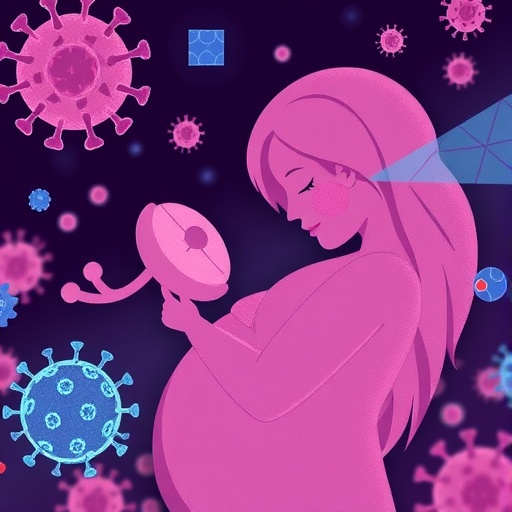
DETROIT — The National Institute of Allergy and Infectious Diseases of the National Institutes of Health has awarded a new, five-year $2.4 million R01 grant to Dr. Jiahui Ding, assistant professor of obstetrics and gynecology at the Wayne State University School of Medicine’s C.S. Mott Center for Human Growth and Development, to support research that aims to uncover how viral infections during pregnancy reprogram the developing immune system of the fetus, influencing susceptibility to infectious diseases throughout life.
Maternal viral infections during pregnancy have been associated with adverse pregnancy outcomes and long-term consequences for offspring health. However, scientists do not fully understand how an infection in the mother can alter fetal immune development, particularly when the fetus itself is not directly infected. The project, “Placental Responses to Maternal Viral Infection Drive Sex-Dimorphic Offspring Immune Reprogramming,” focuses on the placenta as a key mediator of that communication.
“This project addresses one of the most important unanswered questions in developmental immunology: how experiences before birth influence immune health across the lifespan,” Ding said. “By understanding how maternal viral infections reprogram fetal immune development, we hope to identify new biomarkers and therapeutic strategies that can reduce susceptibility to infections and improve health outcomes for future generations.”
The findings are expected to provide fundamental insights into why males and females differ in their responses to infections, vaccines and inflammatory diseases following prenatal viral exposure. Ultimately, the research may pave the way for precision medicine approaches that consider fetal sex when developing preventive and therapeutic interventions in pregnancy.
During pregnancy, the placenta acts as an important immune organ that helps educate and shape the developing fetal immune system. When a pregnant mother has an infection, the placenta senses the infection and activates immune responses.
“In this project, we will investigate how the placenta responds to maternal viral infection, how those signals affect developing fetal immune cells, and why these effects can be different between males and females. Ultimately, we hope to better understand how infections during pregnancy can influence immune health later in life and identify potential ways to protect fetal development,” said Ding.
Preliminary findings from Ding’s laboratory indicate that maternal viral infection impairs neutrophil function and increases inflammatory sensitivity predominantly in male offspring, suggesting that placental inflammatory pathways operate in a sex-specific manner during fetal development.
The project will examine how placental inflammasome activation, particularly IL-1β signaling, reshapes fetal hematopoietic stem cells development and establishes long-lasting immune memory. Using cutting-edge approaches, including single-cell transcriptomics, epigenetic profiling and an innovative human placenta–fetal interface organ-on-chip model, the research team will define the molecular pathways linking maternal infection to lifelong immune function.
“I am extremely grateful and excited to receive this award, particularly given the highly competitive funding environment. This support provides an important opportunity for my laboratory to develop a long-term research program focused on how the maternal environment during pregnancy shapes immune development and health in the offspring,” Ding said.
The grant is her first R01 as a principal investigator.
The award represents another major milestone in the Mott Center’s mission to understand the developmental origins of health and disease through collaborative, multidisciplinary research.
“Congratulations to Dr. Jiahui Ding on earning her first NIH R01 award, an outstanding milestone for a promising early-career investigator,” said School of Medicine Dean Dr. Wael Sakr. “This remarkable achievement reflects both her exceptional scientific talent and the collaborative research environment at the C.S. Mott Center. Dr. Ding’s innovative research has the potential to transform our understanding of how maternal health shapes lifelong immune function and to advance precision medicine for future generations. We are proud of her success and look forward to the important discoveries that will emerge from this outstanding work.”
Ding’s earlier work, including studies of Zika virus infection during pregnancy, found that the placenta responds differently depending on fetal sex and that these placental responses are associated with long-lasting and sex-dimorphic differences in offspring neutrophil function.
“Dr. Ding’s NIH R01 exemplifies the scientific vision of the Mott Center, where investigators from diverse disciplines work together to understand how events during pregnancy shape lifelong health,” said Dr. Gil Mor, the John M. Malone Jr. M.D., Endowed Chair of Women’s Health, scientific director of the C.S. Mott Center and vice chair for research in the Department of Obstetrics and Gynecology.
“This project complements several ongoing research programs at the center investigating how maternal infections and environmental exposures influence fetal development and the origins of disease. A defining strength of our research environment is the integration of expertise in reproductive immunology, developmental biology, stem cell biology and systems immunology to uncover the biological basis of sexual dimorphism in disease susceptibility,” Mor said. “Understanding why males and females respond differently to prenatal challenges is central to developing the next generation of precision medicine strategies for mothers and children.”
The C.S. Mott Center for Human Growth and Development at Wayne State University is a nationally recognized multidisciplinary research center dedicated to advancing discoveries in reproductive biology, pregnancy, fetal development, cancer, environmental health and the developmental origins of disease. Through collaborative basic, translational and clinical research, the center seeks to improve the health of women, children and families while training the next generation of biomedical scientists.
“Dr. Ding’s research has the potential to prevent lifelong health challenges in children who have been exposed to infections before birth,” said Dr. Ezemenari Obasi, vice president for research & innovation at Wayne State University. “I look forward to the impact this research will have in our community and beyond.”
Research cited in this article was supported by the National Institute of Allergy and Infectious Diseases of the National Institutes of Health under award number R01AI201310. The content is solely the responsibility of the authors and does not necessarily represent the official views of the National Institutes of Health.
Learn more about Ding’s research and lab at https://wayne.edu/people/gy3378.
###
Wayne State University is one of the nation’s pre-eminent public research universities in an urban setting. Through its multidisciplinary approach to research and education, and its ongoing collaboration with government, industry and other institutions, the university seeks to enhance economic growth and improve the quality of life in the city of Detroit, state of Michigan and throughout the world. For more information about research at Wayne State University, visit research.wayne.edu.
Julie O’Connor
Wayne State University – Office of the Vice President for Research
julie.oconnor@wayne.edu
Office: 313-577-8845
Tags
Cite Scienmag News
Kristina Jarvis. (July 29, 2026). Research study investigates how maternal viral infections shape lifelong immune health in offspring. Scienmag. https://scienmag.com/research-study-investigates-how-maternal-viral-infections-shape-lifelong-immune-health-in-offspring/
Kristina Jarvis. "Research study investigates how maternal viral infections shape lifelong immune health in offspring." Scienmag, 29 July 2026, https://scienmag.com/research-study-investigates-how-maternal-viral-infections-shape-lifelong-immune-health-in-offspring/. Accessed 4 September 2026.
Kristina Jarvis. "Research study investigates how maternal viral infections shape lifelong immune health in offspring." Scienmag. July 29, 2026. https://scienmag.com/research-study-investigates-how-maternal-viral-infections-shape-lifelong-immune-health-in-offspring/

