


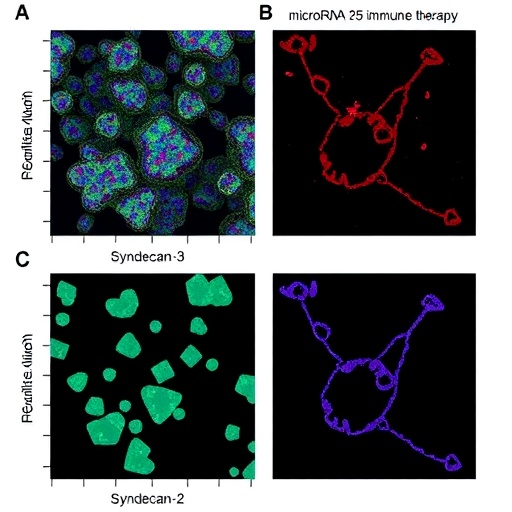
In a groundbreaking study poised to reshape the landscape of cancer immunotherapy, researchers have unveiled pivotal mechanisms by which microRNA-25 undermines the efficacy of immune checkpoint blockade therapies. Published in Nature Communications in 2026, the work led by Zhu, Han, Deng, and their colleagues elucidates how this specific microRNA orchestrates resistance to cutting-edge treatments, effectively silencing innate and humoral immune responses through modulation of a key cell surface molecule, Syndecan-3. This discovery not only deepens our comprehension of immune evasion in tumors but also opens new therapeutic avenues to enhance patient response rates.
Immune checkpoint inhibitors, which have transformed the treatment of various malignancies, function by liberating cytotoxic T cells from inhibitory signals, essentially releasing the brakes on the immune system to attack cancer cells. Despite their revolutionary potential, a significant portion of patients experience primary or acquired resistance, limiting the broad applicability of these therapies. Identifying the molecular culprits behind such resistance remains a critical challenge in oncology research, and the involvement of microRNAs—small regulatory RNA molecules known for their capacity to fine-tune gene expression—has increasingly attracted attention.
MicroRNA-25 (miR-25) has emerged from this study as a master regulator of immune suppression within the tumor microenvironment. Through meticulous experimental analysis, the researchers demonstrated that elevated levels of miR-25 in tumor cells correlate strongly with diminished immune checkpoint therapy response. The microRNA executes its immunomodulatory role by targeting Syndecan-3, a heparan sulfate proteoglycan expressed on immune cells that plays multifaceted roles in immune cell signaling and activation.
Syndecan-3 was previously recognized for its contributions to cell-cell and cell-matrix interactions, but its immunological role has been relatively underexplored. This study reveals that Syndecan-3 facilitates critical cross-talk between innate immune components such as natural killer (NK) cells and macrophages, alongside humoral immunity mediated by B cells. By downregulating Syndecan-3 expression, miR-25 effectively blunts both arms of the immune response essential for robust antitumor activity.
Functionally, the suppression of Syndecan-3 impairs the recruitment and activation of innate immune effectors, leading to reduced production of cytokines and chemokines that would otherwise potentiate the immune assault on cancer cells. Concurrently, B cell function is perturbed, compromising antibody-mediated targeting mechanisms that contribute to tumor eradication. This dual inhibitory effect cultivates an immunosuppressive niche that shields tumor cells from destruction despite immune checkpoint blockade.
The mechanistic insights were corroborated using a combination of in vitro assays and in vivo murine models genetically engineered to modulate miR-25 expression. Knockdown of miR-25 restored Syndecan-3 levels and reinvigorated immune function, overcoming resistance and enhancing tumor regression when combined with checkpoint inhibitors. Conversely, overexpression of miR-25 conferred resistance even in otherwise responsive tumors, underscoring its potent modulatory role.
Molecular pathway analysis further underscored the downstream consequences of Syndecan-3 repression, highlighting alterations in signaling cascades such as NF-κB and STAT pathways, which are crucial for orchestrating innate immunity and antibody production. This comprehensive signaling disruption effectively debilitates multiple layers of antitumor immunity, contributing to the resilience of resistant neoplasms.
Importantly, the clinical implications of these findings extend beyond mere mechanistic curiosity. Measuring miR-25 expression levels or Syndecan-3 status could serve as predictive biomarkers for patient stratification, identifying individuals at heightened risk of failing checkpoint blockade monotherapy. This stratification could guide personalized treatment regimens incorporating miR-25 inhibitors or Syndecan-3-targeted therapies.
Potential therapeutic strategies derived from this work envision employing antisense oligonucleotides, small molecule inhibitors, or CRISPR-based approaches to specifically reduce miR-25 levels in tumor cells or augment Syndecan-3 activity on immune cells. Such interventions might reinstate effective immune surveillance and responsiveness, turning resistant tumors into immunologically susceptible ones.
Further research is warranted to delineate the full spectrum of immune cell subsets influenced by the miR-25/Syndecan-3 axis and to explore combinatorial regimes that optimize therapeutic benefit. Exploring synergy with existing immune modulators and conventional treatments such as chemotherapy and radiation could enhance overall outcomes.
This study exemplifies the power of integrating molecular biology, immunology, and translational research to unravel complex resistance mechanisms. As immunotherapy continues to evolve, overcoming intrinsic and acquired resistance remains paramount for extending its benefits to a wider patient population, particularly those battling aggressive and refractory cancers.
With microRNAs increasingly recognized as critical players in cancer biology, the identification of miR-25 as a resistance driver represents a significant advance. By targeting fundamental regulatory nodes, it offers a promising strategy to circumvent immunosuppression and reinvigorate the immune army against tumors.
As cancer immunotherapy pivots towards more precision-based approaches, understanding molecular determinants like miR-25-induced Syndecan-3 repression will be central to tailoring interventions and improving durability of response. This research paves the way for innovative and potentially practice-changing modalities that enhance the immune system’s power to conquer cancer.
The implications resonate beyond oncology, as elaborating microRNA-mediated immune modulation could inform treatments for infectious diseases, autoimmunity, and transplantation medicine. Harnessing these molecular insights might recalibrate immune responses in diverse pathological contexts.
In summary, Zhu and colleagues have unlocked a novel molecular mechanism underlying immune checkpoint therapy resistance, with miR-25 acting as a suppressor of both innate and humoral immunity through Syndecan-3 downregulation. This work charts a compelling course for new therapies aimed at dismantling tumor immune evasion and boosting the effectiveness of life-saving immunotherapies.
Cite Scienmag News
Nathaniel Bowman. (May 20, 2026). microRNA-25 fuels immune therapy resistance via Syndecan-3. Scienmag. https://scienmag.com/microrna-25-fuels-immune-therapy-resistance-via-syndecan-3/
Nathaniel Bowman. "microRNA-25 fuels immune therapy resistance via Syndecan-3." Scienmag, 20 May 2026, https://scienmag.com/microrna-25-fuels-immune-therapy-resistance-via-syndecan-3/. Accessed 4 September 2026.
Nathaniel Bowman. "microRNA-25 fuels immune therapy resistance via Syndecan-3." Scienmag. May 20, 2026. https://scienmag.com/microrna-25-fuels-immune-therapy-resistance-via-syndecan-3/


