


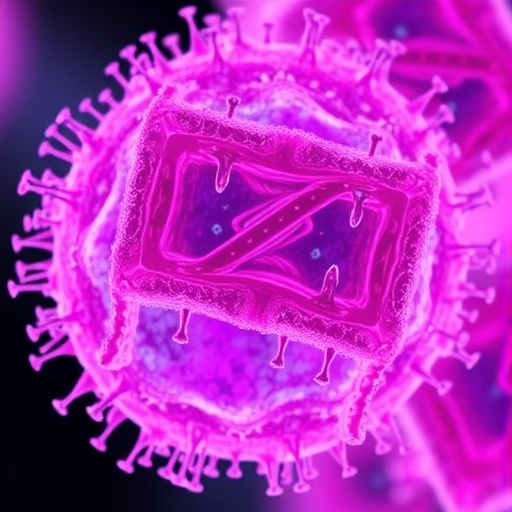
Recent advances in viral entry mechanisms have unveiled critical interactions between viral glycoproteins and host cell surface molecules, providing novel insights into viral infectivity and pathogenesis. Among emerging research is the study of Crimean-Congo hemorrhagic fever virus (CCHFV), a tick-borne pathogen responsible for severe hemorrhagic fever with high fatality rates. The latest exploration into the viral envelope proteins GP38 and GP85 reveals their binding affinity to cell-surface glycosaminoglycans (GAGs), a discovery poised to reshape our understanding of CCHFV’s cellular entry and tropism.
CCHFV belongs to the genus Orthonairovirus within the Nairoviridae family, comprising a tri-segmented negative-sense RNA genome. This virus poses significant public health challenges due to its wide geographic distribution extending from Africa to Asia and Europe, coupled with the absence of approved specific antiviral treatments or vaccines. Glycoproteins embedded in the viral membrane, such as GP38 and GP85, are instrumental in mediating host cell attachment and membrane fusion. However, the precise molecular interactions facilitating viral entry have remained elusive until very recently.
In a breakthrough study published in npj Viruses, researchers headed by Reynard, Vivès, and Makshakova provide compelling evidence that the viral glycoproteins GP38 and GP85 physically interact with glycosaminoglycans present on host cell surfaces. Glycosaminoglycans are long, linear polysaccharides abundantly expressed on mammalian cell membranes and extracellular matrices, often serving as receptors or co-receptors for a variety of viral pathogens. This interaction suggests a mechanism whereby CCHFV exploits host GAGs to initiate infection, potentially impacting virus attachment, internalization, and subsequent replication.
Detailed biochemical assays and binding studies conducted in the investigation revealed that GP38 and GP85 possess domains conducive to strong electrostatic interactions with sulfated GAG chains such as heparan sulfate and chondroitin sulfate. The affinity for these negatively charged carbohydrates likely enables the virus to anchor securely on the host cell surface prior to engaging entry receptors or triggering endocytosis. This process mirrors strategies adopted by other enveloped viruses, including herpesviruses and flaviviruses, yet GP38 and GP85 exhibit distinctive binding kinetics that may reflect niche adaptation to CCHFV’s unique lifecycle.
Beyond binding, the study explored how perturbing GAG interactions influences viral infectivity. Enzymatic removal of cell surface glycosaminoglycans or competitive inhibition using soluble GAG analogs significantly reduced CCHFV GP-mediated entry in cell culture models. These observations underscore the biological relevance of the GP38/GP85-GAG axis in viral pathogenesis and open pathways toward therapeutic intervention aimed at blocking critical attachment steps to curtail infection.
Notably, the structural characterization of GP38 and GP85 through advanced cryo-electron microscopy and computational modeling provided mechanistic insights into GAG recognition. The glycoproteins display positively charged grooves and patches that accommodate sulfated domains of glycosaminoglycans with high specificity. Furthermore, glycan microarray analyses confirmed preferential binding to distinct GAG sulfation patterns, suggesting that viral tropism could be partially determined by differential GAG expression profiles on various host tissues.
These findings bear significant implications for understanding CCHFV vascular tropism and immune evasion, as endothelial cells and immune cell populations variably express diverse GAG species. The engagement of glycosaminoglycans likely facilitates viral dissemination and persistence within the host by modulating attachment efficiency and downstream signaling. Moreover, targeting GP-GAG interactions presents a promising strategy for antiviral drug development, potentially via small molecules or biologics designed to disrupt this initial attachment phase.
Historically, research on CCHFV entry revolved primarily around receptor-mediated endocytosis, with limited appreciation of co-receptor or attachment factor involvement. The identification of GP38 and GP85 as GAG-binding proteins enriches this conceptual framework, emphasizing the multifaceted nature of viral entry mechanisms and supporting the paradigm that viruses leverage host glycobiology in sophisticated ways to establish infection.
The translational potential of these insights cannot be overstated. Designing inhibitors capable of mimicking GAG structures or blocking GP38 and GP85 binding sites might yield potent antivirals that impair viral infectivity at its earliest stage. Additionally, the data invites renewed exploration of GAG-modifying enzymes or antibodies as adjunct therapeutic or prophylactic modalities, especially in regions where CCHFV constitutes a persistent epidemiological threat.
From a virological surveillance perspective, understanding the molecular determinants of CCHFV attachment and entry also informs vaccine antigen design. Eliciting neutralizing antibodies against GP38 and GP85’s GAG-binding domains might constitute an effective approach to preventing viral attachment and subsequent infection cycles. This direction holds promise for generating broadly protective immunity, addressing unmet needs in CCHFV-endemic zones.
In conclusion, the elucidation of how CCHFV glycoproteins GP38 and GP85 interact with cell-surface glycosaminoglycans marks a pivotal advancement in virology. The comprehensive molecular evidence bridging viral envelope composition and host receptor biology deepens our molecular comprehension of CCHFV pathobiology. This knowledge lays a foundation for rational design of antiviral therapies and vaccines that exploit vulnerabilities within the viral entry process, a critical step in combating this deadly pathogen.
Continuing investigations will undoubtedly benefit from integrating these findings with broader studies of viral glycoprotein function, host immune dynamics, and glycan biology. Such multidisciplinary endeavors are vital to devise effective countermeasures against Crimean-Congo hemorrhagic fever and related viral hemorrhagic fevers. The synergy between structural biology, glycobiology, and viral immunology heralds a promising era in the fight against emerging infectious diseases facilitated by enveloped viruses.
The research by Reynard, Vivès, Makshakova, and colleagues thus stands as a benchmark for future explorations and therapeutic innovation. Targeting the intricate interplay between viral glycoproteins and host glycosaminoglycans unlocks new avenues to mitigate viral entry and spread, potentially altering the clinical landscape of CCHFV infection worldwide. As further studies expand on these seminal findings, the prospects for effective intervention strategies become increasingly tangible, offering hope to populations vulnerable to this devastating virus.
Cite Scienmag News
Kristina Jarvis. (May 20, 2026). CCHFV GP38 and GP85 Bind Cell-Surface Glycosaminoglycans. Scienmag. https://scienmag.com/cchfv-gp38-and-gp85-bind-cell-surface-glycosaminoglycans/
Kristina Jarvis. "CCHFV GP38 and GP85 Bind Cell-Surface Glycosaminoglycans." Scienmag, 20 May 2026, https://scienmag.com/cchfv-gp38-and-gp85-bind-cell-surface-glycosaminoglycans/. Accessed 4 September 2026.
Kristina Jarvis. "CCHFV GP38 and GP85 Bind Cell-Surface Glycosaminoglycans." Scienmag. May 20, 2026. https://scienmag.com/cchfv-gp38-and-gp85-bind-cell-surface-glycosaminoglycans/


