


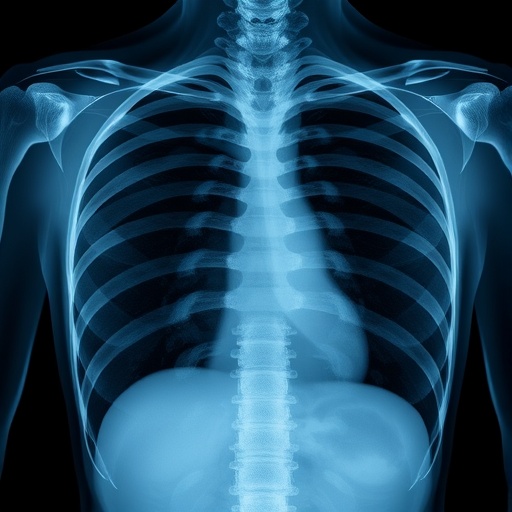
In a groundbreaking development poised to revolutionize medical imaging, researchers have unveiled DeepSeek, an advanced AI-powered system designed to transform the interpretation of chest radiographs. This state-of-the-art technology integrates deep learning algorithms with clinical workflows to offer automated, high-precision analysis of chest X-rays, a tool critical in diagnosing a vast array of pulmonary and cardiac conditions. The system’s release marks a new era in radiology, where speed, accuracy, and accessibility converge to enhance patient care and streamline clinical decision-making.
Chest radiography remains one of the most common diagnostic procedures worldwide, indispensable in screening and evaluating respiratory diseases such as pneumonia, tuberculosis, lung cancer, and heart-related anomalies. However, conventional interpretation heavily depends on radiologists’ expertise, with significant variability influenced by training, fatigue, and workload. DeepSeek addresses these challenges by employing a robust convolutional neural network architecture that mimics human visual cognition, offering consistent, objective, and reproducible assessments of radiographic images across diverse patient populations.
At the core of DeepSeek’s functionality lies its vast training dataset, comprising millions of annotated radiographs sourced from multinational healthcare centers. This extensive compilation enables the AI to learn subtle radiographic patterns that often elude human observers, especially in early disease stages. The system applies hierarchical feature extraction techniques, progressively refining its understanding from pixel-level anomalies to complex pathophysiological signatures, thus enhancing diagnostic sensitivity and specificity.
Beyond mere detection, DeepSeek offers comprehensive radiograph interpretation, including the localization and characterization of pathological findings. Utilizing advanced attention mechanisms, the system highlights regions of interest within the radiograph, providing visual explainability to clinicians and fostering trust in AI-derived insights. This interpretability is pivotal in clinical practice, ensuring radiologists can validate AI suggestions and incorporate them prudently into patient management strategies.
The integration of DeepSeek into electronic health records and picture archiving systems facilitates seamless workflow synchronization, reducing diagnostic turnaround times. Clinical trials implementing DeepSeek in hospital settings demonstrated a substantial increase in reporting efficiency, enabling radiologists to focus on complex cases while routine assessments are reliably automated. The system’s adaptability further allows customization to meet institution-specific protocols and prevalence patterns, reinforcing its versatility across healthcare environments.
One of the most compelling aspects of DeepSeek is its potential to alleviate healthcare disparities, particularly in underserved regions with limited access to radiology expertise. The AI model, deployed via cloud infrastructure, empowers remote clinics to obtain expert-level radiograph interpretations instantaneously. This democratization of diagnostic services could significantly enhance early disease detection rates, guiding timely interventions and improving prognostic outcomes in resource-constrained settings.
The architecture of DeepSeek also incorporates continuous learning capabilities, allowing the AI to assimilate new clinical data and evolving diagnostic criteria dynamically. This adaptive learning mechanism ensures sustained performance enhancement, accommodating emerging disease manifestations and incorporating clinician feedback. Such a feedback loop is instrumental in maintaining the AI system’s relevance and accuracy amid the dynamic landscape of medical knowledge.
Additionally, the system’s robustness against image quality variability, differing radiograph machines, and patient positioning is achieved through extensive data augmentation and normalization techniques during training. Consequently, DeepSeek delivers consistent interpretations regardless of technical inconsistencies, an indispensable characteristic for real-world clinical deployment where image acquisition conditions vary widely.
From a regulatory and ethical perspective, DeepSeek’s developers have emphasized transparency, patient privacy, and compliance with global healthcare standards. Rigorous validation studies underpin the system’s FDA clearance and CE marking, asserting its safety and efficacy for clinical use. Moreover, patient data anonymization protocols and secure data handling frameworks underpin the AI’s trustworthy integration into medical infrastructures.
Clinical adoption studies reveal that DeepSeek not only streamlines workflows but also enhances diagnostic accuracy when used in conjunction with human expertise, mitigating error rates and augmenting radiologist confidence. Such synergistic human-AI collaboration is foreseen as the optimal paradigm, balancing technological innovation with clinical judgment to achieve superior healthcare outcomes.
Furthermore, DeepSeek’s potential extends beyond chest radiographs to other imaging modalities such as CT scans and MRI, with ongoing research exploring modular extensions of the system’s architecture. This scalability promises a comprehensive AI suite capable of holistic radiological evaluation, further cementing AI’s role as a cornerstone of future medical diagnostics.
The system’s impact also reverberates in medical education and training, where DeepSeek serves as an interactive tool for medical students and residents to understand radiographic pathology more concretely. By providing instant feedback and visual annotations, the AI accelerates learning curves and cultivates diagnostic acumen from early stages of medical careers.
In light of these multifaceted benefits, DeepSeek epitomizes the merging of artificial intelligence and medicine, heralding a paradigm shift in how clinicians interpret radiographic data. As healthcare systems worldwide grapple with increasing demand and workforce shortages, AI solutions like DeepSeek offer hope for sustainable, high-quality patient care accessible to all.
Looking ahead, the research team intends to expand DeepSeek’s capabilities to encompass prognosis prediction and therapeutic response assessment, incorporating multimodal patient data including clinical notes and laboratory results. Such integrative AI approaches could usher in precision medicine models, tailoring treatments based on comprehensive data analytics.
Ultimately, DeepSeek exemplifies the transformative potential of artificial intelligence in medical imaging, illustrating how cutting-edge technology can augment human expertise without supplanting it. This harmonious collaboration between human and machine promises to redefine diagnostic medicine, making it more efficient, equitable, and insightful for a new generation of healthcare.
Cite Scienmag News
Ophelia Keating. (May 7, 2026). DeepSeek AI Transforms Automated Chest X-Ray Analysis. Scienmag. https://scienmag.com/deepseek-ai-transforms-automated-chest-x-ray-analysis/
Ophelia Keating. "DeepSeek AI Transforms Automated Chest X-Ray Analysis." Scienmag, 7 May 2026, https://scienmag.com/deepseek-ai-transforms-automated-chest-x-ray-analysis/. Accessed 4 September 2026.
Ophelia Keating. "DeepSeek AI Transforms Automated Chest X-Ray Analysis." Scienmag. May 7, 2026. https://scienmag.com/deepseek-ai-transforms-automated-chest-x-ray-analysis/


