


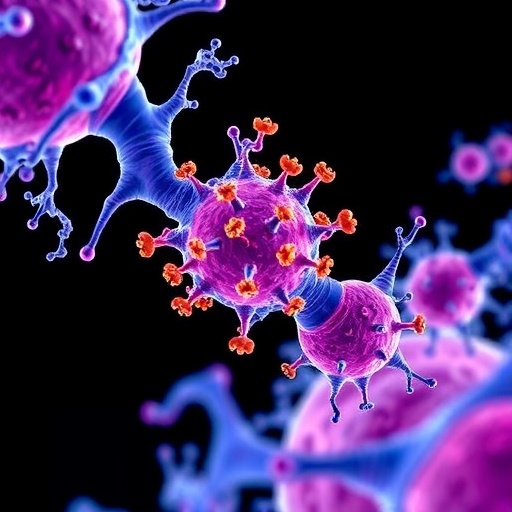
A groundbreaking study from the University of Hong Kong’s School of Biomedical Sciences at the LKS Faculty of Medicine has revealed pivotal insights into why the cancer drug paclitaxel varies in effectiveness among patients. This research illuminates the intricate molecular mechanisms governing drug resistance linked to structural variations within tubulin, the vital protein constituent of microtubules. These findings, published in the prestigious journal Nature Chemical Biology, provide a significant leap toward overcoming one of oncology’s stubborn challenges: the resistance of tumors to paclitaxel.
Paclitaxel, a frontline chemotherapy agent classified by the World Health Organization as an essential medicine, is widely prescribed for breast, ovarian, and lung cancers. Despite its established role, clinicians have long observed inconsistent patient responses, with some tumors exhibiting notable resistance. The study led by Assistant Professor Jeff Ti Shih-Chieh addresses this clinical puzzle by focusing on the molecular heterogeneity of tubulin, which forms microtubules critical for cell division and motility. Variants of tubulin, particularly the β3-tubulin isoform, have been implicated in diminishing paclitaxel’s therapeutic efficacy.
Through a sophisticated combination of state-of-the-art methodologies integrating protein engineering, single-molecule fluorescence microscopy, near-atomic-resolution cryo-electron microscopy (cryo-EM), and genome editing technologies, the research team dissected the underlying structural dynamics of tubulin variants. Their innovative approach enabled unprecedented visualization and manipulation of tubulin architecture, exposing a crucial allosteric network that modulates tubulin conformation and its interaction with paclitaxel.
Central to this discovery is the identification of a specific site in β3-tubulin that, while not in direct contact with the drug, orchestrates paclitaxel resistance by altering the protein’s shape and behavior in microtubules. This allosteric site, conserved through evolution, governs internal tubulin communication that dictates how tightly paclitaxel binds. Strikingly, the study demonstrated that mutating this site can restore drug sensitivity, providing compelling evidence that microtubule structural nuances are decisive for chemotherapy success.
Extensive functional assays in lung cancer cell models validated their structural discoveries. These experiments unequivocally confirmed that modifications at the identified β3-tubulin locus modulate the cellular response to paclitaxel, preventing drug-mediated inhibition of cancer cell proliferation. This mechanistic insight breaks new ground in understanding how subtle protein conformational changes translate into major therapeutic outcomes, highlighting the role of non-canonical drug resistance pathways.
Professor Ti elaborated on the broader implications of this research, stating that it constitutes a paradigm shift in oncology pharmacology. By revealing how an evolutionarily conserved allosteric network within tubulin governs drug efficacy, the study opens avenues for next-generation chemotherapeutics. Tailoring microtubule-targeting agents to account for tubulin variant-specific conformational landscapes could revolutionize personalized cancer treatment, minimizing resistance and maximizing patient benefits.
Beyond oncology, the findings have profound significance for other diseases linked to tubulin dysfunction, including neurodegenerative disorders and infertility conditions that arise from tubulinopathies—diseases caused by mutations affecting tubulin isoforms. The research suggests the tantalizing prospect of pharmacological strategies aimed at modulating tubulin’s internal conformation to treat a spectrum of pathologies rooted in cytoskeletal abnormalities.
The investigative team’s use of high-resolution cryo-EM was instrumental in delineating the near-atomic details of tubulin’s structural shifts. This powerful imaging technique visualized the subtle but crucial conformational changes that propagate through the protein’s allosteric network. Complemented by single-molecule fluorescence, which tracked dynamic interactions in real-time, the study combined structural biology with functional genomics to establish a comprehensive mechanistic framework.
Genome editing allowed precise alterations of tubulin genes in cancer cells, enabling a direct assessment of how specific mutations affect microtubule functions and drug responsiveness. This gene-level manipulation validated the central hypothesis that internal tubulin communication governs paclitaxel efficacy. Such integrative multidisciplinary work underscores the necessity of combining multiple cutting-edge technologies to unravel complex biological processes influencing drug resistance.
The potential translational impact of this research cannot be overstated. By pinpointing a molecular “Achilles’ heel” in tubulin, novel therapeutic interventions can be envisioned that enhance paclitaxel binding or restore sensitivity in resistant tumors. The approach could involve small molecules, peptides, or antibodies designed to target the allosteric site, reshaping tubulin’s conformation toward a drug-sensitive state. This stands to significantly improve outcomes for cancer patients facing treatment failure.
Moreover, the conceptual advance of recognizing tubulin as a dynamic protein whose drug interactions are regulated by an internal shape-modulating network challenges prior static views of microtubule-targeted chemotherapy. This nuanced understanding encourages a new era of drug design that factors in protein plasticity and allosteric regulation rather than focusing solely on direct binding interfaces.
The study received support from prominent funding bodies including the General Research Fund and the Collaborative Research Fund from Hong Kong’s Research Grants Council. It also leveraged infrastructural resources such as the LKS Cryo-EM Laboratory and the Centre for PanorOmic Sciences’ Imaging and Flow Cytometry Core, underscoring the synergy between financial investment, advanced instrumentation, and scientific expertise necessary for such pioneering research.
In totality, this landmark investigation by Professor Jeff Ti Shih-Chieh and his team represents a seminal breakthrough in understanding and overcoming paclitaxel resistance. Their identification of an evolutionarily conserved allosteric network within human tubulin not only elucidates a key determinant of chemotherapy response but also charts a promising path forward for innovative treatments in cancer and tubulinopathies alike. As this knowledge ripples through the fields of molecular biology and clinical oncology, it heralds an exciting future where chemotherapy resistance might be predictable, manageable, and ultimately reversible.
Cite Scienmag News
Nathaniel Bowman. (May 7, 2026). HKUMed Identifies Crucial Mechanism Behind Cancer Drug Resistance. Scienmag. https://scienmag.com/hkumed-identifies-crucial-mechanism-behind-cancer-drug-resistance/
Nathaniel Bowman. "HKUMed Identifies Crucial Mechanism Behind Cancer Drug Resistance." Scienmag, 7 May 2026, https://scienmag.com/hkumed-identifies-crucial-mechanism-behind-cancer-drug-resistance/. Accessed 5 September 2026.
Nathaniel Bowman. "HKUMed Identifies Crucial Mechanism Behind Cancer Drug Resistance." Scienmag. May 7, 2026. https://scienmag.com/hkumed-identifies-crucial-mechanism-behind-cancer-drug-resistance/


