


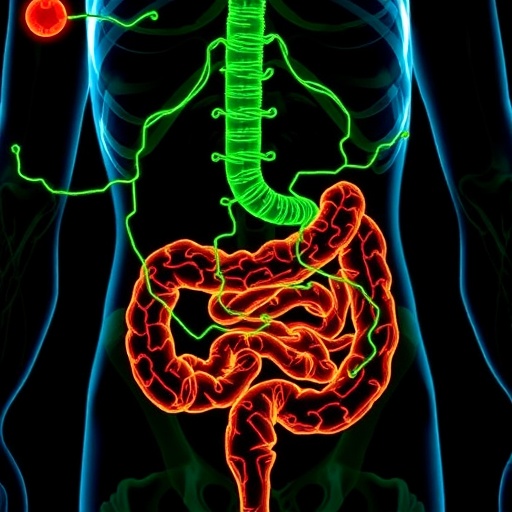
In recent years, the intricate interplay between the animal nervous system and their resident microbiota has captivated the scientific community. Among the striking examples of this symbiotic relationship is the influence of gut bacteria on human neurological conditions such as depression and Parkinson’s disease. Moving beyond mere correlations, a groundbreaking study from The Picower Institute for Learning and Memory at MIT delves into the fundamental mechanisms by which bacteria directly modulate neuronal activity and behavior. This pioneering research utilizes the nematode Caenorhabditis elegans, a transparent and genetically tractable model organism often dubbed a “bacterial specialist,” to elucidate how bacterial chemical signals interface with enteric sensory neurons to shape host behavior.
Led by postdoctoral fellow Cassi Estrem under the guidance of Associate Professor Steven Flavell, the team sought to identify the precise molecular cues from bacteria that activate specific neurons within the worm’s alimentary canal. The neuron of focus, known as NSM, had been previously characterized for its capacity to detect ingested bacteria via acid-sensing ion channels (ASICs), which are highly conserved across species, including humans. When NSM neurons sense favorable bacteria, they release serotonin, a neurotransmitter that promotes increased feeding and reduced locomotion, thereby enhancing the worm’s ability to capitalize on available nutritious microbes.
However, a critical gap in understanding pertained to the exact bacterial components that stimulate NSM activation. The researchers embarked on a methodical dissection approach, exposing C. elegans to a diverse panel of over twenty bacterial species, all native components of its environment, and then fractionating these bacteria into molecular constituents to pinpoint the active stimulants. Remarkably, canonical biomolecules such as DNA, proteins, lipids, and monosaccharide sugars were ruled out as triggers. Instead, the team discovered that complex polysaccharide structures coating the bacterial surface were the primary ligands sensed by NSM neurons.
The detailed analyses revealed that in gram-positive bacteria, peptidoglycan—a rigid polysaccharide integral to bacterial cell walls—served as a potent activator of NSM. Gram-negative bacteria, which have a distinct outer membrane structure, appear to present alternative polysaccharides responsible for this activation, although these differ chemically from peptidoglycan. Functional experiments further demonstrated that these polysaccharide signals not only induce electrophysiological responses in NSM neurons but also evoke distinct behavioral outputs, including increased pharyngeal pumping and attenuated crawling speed, both optimizing nutrient intake.
Delving deeper, genetic manipulations that knocked out ASIC channels in NSM effectively abolished both neural response and associated behaviors, lending strong evidence that ASICs are indispensable transducers of these bacterial polysaccharide signals. This finding underscores a robust molecular mechanism by which the nematode’s nervous system discriminates beneficial microbes at a chemical level, linking environmental cues directly to behavioral paradigms.
Yet, survival in complex microbial landscapes also demands recognition of harmful bacteria. To explore the nematode’s avoidance strategies, the team studied Serratia marcescens, a bacterium with strains varying in virulence and pigmentation. The red pigment prodigiosin, toxic to C. elegans, was found to suppress NSM activation and the typical feeding behavior elicited by non-pigmented strains. When prodigiosin was artificially added to otherwise palatable bacteria, it prevented NSM response and inhibited ingestion, revealing a neuronal detection system finely tuned not only for nutrient identification but also for danger avoidance.
This dual functionality of the NSM neuron in detecting both beneficial polysaccharides and harmful bacterial metabolites illuminates a sophisticated sensory circuit embedded within the worm’s alimentary canal. Such findings have profound implications for understanding host-microbe interactions, suggesting that microbial modulation of neuronal circuits may be a conserved evolutionary feature across animal taxa.
Importantly, the conserved nature of acid-sensing ion channels and polysaccharide recognition pathways hints that similar mechanisms might operate in higher organisms, including mammals, shaping behaviors and physiological responses to gut microbiota. This opens exciting avenues for translational research, where deciphering bacterial signals could elucidate novel intervention points in human neurological disorders mediated by gut bacteria.
The study also highlights how model organisms with specialized bacterial diets, such as C. elegans, offer unparalleled insights into the molecular dialogue between microbes and the nervous system. These insights deepen our mechanistic understanding of how bacteria may influence brain function and behavior, moving beyond associative studies towards causal elucidation.
The implications extend to therapeutic strategies aiming to modulate the microbiome-neuron interface with precision, potentially enabling the development of targeted supplements or drugs that replicate or block specific bacterial chemical signals to beneficially modify human health outcomes.
With funding from prestigious institutions including the NIH, McKnight Foundation, Alfred P. Sloan Foundation, Howard Hughes Medical Institute, and The Freedom Together Foundation, this comprehensive investigation was poised to uncover chemical-neuronal pathways previously obscured in more complex animal systems.
This impressive body of work, titled “Identification of bacterial signals that modulate enteric sensory neurons to influence behavior in C. elegans,” was published in the April 2026 issue of Current Biology. It represents a milestone in microbiome research, emphasizing the concrete molecular mechanisms by which bacteria and nervous systems engage in cross-kingdom communication.
By elucidating the chemical signatures exploited by sensory neurons within the gut, this study paves the way for a new frontier in neuroscience and microbiology, where behavior can be understood as an emergent property of intricate bacterial-host dialogues shaped over evolutionary time.
Cite Scienmag News
Morgan Morrow. (April 20, 2026). How Neurons Detect Bacteria in the Gut: New Insights. Scienmag. https://scienmag.com/how-neurons-detect-bacteria-in-the-gut-new-insights/
Morgan Morrow. "How Neurons Detect Bacteria in the Gut: New Insights." Scienmag, 20 April 2026, https://scienmag.com/how-neurons-detect-bacteria-in-the-gut-new-insights/. Accessed 4 September 2026.
Morgan Morrow. "How Neurons Detect Bacteria in the Gut: New Insights." Scienmag. April 20, 2026. https://scienmag.com/how-neurons-detect-bacteria-in-the-gut-new-insights/


