


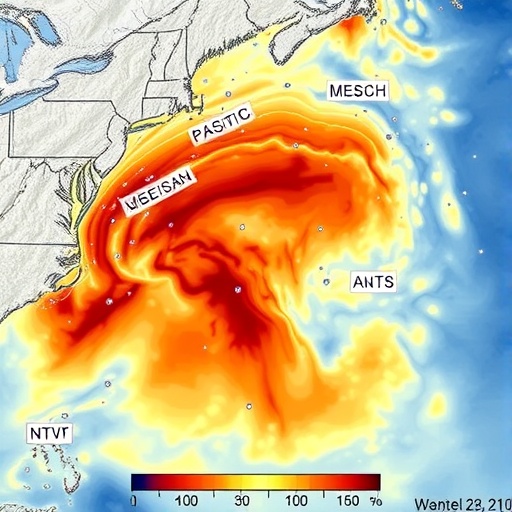
In recent years, marine heatwaves have emerged as critical phenomena reshaping marine ecosystems and influencing global climate patterns. Among these, the persistent marine heatwaves in the Northeast Pacific have garnered significant attention for their intensity, duration, and far-reaching impacts. A groundbreaking study led by Xu, Newman, Shin, and colleagues, published in Communications Earth & Environment (2026), delves deeply into the underlying mechanisms driving the persistence of these marine heatwaves, placing special emphasis on the complex interplay between tropical and North Pacific seasonal dynamics.
Marine heatwaves, characterized by prolonged periods of anomalously warm sea surface temperatures, profoundly disrupt marine biodiversity and fisheries, while also exerting feedbacks on atmospheric circulation and weather patterns. The Northeast Pacific, a region historically known for its dynamic ocean-atmosphere interactions, has witnessed increasingly severe and extended periods of ocean warming. This study’s critical insight lies in identifying the sensitive dependence of these heatwaves on the seasonal timing and intensity of oceanic and atmospheric phenomena in both tropical and North Pacific realms.
The researchers utilized an extensive array of oceanic datasets, climate models, and advanced statistical techniques to dissect the seasonal cycles of surface temperatures, atmospheric pressure fields, and ocean currents. Their analyses reveal a pronounced modulation of marine heatwave persistence linked to shifts in the seasonal phase of the tropical Pacific’s coupled ocean-atmosphere system, notably involving ENSO-related dynamics. These tropical influences propagate poleward and interact with the North Pacific’s own seasonal variability, including its subtropical high-pressure systems and ocean gyres.
A pivotal finding of the study is the identification of a temporal “window of susceptibility,” during which marine heatwaves in the Northeast Pacific intensify and endure longer. This window corresponds to the boreal summer and fall months when tropical Pacific changes—such as variations in sea surface temperature gradients and trade wind strength—synergize with the North Pacific’s delayed seasonal cooling. This seasonal overlap effectively traps warm waters in the upper ocean layers, inhibiting their dissipation and fostering prolonged heatwave conditions.
Moreover, the feedback mechanisms between ocean and atmosphere revealed by this study suggest that not only do tropical and North Pacific seasonal dynamics influence marine heatwaves, but the persistence of these heatwaves also alters atmospheric circulation patterns. For example, prolonged warming modulates the position and strength of the North Pacific High, which in turn affects surface winds and ocean mixing processes, creating a self-reinforcing cycle that exacerbates heatwave longevity.
Such persistent marine heatwaves have broad ecological consequences. The Northeast Pacific’s marine ecosystems, including fisheries on which millions depend, are vulnerable to disruptions in plankton blooms, fish migration patterns, and habitat suitability. By elucidating the seasonally sensitive nature of marine heatwave dynamics, Xu and colleagues provide a crucial foundation for improving predictive models that can aid in marine resource management and climate resiliency planning.
The study’s methodological approach stands out by integrating high-resolution climate simulations with observational records spanning multiple decades. This blend allows for robust attribution of observed heatwave persistence patterns to distinct seasonal drivers. Additionally, the collaborative team employed novel metrics to quantify the degree of tropical-North Pacific interaction, which enhances our mechanistic understanding of cross-basin teleconnections on marine heatwave behavior.
Critical to the broader climate science community, these findings underscore the importance of resolving seasonal cycles and their variability in global climate models. Current climate projections often struggle with biases in simulating tropical and mid-latitude seasons, undermining confidence in near- and medium-term marine heatwave forecasts. Recognizing the sensitive timing windows will help refine model parameterizations to better capture these seasonal interdependencies.
The research also highlights an urgent need to monitor early warning signals of marine heatwave initiation, particularly in regions like the Northeast Pacific that serve as climate hotspots. Enhanced observational networks, combining satellite remote sensing with in situ oceanographic platforms, are vital for detecting subtle shifts in tropical Pacific dynamics that presage downstream impacts on Northeast Pacific conditions.
From a climate adaptation perspective, understanding the seasonally sensitive nature of these marine heatwaves offers practical avenues for mitigation. Fisheries management can apply seasonal forecasts to adjust harvest strategies, while coastal ecosystems can be prioritized for resilience-building measures during identified vulnerability windows, ameliorating heat-stress impacts on keystone species.
Importantly, the study situates these marine heatwave dynamics within the context of ongoing climate change. Anthropogenic warming intensifies baseline ocean temperatures and alters the seasonal timing of ocean-atmosphere interactions, potentially extending the duration and frequency of these events. The intricate sensitivity to seasonality emphasizes the nonlinear nature of future marine heatwave risks amid changing climatic regimes.
The interdisciplinary nature of this research bridges physical oceanography, atmospheric science, and marine ecology, setting a precedent for integrative studies on climate extremes. By honing in on the seasonal dance between tropical and mid-latitude systems, Xu et al. illuminate a critical dimension previously underappreciated in marine heatwave science, advancing the predictive frontier to better safeguard ocean health and human livelihoods.
In conclusion, the persistent Northeast Pacific marine heatwaves exemplify the multifaceted challenges posed by climate variability and change. The 2026 study by Xu and colleagues offers an authoritative, technically detailed examination of how seasonality in tropical and North Pacific dynamics governs the persistence of these heatwaves. Their insights pave the way toward improved seasonal prediction, adaptive management, and a deeper understanding of ocean-climate feedbacks, underscoring the increasingly pressing need to anticipate and respond to a warming world’s oceanic extremes.
Cite Scienmag News
Violet Maxwell. (April 15, 2026). Northeast Pacific Heatwaves Driven by Seasonal Ocean Dynamics. Scienmag. https://scienmag.com/northeast-pacific-heatwaves-driven-by-seasonal-ocean-dynamics/
Violet Maxwell. "Northeast Pacific Heatwaves Driven by Seasonal Ocean Dynamics." Scienmag, 15 April 2026, https://scienmag.com/northeast-pacific-heatwaves-driven-by-seasonal-ocean-dynamics/. Accessed 4 September 2026.
Violet Maxwell. "Northeast Pacific Heatwaves Driven by Seasonal Ocean Dynamics." Scienmag. April 15, 2026. https://scienmag.com/northeast-pacific-heatwaves-driven-by-seasonal-ocean-dynamics/


