


In a groundbreaking new study led by researchers at Cornell University, the potential for transforming animal and human waste into a pivotal resource for U.S. agriculture has been brought to light with unprecedented clarity and depth. This study, set for publication in the esteemed journal Nature Sustainability on April 15, 2026, delves into the intricate balance between nutrient recovery and real-world agricultural demands across the country. It tackles the formidable challenge of synthetic fertilizer dependence, a cornerstone of modern farming with significant environmental and geopolitical drawbacks.
Synthetic fertilizers, primarily used for their nitrogen and phosphorus content, underpin the productivity of many of the United States’ staple crops. However, their production is both energy-intensive and environmentally taxing, contributing substantially to global greenhouse gas emissions. Moreover, reliance on imported fossil-fuel-based inputs places the nation at the mercy of geopolitical conflicts and supply chain disruptions, exemplified by recent turmoil impacting fertilizer access worldwide. Against this backdrop, the Cornell study’s exploration of waste-derived nutrients opens new vistas for sustainable agriculture.
The research team undertook a meticulous spatial analysis, integrating diverse datasets to map the locations of nutrient surpluses found in human and livestock waste across the continental U.S. This granular mapping extended to a resolution of approximately 10 kilometers, allowing researchers to detail the congruence—and often lack thereof—between areas of waste abundance and agricultural nutrient needs. It became clear that while waste is plentiful in densely populated urban centers and livestock-heavy regions, the primary grain-producing heartlands in the Midwest and southern Great Plains frequently manifest nutrient deficits.
Despite these spatial disparities posing logistical challenges, the study highlights a remarkable theoretical potential: waste streams could provide more than 100% of the nation’s nitrogen needs and about half of its phosphorus requirements for crop production. In monetary terms, this nutrient recovery could equate to a savings upwards of $5.7 billion annually, underscoring both economic and environmental incentives. Yet, the practical realization of this potential is far from straightforward, hinging on sophisticated strategies for nutrient processing, transport, and coordination among sectors.
One of the study’s most insightful revelations is the identification of a coordination problem, rather than a resource scarcity issue. Waste nutrients, though abundant, must be effectively processed and redistributed to overcome geographic mismatches with agricultural demand. The researchers envision decentralized processing hubs capable of converting raw waste into viable fertilizers near the source, minimizing transportation costs and preserving nutrient integrity. This model capitalizes on existing technologies but demands substantial advancements in governance frameworks and cross-sector collaboration.
The environmental implications extend beyond nutrient recycling efficiency. Excess nutrient runoff from waste-rich regions currently burdens aquatic ecosystems with pollutants, exacerbating eutrophication and water quality degradation. Conversely, nutrient-poor farming regions rely heavily on synthetic fertilizers, which can lead to soil depletion and further environmental harm. By rebalancing nutrient flows, this redistribution could alleviate these twin environmental pressures, presenting an integrated strategy for ecological restoration and agricultural sustainability.
Crucially, the study draws attention to the intersection between nutrient distribution inequalities and broader social disparities. Counties experiencing extreme nutrient surpluses or deficits often coincide with areas facing socioeconomic hardships and food insecurity, suggesting that better nutrient management could foster not only environmental justice but also social equity. Enhancing nutrient flows in these vulnerable regions can improve soil health, crop yields, and ultimately the resilience of local food systems.
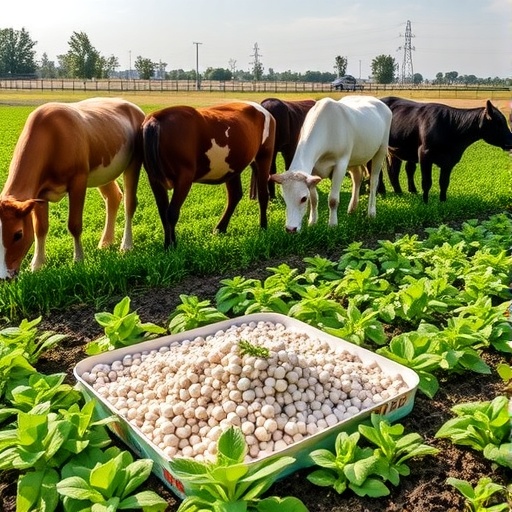
Practical applications of this research are well illustrated by scenarios such as pig farms surrounded by nutrient-demanding cornfields. With appropriate infrastructure investments—such as waste processing facilities proximal to farms—nutrients can be cycled effectively within local agricultural systems, reducing both environmental footprint and dependency on external inputs. Such decentralized approaches propose a roadmap for scaling nutrient recovery nationwide.
Governance remains a pivotal hurdle. Coordinating across diverse sectors—including agriculture, waste management, and energy—requires policy innovation, financial incentives, and stakeholder engagement. Building infrastructure to scale up nutrient recovery and redistribution demands alignment of federal, state, and local powers, alongside community participation. Technology is poised to deliver, but systemic changes in governance structures are paramount for transitioning from pilot projects to widespread adoption.
The Cornell-led effort is part of a broader global research initiative to evaluate waste nutrient use as a foundation for sustainable agriculture worldwide. Notably, the multi-disciplinary team includes leading scientists in plant science and sustainability, enriching the research with expertise that spans agronomy, environmental science, and socio-economic analysis. This integrative approach is essential for devising holistic solutions to the multifaceted challenge of nutrient management.
As the world grapples with climate change, food security, and resource scarcity, this pioneering study provides a compelling vision of circular nutrient economies rooted in locally sourced animal and human waste. It underscores the imperative of rethinking agricultural inputs not as finite commodities but as recyclable resources embedded within human and natural ecosystems.
In conclusion, the Cornell study lays a blueprint for reducing U.S. agriculture’s synthetic fertilizer footprint by harnessing the largely untapped potential of waste-derived nutrients. By navigating the complexities of spatial nutrient disparities and infrastructural demands through coordinated, decentralized systems, the research illuminates pathways toward enhanced environmental sustainability, economic savings, and social equity in food production.
News Publication Date:
April 15, 2026
Web References:
http://dx.doi.org/10.1038/s41893-026-01811-0
Cite Scienmag News
Alan Morgan. (April 15, 2026). Turning Animal and Human Waste into a Game-Changer: Slashing Synthetic Fertilizer Use in the US. Scienmag. https://scienmag.com/turning-animal-and-human-waste-into-a-game-changer-slashing-synthetic-fertilizer-use-in-the-us/
Alan Morgan. "Turning Animal and Human Waste into a Game-Changer: Slashing Synthetic Fertilizer Use in the US." Scienmag, 15 April 2026, https://scienmag.com/turning-animal-and-human-waste-into-a-game-changer-slashing-synthetic-fertilizer-use-in-the-us/. Accessed 5 September 2026.
Alan Morgan. "Turning Animal and Human Waste into a Game-Changer: Slashing Synthetic Fertilizer Use in the US." Scienmag. April 15, 2026. https://scienmag.com/turning-animal-and-human-waste-into-a-game-changer-slashing-synthetic-fertilizer-use-in-the-us/


